Garage Door Belt Replacement: A Practical Home Guide
Learn to safely replace a worn garage door belt with a model-specific part. This guide covers matching, safety shutdown, routing, installation, tensioning, and testing for smooth operation.


Learn to replace a worn garage door belt with the right belt and basic tools. This guide covers safety shutdown, belt routing, installation, tensioning, and testing for smooth operation. Expect a 30–60 minute job depending on your model; always refer to your opener manual and unplug power before starting.
Why Replace a Garage Door Belt?
A belt-driven opener relies on a reinforced belt to transfer motion from the motor to the lifting mechanism. Over time, the belt can stretch, fray, or slip, reducing lifting power and causing grinding noises or jerky starts. Replacing a worn belt restores smooth, silent operation and reduces load on the opener motor. According to GarageDoorAdjust, belt wear is a common issue that homeowners can address with the right belt and careful steps. Start by confirming symptoms like slow travel, misalignment, or visible cracks, then proceed only after powering down the unit.
Belt Types and Compatibility
Most modern belt-driven garage door openers use polyurethane or steel-reinforced belts. The belt type, width, and length depend on your opener model. Before buying a replacement, locate the model number on the opener cabinet and check the manufacturer's parts list. Do not assume a universal belt will fit because a mismatched belt can slip, increase wear, or fail fully. If you cannot locate model numbers, photograph the belt path and consult your manual or a repair professional. In many cases, a properly sized belt will have numeric width and a part number that matches the replacement kit. Since belts and pulleys wear together, replacing the belt often also requires inspecting pulleys and torsion components for wear.
Safety Considerations and Prep
Safety first: unplug the opener from the ceiling outlet or switch off the circuit breaker feeding the garage. Do not work under a loaded door; secure it from rising unexpectedly by placing a small prop on the track or using the emergency stop. Wear impact-resistant gloves and safety glasses. Have a sturdy ladder and ensure the work area is clear. Take photos of the belt routing before you disconnect anything; this will help you route the new belt correctly.
How to Choose the Right Replacement Belt
Verify belt length, width, and tooth profile. The belt length is often labeled on the belt or in the parts list. Use the model number to search for a kit that includes mounting hardware and the belt. If you have a dual-belt system, ensure you are purchasing the entire kit for both belts. When in doubt, contact the manufacturer or a trained technician to confirm compatibility.
Installation At a Glance
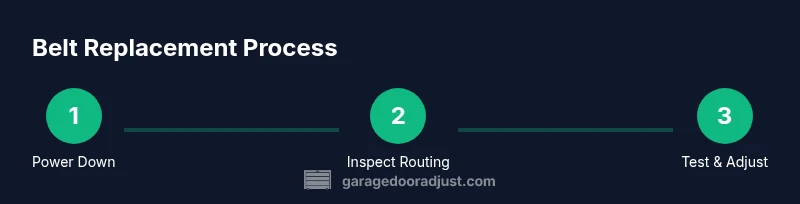
- Power down and secure the door, 2) Remove the cover and locate the belt path, 3) Release tension and remove the old belt, 4) Compare the new belt to the old one (width, length, teeth), 5) Install the new belt along the routed path, 6) Re-tension to the manufacturer spec, 7) Reattach the cover, restore power, and run a test cycle. Double-check pulleys and tracks for interference and ensure the door stays balanced.
Maintenance Tips and Common Pitfalls
Do not lubricate the belt unless the manufacturer instructs you to. Keep the belt path clean and free of debris; inspect pulleys for cracks and wear, and check track alignment. Re-check tension after a few cycles and avoid forcing the door. If the belt shows fraying or significant cracking after a test, stop and replace it again or seek professional help. Regular checks can extend belt life and prevent unexpected failures.
Authority Sources
For safety and installation guidelines, consult reputable sources. The following references provide general safety standards and information on garage door systems: OSHA.gov for workplace safety practices. NIST.gov for measurement and standards considerations relevant to consumer repair. Energy.gov for home efficiency and equipment maintenance guidelines. Always verify that a belt replacement follows the manufacturer's instructions in your opener's manual, and use model-specific parts. Rely on established guidelines when performing any repair task.
Tools & Materials
- Replacement belt compatible with your opener model(Check model number and belt width/length on the existing belt or parts list.)
- Screwdrivers (Phillips and flat-head)(To remove belt cover screws.)
- Socket wrench or nut driver(To loosen mounting hardware.)
- Adjustable wrench(For brackets and tensioners.)
- Gloves(Protect hands from pinch points.)
- Safety goggles(Eye protection.)
- Ladder or sturdy step stool(Work at a safe height.)
- Camera or smartphone(Photograph routing before removing components.)
- Marker or tape(Mark routing lines if needed.)
Steps
Estimated time: 30-60 minutes
- 1
Power down and secure the door
Unplug the opener from the ceiling outlet or switch off the circuit breaker. Physically secure the door to prevent movement during the process. This prevents accidental closure and injury while you work.
Tip: Use a wooden block or vise grip on the track to prevent movement. - 2
Remove belt cover and locate routing
Remove the belt cover screws with the appropriate screwdriver. Note or photograph the belt routing so the new belt follows the same path.
Tip: Taking photos early saves time and avoids misrouting. - 3
Relieve tension and remove the old belt
Loosen the tensioner or pulley mechanism to relieve tension on the belt, then carefully slide the belt off the pulleys. Avoid catching fingers in moving parts.
Tip: Using gloves keeps your hands safe as you work. - 4
Compare belt size and prepare replacement
Measure the old belt length and width and verify against the new belt’s specifications. Confirm the tooth profile and ensure the replacement kit includes necessary hardware.
Tip: If the belt length is ambiguous, rely on the model number and parts list. - 5
Install the new belt along the routed path
Position the new belt on the pulleys following the same routing as the old belt. Avoid twisting or misalignment.
Tip: Don’t force the belt; if it doesn’t seat, re-check routing. - 6
Tension to spec and test
Tighten the belt to the manufacturer’s recommended tension. Reattach any covers and reconnect power, then run a few test cycles.
Tip: Check for smooth operation without slipping or noise. - 7
Final inspection
Power the system again and observe the door through several cycles. Inspect pulleys, tracks, and brackets for signs of wear or interference.
Tip: If the door binding is unusual, stop and reassess alignment. - 8
Consult if unsure
If you’re unsure about compatibility or tension, contact the manufacturer or a pro.
Tip: Better to ask than to risk a failed repair.
Got Questions?
Is belt replacement safe for DIY homeowners?
Yes, belt replacement is doable for many homeowners when power is off and safety steps are followed. Always consult your manual and consider professional help if you’re unsure.
Yes, belt replacement is generally safe if you power off and follow safety steps. Seek help if unsure.
How do I know if my belt is worn?
Look for cracking, fraying, stretching, or slipping signs on the belt and pulleys. If the door lags, hesitates, or makes grinding noises, inspect the belt path.
Check for signs like cracking, slipping, or grinding noises.
Do I need to lubricate the belt?
In most cases, belt systems do not require lubrication. Consult the manual; applying lubricant can attract dirt or cause slippage.
Lubrication is usually not needed unless the manual says so.
Can I replace the belt without removing the door from the tracks?
Replacing the belt generally requires accessing pulleys and the belt path, which often means removing the belt cover and working with the door in a safe position.
Most often you need access to the belt path; full track removal is not typically required.
How long does belt replacement take?
For most homeowners, a belt replacement takes 30-60 minutes, depending on your opener model and prior experience.
Most people finish in about 30 to 60 minutes.
Watch Video
Quick Summary
- Identify the correct belt model before purchase.
- Follow routing exactly to avoid misalignment.
- Test operation safely after reinstall.
- Check pulleys and tracks for wear during maintenance.