Garage Door 3 in 1: Diagnostic, Repair, and Installation Guide
Learn how to diagnose, repair, and install a complete garage door 3 in 1 system with a clear, safety-focused, step-by-step approach. Practical tips, tools, and maintenance for reliable, quiet operation.


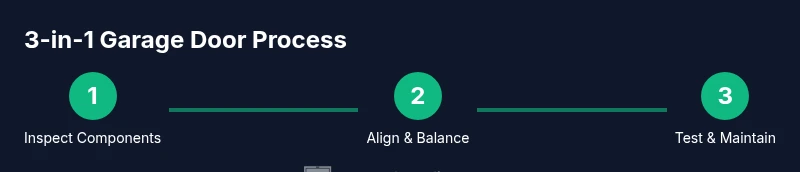
You’ll learn to diagnose, repair, and install a garage door 3 in 1 system that combines the door, opener, and safety features. This guide covers essential safety, the required tools, and a step-by-step process to ensure proper balance, programming, and maintenance for dependable operation. Whether you’re upgrading or troubleshooting, this approach keeps you in control.
Understanding the 3 in 1 Concept
According to GarageDoorAdjust, a true garage door 3 in 1 system integrates the door, opener, and safety controls into a single, cohesive unit. This design aims to simplify troubleshooting by letting you assess how the door, motor, and safety features interact rather than addressing each component in isolation. In practice, a well-executed 3 in 1 setup reduces the risk of misalignment, sensor faults, and inconsistent stopping points. The concept relies on precise alignment, correct balance, and correct programming of the opener limits and force, so that the door moves smoothly and safely through every cycle. For homeowners, the payoff is fewer surprises: fewer urgent repairs, a quieter operation, and clearer fault indicators when something is off. In the context of GarageDoorAdjust’s guidance, you’ll focus on safe handling, systematic testing, and documenting your changes so you can revert if needed. The goal is to restore reliable operation across door, opener, and safety interlocks with minimal downtime, using a clear, repeatable process.
In a garage door 3 in 1 installation or repair, you’ll routinely verify three subsystems: the physical door mechanism (panels, tracks, rollers), the power-driven opener (motor, sensors, control board), and the safety interlocks (photoelectric eyes, manual release). This integrated approach helps you quickly identify where a fault originates and how different components interact when a cycle starts. As you read, keep in mind that the term 3 in 1 emphasizes balance across movement, power, and safety. If one piece behaves unexpectedly, it often signals an interaction problem rather than a single failing part. Remember, the GarageDoorAdjust team emphasizes conservative testing and gradual changes so you can observe responses without overloading any component.
note2urlx1listedatend: null
Tools & Materials
- Safety gear (gloves, goggles, non-slip shoes)(ANSI-rated gloves and eye protection; protect from sharp edges and pinch points.)
- Sturdy ladder(Reach tracks safely; avoid standing on furniture or chairs.)
- Screwdriver set (Phillips and flat)(Assorted sizes; use magnetic tip to prevent dropping screws.)
- Adjustable wrench set(For bolts on brackets, hinges, and safety devices.)
- Socket set and ratchet(Handle bolts in track brackets and opener assembly.)
- Level and tape measure(Check track plumb and door height alignment.)
- Pliers and needle-nose pliers(Grip components, remove clips, and connect wires safely.)
- Lubricant (silicone-based)(Use sparingly on rails, hinges, and rollers; avoid chain lubrication.)
- Cleaner/degreaser(Remove grime from tracks for smooth operation.)
- Hammer or rubber mallet(Light tapping to seat components without damage.)
- Voltage tester/multimeter(Confirm power is off before touching electrical connections.)
- Replacement parts (as needed)(Be prepared for worn hinges, rollers, or brackets.)
Steps
Estimated time: 2-3 hours
- 1
Power down and secure the workspace
Begin by unplugging the door’s opener and turning off the circuit at the breaker. Remove clutter, trim any loose cords, and secure the door from moving by placing locking pliers or clamps on the tracks. This step prevents accidental movement and protects you while you inspect other components.
Tip: Always confirm the power is off with a non-contact tester before touching any component. - 2
Inspect the 3-in-1 components
Visually inspect the door panels, tracks, rollers, hinges, sensors, and the opener mounting hardware. Look for bent tracks, worn rollers, loose bolts, or frayed cables. Document any problems but avoid making changes yet; this is a diagnostic pass, not a repair.
Tip: Take clear photos of any damaged areas to reference during reassembly. - 3
Test manual balance after disconnecting the opener
Disconnect the opener’s power and lift the door manually to eye level. It should stay in place if balanced properly; if it drops or rises uncontrollably, springs or balance mechanisms may be worn. Do not attempt to adjust torsion springs yourself.
Tip: If you notice imbalance, stop and seek a professional—springs store significant energy. - 4
Check tracks, rollers, and alignment
Inspect each track for obstructions and ensure they are vertical and plumb. Clean dirt and debris, then lubricate where appropriate. Misaligned tracks can cause binding and noise; correct alignment by loosening and re-securing brackets only if you can safely do so.
Tip: Only a light touch should be needed; overtightening can warp tracks. - 5
Program limits and force settings on the opener
Reconnect power and access the opener’s programming mode. Set the limit switches so the door fully closes and reverses at the correct point. Reprogram remotes and keypads if needed and verify that the safety sensors align and recognize each other.
Tip: Test with the door opening and closing slowly before full-speed operation. - 6
Run a controlled test with the opener
With the door supported by its balance, run several cycles using the remote and wall switch. Watch for smooth travel, consistent stopping, and proper auto-reverse. If the door binds or reverses late, re-check track alignment and limits.
Tip: Keep hands away from pinch points during operation. - 7
Lubricate moving parts and perform a maintenance check
Apply silicone-based lubricant to hinges, rollers, and track joints; avoid the chain or belt if not specified by the manufacturer. Wipe away excess lubricant to prevent dust attraction. Record maintenance activities for future reference.
Tip: Schedule lubrication at regular intervals to maintain quiet operation. - 8
Safety checks and documentation
Test auto-reverse function by placing an object under the door while closing. Ensure photoeyes align and illuminate. Document each adjustment and date of maintenance for future troubleshooting.
Tip: If any safety feature fails, stop and consult a professional. - 9
Final review and next steps
Review all inspected components, ensure fasteners are tight, and double-check that door movement is quiet and balanced. Establish a simple maintenance schedule and keep a log of any changes for easy troubleshooting later.
Tip: Leave a clear plan for recurring inspection and lubrication.
Got Questions?
What is a 3-in-1 garage door system?
A 3-in-1 system integrates the door, opener, and safety controls into a single cohesive setup. This approach simplifies troubleshooting and maintenance because you assess how the three subsystems interact rather than treating them separately.
A 3-in-1 system combines the door, opener, and safety features in one package, making it easier to troubleshoot as a whole.
Can I install a 3-in-1 system myself?
DIY installation is possible for basic setups with careful attention to safety and detailed instructions. However, components like springs and torsion systems can be dangerous; consider professional help for those parts.
You can do basic parts yourself, but be cautious around springs and torsion components and don’t attempt high-risk tasks without training.
What should I do if the door is noisy after installation?
Noisy operation often points to misaligned tracks, improper lubrication, or loose hardware. Recheck track alignment, clean dirt, and apply silicone lubricant to moving parts. If noise persists, consult a pro.
If it’s noisy, check tracks, lubrication, and loose screws, and seek professional help if the noise continues.
Why won’t my opener program or pair with remote?
Ensure power is on, reset the opener, and re-run the pairing process per the manufacturer’s instructions. Check for interference from wireless devices and verify that sensors are aligned.
Reset the opener and retry pairing, and check sensors if pairing fails.
Is it safe to lubricate the tracks and rollers?
Yes, using silicone-based lubricant on tracks and rollers is generally safe. Do not lubricate chains or belts unless the manufacturer recommends it, and wipe away excess to prevent dust buildup.
Lubricate tracks and rollers with silicone-based lubricant and avoid overdoing it.
Quick Summary
- Balance is essential: a well-balanced system reduces wear and failure
- Do not adjust springs yourself; seek professional help when springs are involved
- Program safety features and test auto-reverse for reliable operation
- Maintain a documented maintenance schedule for consistent performance