Eden Prairie Garage Door Repair: Step-by-Step Guide
Step-by-step, expert guidance for diagnosing and repairing garage doors in Eden Prairie. Learn safety, tools, and maintenance tips from GarageDoorAdjust to keep your door operating reliably year-round.


By following this guide, you’ll diagnose and repair common garage door problems in Eden Prairie safely and effectively. You’ll learn how to test balance, inspect tracks and sensors, and determine when to replace parts or call a pro. No prior expertise required, but you’ll need basic tools and a calm, patient approach.
Understanding the Eden Prairie Context
Eden Prairie homeowners confront a mix of traditional sectional doors and newer insulated models. The local climate—with cold winters and seasonal temperature swings—puts extra stress on torsion springs, tracks, weather seals, and opener gears. For eden prairie garage door repair projects, you’ll often see rust on hardware after winter, stiff springs in cold months, and sensors misbehaving after temperature shifts. According to GarageDoorAdjust, regional conditions mean preventive maintenance and timely part replacement prevent bigger repairs later. Start by identifying your door type, measuring height and width, and noting the opener model. This context helps you source the right parts and plan repairs with confidence. Our goal is practical, safe fixes that keep your garage usable through Eden Prairie winters and springs. You’ll learn to identify worn parts early, map replacement needs, and avoid common missteps that create rework. This approach emphasizes durability and safety for everyday homeowners.
Safety First: Essential Precautions Before Any Repair
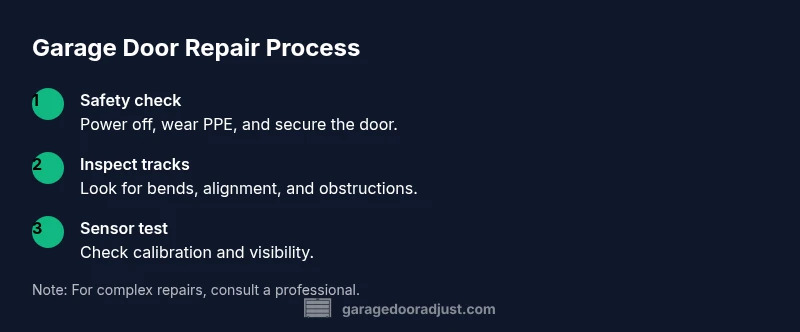
Safety should come first in any eden prairie garage door repair. Begin by turning off power at the breaker and unplugging the opener, then secure the door in the fully lowered position. Wear ANSI-approved safety glasses and sturdy gloves, and keep bystanders clear of the workspace. If you’ll work near springs, cables, or the opener’s mechanism, never bypass safety devices. A calm, methodical approach reduces the risk of injury and damage. If anything feels uncertain or dangerous, pause and seek professional assistance. Remember, the goal is to prevent harm while keeping your home secure.
GarageDoorAdjust emphasizes safety as the foundation of any home repair. This mindset helps homeowners avoid risky mistakes that can lead to costly fixes or injuries. Disconnect power, remove access to high-tension components, and work in a well-lit area. Finally, have a plan for testing after the repair to verify functionality without compromising safety.
Common Garage Door Problems You May Encounter
Garage doors present a range of issues, from silent failures to loud grievances. In Eden Prairie, common symptoms include the door stopping partway, creeping or sticking along the tracks, or a sensor giving false readings. Misaligned safety sensors can prevent the opener from operating, while worn rollers or stiff hinges create grinding noises. Bent tracks or loose mounting hardware can cause uneven movement, and weather seals deteriorate with age, inviting drafts and moisture. Electrical issues with openers—bad limit switches or fried gears—also appear. By understanding these categories, you can triage effectively, determining whether the problem is mechanical, electrical, or a wear-and-tear failure of components.
How to Assess Door Balance and Track Alignment
A balanced door opens smoothly with minimal effort. In a safe setting, disconnect the opener and try lifting the door manually. If it’s heavy, sticks, or feels uneven, balance and track alignment need attention. Inspect tracks for dents or obstructions, and ensure all bolts are tight. Look for gaps between rollers and tracks, as these indicate wear. Check that tracks are vertical and plumb; a slight bow can cause binding. If you notice binding at a single corner, the door may be off-balance or the track misaligned. Document all findings before proceeding with maintenance or part replacement.
Diagnosing the Opener: Sensor, Limit Switches, and Motor Issues
Opener-related problems often present as a non-responsive door or safety-sensor errors. Verify the photo-eye sensors are clean and properly aligned; even a small misalignment can halt operation. Review the opener’s limit switches to ensure the door fully opens and closes. Motor issues may present as slow operation, unusual noises, or overheating. If the opener shows signs of electrical wear, inspect power connections and wiring harnesses. A professional assessment can help determine whether to repair or replace the opener, especially when the unit is older or has multiple failed components.
Replacing or Repairing Springs, Cables, and Torsion Considerations
Springs and cables are high-tension components that require professional handling. If you suspect a broken torsion spring or snapped cable, treat the situation as a high-risk repair and contact a pro immediately. Do not attempt to unwind springs without proper tools and training. For non-tension components like cables or small hardware, you can replace them with the door in a lowered position and ensure balanced tension. Always use manufacturer-approved parts compatible with your door model and revisit safety procedures to prevent accidental release or door drop.
Tools, Materials, and Parts You May Need (Overview)
Having the right tools helps you stay safe and efficient. Essentials include safety glasses, gloves, a sturdy ladder, screwdrivers, a wrench set, and a silicone-based garage door lubricant. Keep track of part numbers for rollers, hinges, weather seals, and tracks if replacements become necessary. The exact parts depend on your door model and the specific issue. Create a short parts list before you start so you can source items quickly and avoid mid-repair substitutions that could compromise safety or performance.
Maintenance Plan: Lubrication, Weather Sealing, and Seasonal Checks
Preemptive maintenance reduces the likelihood of future Eden Prairie garage door repair needs. Lubricate rollers, hinges, and track joints at least twice a year, and inspect weather seals for wear and gaps that allow drafts or moisture. Clean sensors and track surfaces to remove dust and debris that can hinder performance. Regularly check balance and tighten mounting hardware as part of a seasonal routine. Document tasks and reminders so you’re prepared for each season, especially before winter when cold weather can complicate operation.
When to Call a Pro: Safety, Code, and Cost Considerations
Some repairs are best left to professionals, especially when high-tension components, electrical wiring, or structural damage are involved. If the door’s balance is off, tracks are bent, or you encounter any risk of a fall, contact a licensed technician. For code compliance and safety, consult local regulations and warranty requirements before proceeding. A pro can help with complex spring replacements or door-panel issues that require specialized tools and training, ensuring long-term reliability and safety.
Local Resources in Eden Prairie: Permits, Codes, and Warranties
Local resources can influence your repair approach. Check with the Eden Prairie building department for any permit requirements for major repairs or door replacements. Review your door opener’s warranty and any installed accessory warranties to understand coverage and eligibility. If purchasing parts, choose reputable suppliers with clear return policies and documented compatibility. This local context helps you avoid unexpected costs and ensures your Eden Prairie garage door repair aligns with current codes and standards.
Tools & Materials
- ANSI Z87.1 compliant safety glasses(Protects eyes from flying debris and springs)
- Work gloves(Choose cut-resistant or leather for grip and protection)
- Ladder or sturdy step stool(Use a stable platform with non-slip feet)
- Phillips and flathead screwdrivers(Have multiple sizes available)
- Adjustable wrench and socket set(For nuts, bolts, and track fasteners)
- Tape measure(Helpful for door sizing and alignment reference)
- Silicone-based garage door lubricant(Lubricates moving parts without attracting dust)
- Penetrating oil (WD-40 or similar)(Use on stubborn rusted fasteners)
- Cordless drill with assorted bits(Optional for quicker screw removal/installation)
- Replacement rollers/hinges/tracks (as needed)(Source compatible with your door model)
- Voltage tester(Useful when working near electrical components)
Steps
Estimated time: 60-90 minutes
- 1
Disconnect power and secure the door
Begin by turning off the garage door opener at the switch and unplugging the unit. If possible, disable the automatic operation to prevent movement while you work. Secure the door in the fully closed position using a temporary prop if needed. This step reduces the risk of unexpected movement and injury.
Tip: Always verify the door cannot move before touching tracks or springs. - 2
Test door balance manually
With the door disengaged from the opener, lift it slowly by the bottom edge. The door should rise smoothly and stay in place when you stop. If it’s heavy or drags, there is an imbalance or worn components that require attention.
Tip: If you can’t lift it with one hand, stop and reassess for safety. - 3
Inspect tracks, rollers, and hinges
Check tracks for dents, bends, or obstructions. Ensure tracks are vertical and aligned, with no gaps between rollers and the track. Tighten loose hardware and replace worn rollers or hinges as necessary to restore smooth operation.
Tip: Use a level to confirm tracks are plumb for accurate alignment. - 4
Test sensors and limits on the opener
Reattach the opener, if previously disconnected, and test the auto-reverse and sensor alignment. Clean the sensors, adjust if needed, and confirm that the door fully opens and closes without stopping prematurely.
Tip: Clear any dust from photo-eye sensors and ensure a direct line of sight. - 5
Lubricate moving parts and weather seals
Apply silicone-based lubricant to hinges, rollers, tracks, and weather seals where metal contacts metal or rubber. Wipe away excess lubricant to prevent dust buildup. Lubrication reduces friction and quiets noisy operation.
Tip: Avoid over-lubricating, which can attract dirt and create a slippery surface. - 6
Assess springs and cables safety
If you suspect a worn or broken torsion spring or snapped cable, do not attempt a DIY fix. High-tension components can cause serious injury. Document your findings and contact a licensed technician for replacement.
Tip: Never attempt to unwind or adjust springs without proper equipment and training.
Got Questions?
What are the most common garage door problems in Eden Prairie?
Residents typically see sensor misalignment, track binding, weather seal wear, and spring or cable wear. Diagnosing which component is at fault involves observing door movement, listening for grinding, and testing sensor signals. A systematic check helps you target the right part for replacement or repair.
Common Eden Prairie problems include sensor misalignment, track binding, and worn springs or cables. A step-by-step check helps identify the faulty part.
Can I fix a broken spring myself?
No. Torsion springs are under high tension and can cause severe injuries if mishandled. Replacing or adjusting springs should be performed by a qualified technician with proper safety equipment and procedures.
Spring work is dangerous. It’s best left to a licensed professional with the right tools and training.
How long does a typical garage door repair take?
Repair duration varies with the issue and accessibility. Simple tasks like lubrication can take about an hour, while more complex track or spring work may require several hours or a professional visit.
Most simple fixes take around an hour, with more complex repairs possibly taking longer.
Do I need a permit for garage door repairs in Eden Prairie?
Residential repairs generally don’t require a permit unless you’re replacing major components or changing door structure. Check with the Eden Prairie building department for specifics and any warranty considerations.
Usually no permit is needed for standard repairs, but confirm with your city for larger changes.
What’s a quick way to reduce garage door noise?
Lubricate moving parts, tighten loose hardware, and replace worn rollers or hinges. Regular cleaning of tracks and sensors also helps reduce grinding noises.
Lubricate parts, tighten hardware, and replace worn rollers for quieter operation.
Is there a maintenance schedule I can follow?
Yes. Check monthly for obvious wear, lubricate moving parts twice a year, and schedule an annual professional inspection to catch worn components early.
Have a monthly check, biannual lubrication, and an annual professional inspection.
Watch Video
Quick Summary
- Inspect safety devices before any repair.
- Balance, tracks, and sensors are common failure points.
- Springs and cables are high-risk; call a pro for replacements.
- Lubrication and weather sealing extend door life.
- Document maintenance to simplify future Eden Prairie garage door repairs.