Can One Garage Door Panel Be Replaced? A Homeowner's Guide
Can you replace a single garage door panel? Learn compatibility checks, sourcing options, safety tips, and a detailed step-by-step guide from GarageDoorAdjust.


Yes — in many scenarios you can replace a single garage door panel if the panel size, thickness, and construction match the surrounding sections and the door’s frame and tracks are still sound. This guide explains how to verify compatibility, source the right panel, and perform a safe replacement with attention to alignment and weather sealing. Follow the steps carefully to avoid compromising door balance.
Can one panel replacement be feasible? Understanding feasibility
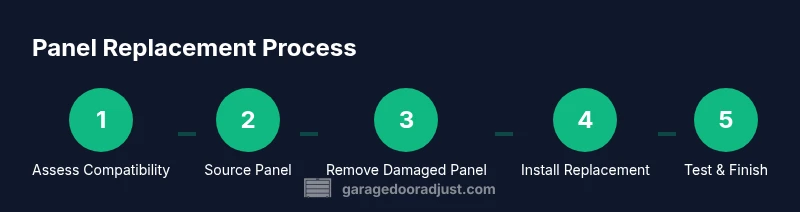
Replacing a single panel on a sectional garage door is feasible in many cases, but it hinges on compatibility and the door’s overall condition. According to GarageDoorAdjust, the main factors are panel size, thickness, core construction, and the integrity of rails and tracks. If only cosmetic damage is present and the panel is still structurally sound, a swap can save cost and preserve symmetry.
First, verify that the panel is truly damaged and not just paint or weatherstripping wear. Compare the damaged panel’s width and height to adjacent panels, and check that the insulation core, if present, matches the rest of the door. Also inspect the surrounding hardware: tracks should be straight, springs balanced, and hinges free of excessive wear. If these parts show significant wear or deformation, replacement may be more complicated or unsafe. A professional assessment is advised when you see cracks in the frame or misalignment in multiple panels. By starting with a careful assessment, you can determine whether you can replace a single panel without destabilizing the entire door.
Assessing panel compatibility: size, color, and construction
To determine if you can replace a single panel, you must confirm several compatibility details. Measure the panel’s width, height, and thickness, and record the insulation type if present (polyurethane or polystyrene foam). The replacement panel should match the door’s panel profile (the pattern on the door surface) and thickness to maintain proper balance. Color and finish should match, or be repainted, to avoid an obvious mismatch. If your door uses insulated panels with a factory finish or color code, request a panel from the same family to ensure consistent R-values and appearance. Keep in mind that nonmatching panels can create edge gaps that worsen drafts or moisture intrusion, so careful matching matters.
When a panel replacement makes sense and when not to
Replacement is sensible when a single panel is damaged but the door’s frame, tracks, and springs are sound. If the frame shows corrosion, the tracks are bent, or the springs show signs of fatigue, a full door service may be a safer route. Also consider the door’s age: very old doors may not align perfectly with a newer panel, especially if the panel pattern has been updated by the manufacturer. In these cases, a full door panel reconfiguration or replacement may be required. In short, replace only if the structure remains true and the cost-benefit favors a patch over a complete rebuild.
Sourcing the right replacement panel
Look for OEM panels from the door manufacturer when possible, as these guarantee fit and finish. If OEM options are unavailable, reputable aftermarket panels can work, but verify exact dimensions and mounting holes. Avoid generic panels with mismatched patterns or insulating cores that differ from yours. For color consistency, plan to repaint or hire a pro to color-match after installation. If you’re unsure, ask for a sample or a parts diagram to confirm part numbers and compatibility before purchasing.
Tools, safety gear, and prep steps
Prepare a safe, well-lit workspace and gather the following essentials: a sturdy ladder, protective gloves, safety glasses, screwdrivers, a socket set, and a helper or panel-lifting strap. Clear the garage floor and remove any items that could cause slips or trips. Disconnect power to the garage door opener and lock the door in the open position to prevent movement. Have plywood or a foam pad on the floor to cushion the door in case of accidental contact. Finally, measure again before ordering to avoid misfits.
Planning the replacement: evaluating door balance and hardware
Before removing the damaged panel, evaluate the door’s balance by manually lifting the door about halfway to see if it stays in place. A door that droops or snaps back indicates tension in its springs that should be handled by a pro. Examine hinges, rollers, and tracks for wear and alignment. If you notice any binding, rust, or bent components, address these issues first. The replacement process should proceed only when the door can be safely opened and supports weight without wobbling.
Post-install inspection and maintenance
After installing the new panel, test the door’s movement slowly and watch for binding, gaps, or misalignment. Confirm the weather seal around the bottom of the door is continuous and undamaged, and lubricate moving parts with a light garage-door lubricant. Recheck that the opener remote works and that safety sensors respond appropriately. A final visual inspection should verify that all fasteners are tight and that the door returns to its open and closed stops smoothly.
Tools & Materials
- Replacement panel (matched size)(Ensure exact width, height, thickness; verify color/finish.)
- Screwdrivers (flathead & Phillips)(For track clips and panel screws.)
- Socket set(For bolts on mounting hardware.)
- Adjustable wrench(To secure fittings without damaging edges.)
- Helper or panel-lifting strap(Support heavy panel during removal/installation.)
- Measuring tape(Confirm exact panel dimensions and track alignment.)
- Ladder(Stable access to the door hardware.)
- Safety glasses(Protect eyes from springs and debris.)
- Work gloves(Improve grip and prevent cuts.)
- Lubricant for hinges/tracks(Use silicone-based or white lithium on metal parts.)
- Weather seal (optional)(Replace if the bottom seal is damaged.)
- Drop cloth or cardboard(Protect floors and prevent scratches.)
Steps
Estimated time: Estimated total time: 2-6 hours
- 1
Disconnect power and secure the door
Begin by unplugging the garage door opener or turning off the circuit to disable automatic operation. Use a helper or prop the door in the open position so the weight is supported and won’t shift unexpectedly. Put on safety glasses and gloves to protect your eyes and hands during panel handling.
Tip: Never work under a door that is under spring tension; missteps can cause the door to drop suddenly. - 2
Document and measure the damaged panel
Take precise measurements of the damaged panel: width, height, and thickness. Photograph mounting points, hinge locations, and track alignment. Compare these measurements with the candidate replacement panel to ensure a perfect fit and consistent appearance.
Tip: Double-check color and insulation type; mismatches can lead to poor energy efficiency and visible seams. - 3
Remove fasteners and detach the damaged panel
Loosen and remove screws or bolts that secure the panel to hinges or mounting brackets. Support the panel as you release clips or track connectors to prevent it from slipping. Have a helper hold the panel as you work to avoid dropped damage to the floor or door components.
Tip: Keep all fasteners organized by location to simplify reassembly. - 4
Prepare the replacement panel
Inspect the new panel for defects and verify hinge locations. If needed, loosen the hinges slightly to align with existing mounting points. If color or finish differs, plan for repainting after installation to ensure a seamless look.
Tip: Mock-fit the panel before final mounting to confirm alignment with adjacent panels. - 5
Install the new panel and reassemble hardware
Position the replacement panel into the doorway, align with tracks, and attach hinges or clips. Reinsert mounting screws and tighten gradually to avoid cross-threading. Recheck track alignment and smooth operation before moving to testing.
Tip: Avoid overtightening screws; overtightening can crack or warp mounting points. - 6
Test operation and perform final checks
Reconnect power and test the door’s up/down movement. Listen for unusual noises and verify that the door stops at the correct heights. Check weather seals and lubricate moving parts if needed. Ensure all fasteners are snug and the door operates smoothly.
Tip: If the door feels off-balance, stop and call a professional to avoid further damage.
Got Questions?
Can I replace just one panel on a sectional garage door by myself?
Yes, if the panel size, thickness, and mounting points match the rest of the door and there is no frame or track damage. If springs or tracks show wear, consult a professional. Follow a careful measurement and planning process to ensure a safe fit.
Yes, you can replace a single panel if it matches the rest of the door and there’s no frame damage, but be cautious with springs and tracks and consider professional help if unsure.
What signs indicate a replacement panel is not advisable?
If the door frame is bent, tracks are damaged, or springs show fatigue, panel replacement may not be safe or cost-effective. Age-related misalignment or a mismatch in panel pattern can also make replacement impractical.
If you see frame damage, bent tracks, or worn springs, replacement may not be safe. Also consider door age and panel pattern compatibility.
Where can I find a replacement panel that fits?
Start with OEM panels from the original manufacturer for guaranteed fit. If unavailable, use reputable aftermarket options and verify dimensions, mounting holes, and pattern. Check color matching or plan to repaint for visual consistency.
Look for OEM panels first; if not available, carefully verify aftermarket panels for exact size and pattern, and plan for repainting if needed.
Should I repaint the replacement panel to match my door?
If the color or finish differs, repainting the panel or entire door job may be the best way to achieve a uniform look and energy efficiency. Color matching can require professional refinishing.
Yes, repainting is often necessary to achieve a uniform look and maintain energy efficiency.
How long does a panel replacement typically take?
Most replacements take several hours, depending on door type, panel availability, and your experience. Plan for a dedicated session and allow extra time for unexpected adjustments.
Typically a few hours, depending on door type and your experience.
What safety precautions should I follow?
Always disconnect power to the opener, secure the door in the open position, wear PPE, and have a helper. Avoid working under a door in spring tension and follow the manufacturer’s instructions.
Disconnect power, secure the door, wear PPE, and avoid working with springs under tension.
Watch Video
Quick Summary
- Confirm compatibility before sourcing a panel.
- Don’t ignore door balance; replace only when structure is sound.
- OEM parts ensure fit and finish; aftermarket requires careful checks.
- Plan for color matching or repainting if needed.
- Prioritize safety: disconnect power and secure the door during work.