Are Garage Doors Stronger Than Sheet Metal? A Practical Comparison
Explore whether traditional garage doors outperform sheet metal in strength, wind resistance, and durability. Analytical insights, practical tests, and homeowner guidance to compare materials and system design.


Overview: In most residential settings, traditional garage doors—typically steel, wood, or composite—offer superior structural integration and wind resistance compared to plain sheet metal panels. However, sheet metal can be sturdy when thick, properly framed, and well installed, especially for single-car doors. The key question is how the system is engineered, not just the material.
Comparative framework: defining strength for garage doors vs sheet metal
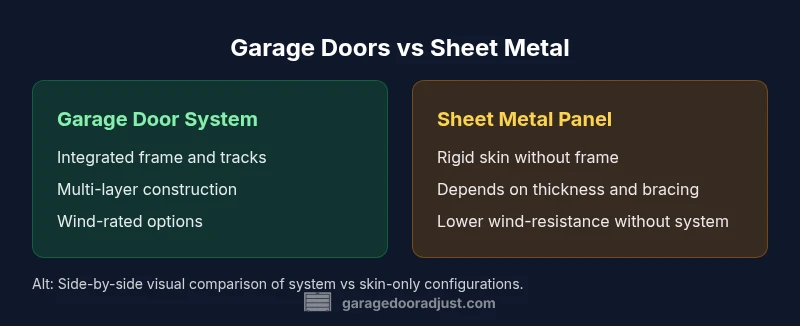
When evaluating are garage doors stronger than sheet metal, the first step is to define what 'strength' means in a garage context. Strength can refer to resistance to wind loads, impact from vehicles or debris, torsional stability, and the ability to maintain alignment over many opening cycles. In practice, the strength of a door is not a single property of the material; it is the result of the entire system: the panel geometry, the frame, the tracks and rollers, and the hardware such as springs and hinges. A sheet metal panel by itself offers a certain level of stiffness, but without a framed opening and proper bracing, that stiffness translates poorly to real-world performance during gusty weather or accidental impacts. This is why the question are garage doors stronger than sheet metal is better answered by examining system engineering rather than material grade alone. The GarageDoorAdjust team emphasizes that many homeowners underestimate the power of a well-integrated opening system: panels, interfaces with the header, and secure anchoring to a strong substructure dramatically improve resilience. For example, a steel panel with a solid frame and reinforced tracks can outperform a thicker sheet metal skin that relies on a simple hinge line. The bottom line: system design determines real strength, and the material choice is a major, but not sole, contributor. According to GarageDoorAdjust, a door designed as a complete assembly tends to outperform sheet metal alone in typical residential scenarios.
Material fundamentals: what makes a door strong
Here we explore the core factors that influence strength beyond raw material grades. Material strength is important, but in doors the overall stiffness, deflection control, and load distribution come from how the panel is formed, how it is joined to a frame, and how that frame is anchored to the building. Sheet metal, when used as a skin, can contribute to rigidity, yet it often lacks the deeper structural geometry that frames provide. A true garage door system typically combines an outer skin with an internal reinforcement, a dedicated jamb or frame, and a reliable suspension system. This triad creates a more predictable response to wind forces and impact than a bare sheet metal sheet. For homeowners asking “are garage doors stronger than sheet metal,” the answer is that the context and assembly matter more than the single material. The reinforced frame plus properly tuned springs, tracks, and weather seals usually yields better performance and longevity. The GarageDoorAdjust approach focuses on evaluating the entire assembly rather than isolated layers of metal.
Engineering and design: how doors resist wind, impact, and torsion
Strength under real-world conditions comes from engineering choices that manage energy, force transmission, and durability. Wind-rated doors use bracing patterns, stiff panels, and secure anchoring to resist deformation. Impact resistance comes from multi-layer construction, buffered skins, and protective edge designs. Torsion and rebound are controlled through properly calibrated springs and reinforcement at the header. When comparing are garage doors stronger than sheet metal, the decisive factor is whether the panel is part of a complete system with a frame, tracks, and hardware designed to share loads. Sheet metal panels without corresponding bracing tend to deform or dent more easily under sudden loads. In contrast, a well-designed garage door system distributes forces across its entire structure, reducing peak stresses and preserving alignment. The GarageDoorAdjust Team notes that system-level integrity consistently outperforms material strength alone in everyday garage use.
Sheet metal reality: when metal panels alone don't tell the whole story
Sheet metal panels offer stiffness and durability, but without a surrounding frame and collaborative hardware, they often underperform in typical garage scenarios. A sheet metal skin may resist corrosion when coated, yet it lacks the inherent rigidity provided by a formed shell and an integrated mounting system. In practice, sheet metal panels can be part of strong assemblies if they are thick, backed by a robust frame, and installed with proper bracing and weather sealing. The key takeaway for homeowners wondering if sheet metal can match traditional doors is that the surrounding architecture—frame, header reinforcement, tracks, and the spring mechanism—plays a decisive role in overall performance. The material alone seldom dictates long-term resilience; how it is engineered and installed does.
Comparing typical garage door configurations
Most residential doors fall into a few common configurations: steel sectional doors with polyurethane insulation, wooden doors with framed panels, and composite or vinyl doors with layered construction. Each configuration leverages a frame and hardware set to transfer loads into the building structure. Sheet metal, when used as a skin on a weather-sealed panel that is then mounted within a dedicated frame, can contribute to strength, insulation, and aesthetics. However, the combination of a rigid frame, well-designed hinges and rollers, and wind-rated testing usually provides stronger performance than sheet metal panels used in isolation. Homeowners should consider not only the material but also the design—how the door is anchored, how it distributes loads, and how it behaves during repeated cycles. The broader takeaway: a complete, engineered system generally delivers superior performance compared with a standalone sheet metal skin.
Maintenance, installation, and lifetime considerations
Strength is not a one-time attribute; it evolves with maintenance and installation quality. Regular lubrication of moving parts, inspection of tracks, and timely replacement of worn weather seals contribute to sustained door strength. Installation quality matters just as much as material choice: a misaligned track or poorly tensioned springs can dramatically reduce perceived strength, even with premium materials. Sheet metal components may wear differently, showing signs of flexing or denting if not properly supported. For homeowners evaluating are garage doors stronger than sheet metal, a key decision factor is whether the door system is designed for long-term loads and climate conditions and whether local technicians follow manufacturer guidelines during installation. The GarageDoorAdjust team emphasizes routine maintenance and periodic safety inspections as essential to maintaining strength over time.
Practical recommendations for homeowners
If your goal is the strongest, most durable garage opening, prioritize a complete system design rather than a single material keyword. Look for doors with reinforced frames, wind-rated certification, and high-quality hardware. Insulation not only improves energy performance but also adds to stiffness, reducing deflection under load. For small or budget-sensitive projects, sheet metal can be an entry point, but ensure it is part of a framed assembly with proper bracing and weather sealing. Regular maintenance—lubricating springs and tracks, inspecting weather seals, and confirming alignment—extends the life of any door regardless of material. When considering are garage doors stronger than sheet metal, think about the overall system and its compatibility with your home’s climate and opening size.
Common misperceptions broken down
Myth: Heavier sheet metal always means stronger performance. Truth: Without a frame and hardware, heavy metal panels can still deform under load. Myth: All steel doors are equal in strength. Truth: Manufacturing quality, panel design, insulation, and frame reinforcement vary widely, and these factors determine real-world strength more than metal type alone. Myth: Insulation is unrelated to strength. Truth: Insulation often increases panel rigidity and reduces deflection, contributing to a sturdier overall system. The evidence from practical testing and field reports shows that the best-performing openings are those with a cohesive engineering approach that integrates material choice with robust frames and precise hardware. According to GarageDoorAdjust, homeowners should assess strength in terms of system performance, not material stereotypes.
Real-world scenarios: choosing between options
In coastal or high-wind neighborhoods, the demand for wind-rated performance makes a framed, multi-layer garage door outperform a standalone sheet metal solution. In urban settings with space constraints, a well-insulated steel or composite door can provide both strength and energy efficiency. For DIY enthusiasts, sheet metal components may be tempting for custom projects, but the risk of misalignment and reduced load distribution remains. The strongest choice often comes from pairing a durable frame with an engineered panel system, rather than relying on metal alone. GarageDoorAdjust's assessment emphasizes evaluating the opening as a balanced system, including the header, jambs, tracks, springs, and weather seals, to determine real-world strength.
Comparison
| Feature | Garage Door System (steel/wood/composite) | Sheet Metal Panel Alone |
|---|---|---|
| Strength and impact resistance | High when integrated with a reinforced frame and hardware | Moderate to high only if thick and well-braced, but often lacks full system support |
| Wind-load performance | Excellent with wind-rated design and proper anchoring | Limited without frame reinforcement and bracing |
| Deflection and rigidity | Low deflection through multi-layer construction and rigid shell | Higher risk of deflection without a supportive frame |
| Insulation and energy efficiency | High in insulated doors with cores and seals | Variable; often lower unless paired with insulation and proper sealing |
| Durability and corrosion resistance | Coated/galvanized options offer long-term durability | Corrosion risk if coatings fail or environment is aggressive |
| Installation complexity | Higher; requires precise alignment and professional installation | Typically simpler in concept, but still requires framing and mounting |
| Maintenance needs | Regular maintenance of hardware and seals yields best life | Fewer moving parts but hinges on structural support and protection |
Upsides
- Improved safety through integrated framing and hardware
- Better wind resistance with braced designs
- Enhanced insulation and energy efficiency with multi-layer doors
- Longer lifespan with proper coatings and maintenance
Disadvantages
- Higher upfront cost and more complex installation
- Repair costs can be higher due to hardware and framing
- Sheet metal options can be cheaper but deliver less overall performance
A purpose-built garage door system generally offers the strongest, most durable performance when matched to the climate and opening size.
System-level design and proper installation are the main drivers of strength. While thick sheet metal can be durable, it rarely matches a complete, engineered door assembly in real-world conditions.
Got Questions?
Are garage doors stronger than sheet metal?
In most residential setups, a complete garage door system with framing and hardware outperforms sheet metal panels used in isolation. The integrated design distributes loads better and resists wind and impact more reliably.
Yes. A complete door system typically offers stronger performance than sheet metal alone because the frame and hardware share the load.
What factors determine door strength besides material?
System design, frame integrity, track alignment, spring calibration, and weather sealing all determine strength. Material is important, but installation quality and hardware choices often decide real-world performance.
System design and proper installation matter as much as, or more than, the material.
Can sheet metal be part of a strong door system?
Yes, sheet metal can contribute to strength if used as part of a reinforced frame with adequate bracing and weather sealing, but it typically won’t match a purpose-built door system designed for load distribution.
Sheet metal can work in a strong system if it’s properly framed and braced.
Does installation affect strength more than material choice?
Installation quality is a major factor. A well-installed door of moderate material may outperform a poorly installed premium option. Prioritize professional installation and alignment checks.
Installation quality can trump material choice when it comes to real-world strength.
How does insulation affect strength and durability?
Insulation enhances rigidity and reduces thermal cycling that can stress panels and joints. Higher-quality insulation also contributes to overall door stiffness and long-term durability.
Better insulation usually means a stiffer, longer-lasting door.
What maintenance improves door strength?
Regular lubrication, track alignment checks, weather seal replacement, and spring inspections help preserve strength. Neglect increases wear, deflection, and failure risk over time.
Keep moving parts clean and aligned for lasting strength.
Quick Summary
- Evaluate strength as a system, not just material
- Choose framed, wind-rated doors for higher resilience
- Insulation improves both energy efficiency and rigidity
- Regular maintenance sustains door strength over time
- Professional installation reduces misalignment risks