Garage Door vs Sheet Metal: A Practical Guide for Homeowners
A detailed, objective comparison of garage door materials, focusing on sheet metal versus traditional options. Learn about durability, insulation, cost, maintenance, and scenarios where sheet metal makes sense for homeowners.


Garage door vs sheet metal comes down to material performance, cost, and maintenance. In most homes, sheet metal is a niche option compared with standard steel- or aluminum-finished doors. This quick comparison outlines when sheet metal makes sense and where traditional options typically win based on climate, use, and budget.
Material Basics and Definitions
When evaluating the topic of garage door vs sheet metal, it helps to start with clear definitions. A typical residential garage door is a multi-layer assembly that may use steel, aluminum, wood, or composite skins with insulation inside. Sheet metal, in this context, refers to metal panels formed from steel or aluminum sheets used as the facing material. Sheet metal doors can be lighter and less expensive upfront, but their insulation performance and dent resistance depend on the panel gauge, coating, and overall door construction. In GarageDoorAdjust's guidance, your material choice should align with climate, household usage, and maintenance expectations. Remember that finishes, coatings, and frame quality influence longevity as much as the core material. The choice of material will influence noise, balance, and how the door interacts with your opener, weather, and driveway aesthetics.
Structural Differences and Longevity
Structure matters as much as surface. Traditional garage doors often rely on a sandwich-constructed panel with rigid foam insulation between skins, offering consistent rigidity and long-term performance. Sheet metal doors, by contrast, may use thinner panels or single-skin faces that emphasize a sleek look and lighter weight. Over time, the heavier, well-insulated assemblies tend to resist warping and sag better in temperature swings, while sheet metal solutions can be susceptible to denting and flexing if not properly reinforced or coated. The practical implication for homeowners is straightforward: verify panel gauge, internal reinforcements, and the presence of weather seals before concluding which option matches your climate and usage patterns. A well-designed traditional door can often outperform a basic sheet metal setup in harsh weather scenarios, while sheet metal panels shine in modern, low-maintenance ensembles.
Insulation and Energy Efficiency
Energy performance is a central differentiator in the garage door vs sheet metal debate. Insulated doors—often steel cores with polyurethane or polystyrene filling—offer higher R-values, reducing heat loss in winter and heat gain in summer. Sheet metal doors, especially single-skin varieties, generally provide less insulation unless paired with an auxiliary insulating layer or a foam core retrofit. For homeowners in cooling climates or seeking year-round comfort, insulation matters for comfort and energy bills. GarageDoorAdjust analysis shows that the insulation quality of the door expands beyond the visible surface and depends on seal integrity around the edges. If your climate includes frequent freeze-thaw cycles or high summer heat, prioritize doors with proven thermal resistance and airtight weatherstripping.
Weather Resistance and Corrosion
Weather resistance is closely tied to material composition and protective finishes. Steel doors with durable finishes resist rust when properly coated, but exposed areas can corrode where coatings wear. Aluminum doors resist rust exceptionally well but can dent more easily under impact. Sheet metal doors rely on coatings and galvanization; if these layers degrade, corrosion can become progressive in salty or humid environments. A key takeaway: choose doors with protective coatings suited to your climate, and plan for periodic maintenance to preserve finish integrity. In coastal or roadway environments, sheet metal doors must be upgraded with corrosion-resistant finishes and regular inspection.
Maintenance and Repair Considerations
Maintenance is a practical lens through which to view garage door vs sheet metal. Traditional doors typically require periodic lubrication, alignment checks, and occasional panel or roller replacement. Sheet metal doors can demand vigilant finish maintenance to prevent surface corrosion and dent repair; some sheet metal doors may need more frequent touch-ups in harsh conditions. Modern coatings, sealants, and weatherstripping can reduce long-term maintenance, but the cost and effort may differ from standard steel doors. When choosing, assess access to skilled technicians, availability of replacement panels, and the ease of repairing bent panels versus replacing an entire section. GarageDoorAdjust emphasizes selecting materials with a robust service network to minimize downtime.
Fire Safety and Building Codes
Fire safety and building codes influence door material choices in some regions. Both traditional steel or insulated doors and sheet metal variants generally meet typical residential codes when installed with appropriate fire-rated hardware and modern openers. Some jurisdictions require fire-rated assembly labels or specific third-party attestations for commercial-grade doors that resemble residential installations. It remains essential to verify local codes and ensure the door, tracks, and opener comply with standards. For homeowners, this means partnering with a qualified installer who understands code requirements and can document compliance during inspection time.
Aesthetics, Finishes, and Customization
Aesthetic appeal matters in curb appeal and interior harmony. Traditional steel or wood doors offer a wide range of finishes, textures, and custom panel designs that can mimic wood grain or feature bold modern lines. Sheet metal doors emphasize a clean, contemporary look with smooth surfaces and precise lines. Custom color options and decorative hardware can bridge the gap between different materials. Consider the garage facade, driveway width, and adjacent architectural elements when evaluating the visual impact. If you value a high-end appearance with minimal maintenance, focus on durable finishes and professional spray coatings that resist chipping and fading over time.
Installation and Availability
Installability plays a considerable role in the garage door vs sheet metal equation. Traditional doors benefit from a long-established installation ecosystem, with many technicians skilled in adjusting torsion springs, tracks, and openers. Sheet metal doors can require specialized fabrication or heavier framing support, particularly if you select unique panel sizes or non-standard configurations. Availability often aligns with regional supply chains, so consult a local supplier about lead times, warranty coverage, and upgrade options (like reinforced rails or extra insulation). When in doubt, request a written project scope that includes panel gauge, seal details, and expected service intervals to avoid surprises post-installation.
Cost and Long-Term Value
Cost is rarely the only factor; long-term value matters more. Sheet metal doors may present a lower upfront price, but potential maintenance, repainting, or accelerated wear can increase lifetime costs compared with insulated steel or aluminum doors. Traditional doors typically promise a longer service life when well maintained, enhanced by energy-efficient cores that reduce heating and cooling expenses. Evaluate total cost of ownership: upfront price, installation complexity, warranty coverage, maintenance frequency, and expected panel lifetime. GarageDoorAdjust suggests comparing two or three reputable brands, requesting performance data, and calculating estimated energy savings over a 10–20 year horizon to inform a sound decision.
Environmental and Sustainability Considerations
Sustainability considerations include material recyclability, manufacturing footprint, and potential for reuse. Sheet metal panels are commonly recycled at the end of life, and steel-insulated doors often incorporate recycled content. Wood doors, while attractive, may have higher maintenance demands and shorter lifespans in certain climates. When evaluating the garage door vs sheet metal choice, consider the environmental impact of coatings, energy use during manufacturing, and the end-of-life recyclability. For eco-conscious homeowners, selecting doors with high recycled-content materials and durable finishes reduces waste and promotes longer intervals between replacements.
When Sheet Metal Makes Sense: Practical Scenarios
Sheet metal doors are not universally inappropriate; they can be a smart choice in specific circumstances. For example, budget-limited renovations where quick replacements are needed and climate controls are modest may benefit from sheet metal’s light weight and simplified fabrication. In urban lots with limited driveway space and a high priority on modern aesthetics, sheet metal doors can deliver a sleek, contemporary look with relatively easy maintenance. In mild climates with low corrosion risk, sheet metal can be a practical option when paired with a robust coating system and professional installation. Always balance upfront costs with expected maintenance and energy savings over time.
Decision Framework: Quick-start Checklists
- Define climate exposure: harsh winters, humidity, coastal salt spray, or dry interiors.
- Assess insulation needs: do you require higher R-values and a tight seal around the perimeter?
- Compare maintenance budgets: can you budget for coatings, repainting, or dent repairs?
- Evaluate aesthetic goals: do you want a traditional look or a crisp, modern panel design?
- Inspect installation access: are qualified installers and replacement parts readily available in your area?
Common Myths and Misconceptions
- Myth: Sheet metal doors are always cheaper and more durable. Reality: upfront costs can be appealing, but long-term maintenance and insulation differences matter.
- Myth: All sheet metal doors resist dents equally. Reality: dent resistance depends on panel gauge and reinforcement.
- Myth: Insulation is identical across all metal doors. Reality: insulation quality varies with core materials and seals.
Comparison
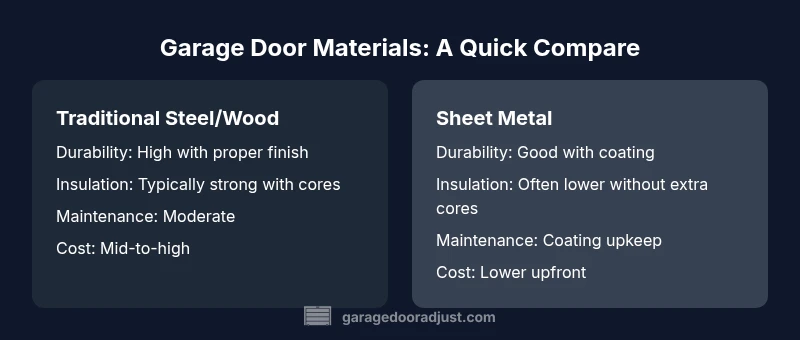
| Feature | Traditional steel/wood garage door | Sheet metal garage door |
|---|---|---|
| Durability and impact resistance | High durability with proper finish and coatings | Moderate durability; dent resistance depends on panel gauge and coating |
| Insulation and energy efficiency | Typically high with insulated cores | Often lower unless paired with extra insulation or foam core |
| Maintenance and repair | Low maintenance; hinges/rollers wear, but panels hold | Potential denting and coating upkeep; repairs can be more visible |
| Cost and value | Balanced upfront cost; long-term value aided by insulation | Lower upfront cost but potential higher maintenance over time |
| Aesthetics and customization | Wide range of finishes and textures | Sleek, modern finishes; limited wood-look options |
| Installation complexity | Well-established installation practices | May require specialized fabrication and precise framing |
| Weather resistance | Strong with proper seals and coatings | Dependent on coating integrity; rust risk if coatings fail |
Upsides
- Potentially lower upfront cost for sheet metal in simple installations
- Good strength-to-weight ratio when properly reinforced
- Availability of contemporary finishes and colors
Disadvantages
- Possible higher long-term maintenance for sheet metal
- Dent susceptibility and coating upkeep in harsh climates
- Insulation performance often lower without added core material
Traditional doors generally offer better long-term value; sheet metal is viable for budget-focused projects in milder climates
If long-term durability and energy efficiency are priorities, choose a traditional steel/insulated door. Sheet metal can work for budget-conscious projects if climate risks are low and you’re prepared for more maintenance or refinishing over time.
Got Questions?
Is sheet metal a good material for a residential garage door?
Sheet metal can be a viable option in milder climates or when budget constraints are tight. However, it may require more maintenance and may not insulate as well as insulated steel or wood-core doors. Consider climate, insulation needs, and maintenance capacity when deciding.
Sheet metal can work in some homes, especially where cost is a major factor, but check insulation and coatings first.
How does insulation compare between sheet metal doors and traditional steel doors?
Traditional insulated doors typically provide higher R-values due to core materials and multiple skins. Sheet metal doors may be less insulated unless additional insulation or foam cores are added. Review door specs for core material and edge seals.
Insulated doors usually keep more heat in or out, while sheet metal doors need extra insulation.
What maintenance differences should I expect?
Sheet metal doors may need more frequent coating and corrosion prevention in harsh environments. Traditional doors often require regular lubrication and seal checks but typically have longer service intervals with proper maintenance.
Maintenance varies by material; expect coatings and inspections for sheet metal and regular lubrication for traditional doors.
Are there scenarios where sheet metal makes more sense than traditional doors?
Yes. In budget-sensitive projects, for quick replacements, or where a sleek, minimalist look is desired in a moderate climate, sheet metal can be a practical choice. Match expectations for insulation and potential maintenance.
It can be a good fit if you prioritize cost and a modern look and climate risk is manageable.
How can I assess installation difficulty?
Check with a local installer about panel sizes, framing requirements, and whether custom fabrication is needed. Ensure warranty coverage includes installation and any adjustments after setup.
Ask your installer about panel size, framing, and warranty to avoid surprises.
Do building codes favor one option over another?
Most residential codes accommodate both materials when installed with proper hardware and safety features. Some regions may have preferences or requirements for insulation and fire safety—verify with local authorities.
Codes usually allow either option if properly installed; check local rules.
Quick Summary
- Evaluate climate and insulation needs before choosing
- Sheet metal can be cost-effective upfront but may incur maintenance
- Traditional insulated doors typically provide better energy efficiency
- Choose materials with proven coatings and service support
- Budgeted maintenance costs should be part of the decision