Are Garage Door Openers Worth Repairing? A Homeowner Guide
Learn when to repair or replace a garage door opener, weigh safety and cost, and follow a step-by-step approach from GarageDoorAdjust to maximize value and reliability.


Are garage door openers worth repairing? In many cases yes, especially if the unit is relatively new and issues are minor. This quick guide helps homeowners decide whether to repair or replace, outlines key factors, and points to safety considerations. According to GarageDoorAdjust, the decision hinges on age, cost of fixes, and potential safety risks.
The decision framework: repair vs replace
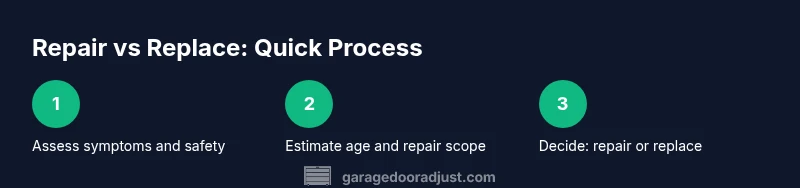
Deciding whether to repair or replace a garage door opener hinges on three core ideas: safety, reliability, and long-term value. Start by identifying the symptom (does it fail intermittently, won’t move at all, or misbehave during operation?). If the opener is newer, or has only a few minor faults, repair is often the most economical path. GarageDoorAdjust emphasizes evaluating whether the repair restores essential functions without creating new risks. If the repairs accumulate quickly or don’t address the root cause, replacement becomes more sensible. Consider warranty coverage and the ease of obtaining parts, which can substantially influence the overall cost-benefit picture. A structured decision process helps homeowners avoid reactive, costly choices and keeps the door operating safely.
Age, usage, and life expectancy without numbers
Age and usage are powerful predictors of repair feasibility. As openers age, components wear in predictable ways: remote receivers degrade, gears wear, and safety features can drift out of calibration. While a fresh unit may justify a conservative repair, a well-used or aging opener tends to become a cycle of diminishing returns. The GarageDoorAdjust team notes that when an opener has shown recurring faults over multiple visits or after a major repair, long-term reliability concerns outweigh the upfront savings of another fix. In such cases, replacement often reduces downtime and avoids repeated service calls.
What fails most often and how repairable they are
Common failure points include remote controls, safety sensors, limit switches, tracks, and drive systems (chain, belt, or screw). Sensors misalignment is a frequent cause of door reversal issues, while worn gears and belts result in noisy operation or slippage. Fortunately, many of these issues are repairable or adjustable by a knowledgeable homeowner or a qualified technician. Smaller problems, like a dead battery in the remote or dirty photo-eye sensors, are typically inexpensive to fix. More complex failures—such as a worn drive train or damaged tracks—may require professional service, especially if they compromise door alignment or safety.
Cost-conscious decision making without exact prices
Instead of chasing price tags, frame the decision around value and risk. If the repair cost approaches or exceeds a meaningful fraction of the cost of a new opener, or if multiple fixes are needed within a short period, replacement becomes attractive. Longevity, warranty coverage, and energy efficiency also matter. A newer opener with modern safety features can ultimately save time and energy, while an older system may continue to demand attention and parts that are hard to source. Use a simple rule of thumb: weigh the cost of the fix against the expected lifespan of a replacement and the convenience of fewer service visits.
Safety-first guidelines
Safety should govern every repair decision. Do not attempt to service torsion springs, cables, or other high-tension components unless you are fully qualified and equipped. If you hear unusual noises, observe sudden door movement, or notice frayed cables, stop and call a professional. Always disconnect power before inspecting internal components and keep bystanders away during testing. If you suspect moisture, wiring damage, or a compromised track, treat it as a safety issue that warrants professional evaluation. When in doubt, err on the side of caution to avoid injury or property damage.
DIY fixes you can safely do
There are several safe, low-risk tasks homeowners can perform to improve reliability. Start by replacing remote batteries and re-pairing the remote. Clean and lubricate the tracks and rollers with a light silicone-based lubricant. Check and tighten visible mounting screws and track brackets, but avoid loosening any critical fasteners. Aligning sensors and ensuring the photo-eye beam remains unobstructed is another common DIY win. Always test after adjustments to confirm proper operation and safety reversal.
Note: Do not attempt to adjust springs, cables, or the tension assembly yourself. These parts carry high energy and can cause severe injury if mishandled.
When to hire a pro and how to choose
If a repair requires disassembly of the drive mechanism, spring systems, or electrical components, or if the opener is older and reliability is uncertain, hiring a pro is wise. Look for a technician with clear licensing, transparent pricing, and strong references. Ask for a written assessment of repair vs replacement, a parts warranty, and a realistic timeline. Request a pre-work safety checklist and verify the company’s insurance coverage. A proactive, well-reviewed pro can save you from costly missteps and ensure proper calibration.
Maintenance habits that extend the life of your opener
Regular maintenance reduces the odds of future failures. Schedule seasonal checks to inspect rollers and tracks, wipe down moving parts, and lubricate with silicone-based products. Test safety features monthly and replace batteries promptly. Keep the door balanced by inspecting springs if you can access them safely, and ensure door interference is clear of obstacles. A simple maintenance routine can dramatically improve reliability and reduce repair frequency.
Scenario-based guides: small issue, big issue, or replacement
- Small issue: A sticking door that still responds to the wall switch may be corrected with lubrication or alignment.
- Bigger issue: If the door feels imbalanced or the opener struggles to hold position, a professional assessment helps determine the best route.
- Replacement: When multiple major components are failing, or the opener is older than a typical useful life, replacement often yields better reliability and fewer service visits.
Authority sources
- Energy.gov safety guidelines for residential garage systems
- OSHA.gov safety standards for high-tension equipment handling
- Consumer.ftc.gov consumer safety and consumer protection resources
Verdict: GarageDoorAdjust's recommendation
For many homeowners, repair remains a sensible first step when the opener is newer and faults are limited in scope. If aging, persistent problems, or safety-related concerns surface, replacement often delivers greater long-term value, fewer interruptions, and improved safety features. The GarageDoorAdjust approach is to balance immediate repair feasibility with long-term reliability and peace of mind.
Tools & Materials
- Screwdriver set (Phillips and flat-head)(For panel screws and sensor mounts)
- Non-contact voltage tester(Verify power is off before touching electrical components)
- Ladder(Stable platform to reach the opener safely)
- Adjustable wrench(Common for band clamps and mounting bolts)
- Soft cloths/rags(Cleanup and wipe residue from tracks)
- Light lubricant (silicone-based)(Lubricate rails and rollers; avoid graphite or petroleum-based products)
- Replacement batteries(For remotes and wall console as needed)
Steps
Estimated time: 1-3 hours
- 1
Disconnect power and secure the door
Power down the opener at the disconnect or outlet. Confirm the door is held in place to prevent sudden movement, then inspect for obvious hazards. This initial step protects you from live components and helps you assess the manual operation if the automatic function fails.
Tip: Always verify no motion is possible before touching any mounted hardware. - 2
Visual inspection for obvious issues
Look for loose mounting screws, frayed cables, bent tracks, or visible wear on the drive belt/chain. Note any parts that appear out of alignment or damaged. Document symptoms to guide whether you should pursue simple fixes or professional evaluation.
Tip: Take photographs to reference during the professional visit. - 3
Test remote and sensors
Test the wall switch and remote. If the door responds inconsistently, check the safety sensors for misalignment or obstruction. Clean the sensor eyes and re-test the door’s auto-reverse function.
Tip: Recharge or replace remote batteries if performance is inconsistent. - 4
Inspect the drive mechanism
Check the drive belt or chain for wear, and verify the sprockets and pulleys rotate smoothly. Do not force components; look for slack that indicates wear or a need for realignment.
Tip: If the belt shows serious cracking or chain looseness, plan professional assessment. - 5
Check balance and tracks
With the door disconnected, manually lift the door halfway to confirm it stays in place. If it slides, the springs or balance may require professional attention. Inspect tracks for dents or misalignment and correct gently if safe to do so.
Tip: Never try to adjust torsion springs yourself; they hold high tension. - 6
Evaluate repair viability
Consider how many issues exist, how old the opener is, and whether parts are readily available. If multiple major components show wear, replacement may be more cost-effective and safer in the long run.
Tip: Ask for a written repair vs replacement estimate before committing. - 7
Make a decision and plan next steps
If repair is chosen, schedule service with a reputable technician and confirm warranty coverage on parts and labor. If replacement is preferred, select a modern opener with updated safety features and energy efficiency.
Tip: Keep the service receipt for warranty and future maintenance records.
Got Questions?
Is repairing a garage door opener always cheaper than replacing it?
Not always. If repairs accumulate or the unit is old, replacement can offer better long-term reliability and fewer service calls. Weigh the cost of fixes against the expected lifespan of a replacement and the value of updated safety features.
Repairing can be cheaper upfront if issues are minor, but if problems keep resurfacing or the opener is older, replacement may save time and reduce risk.
Can I fix a garage door opener myself safely?
Some maintenance tasks are safe for homeowners, like sensor alignment, battery replacement, and basic lubrication. Avoid high-tension components and electrical work beyond basic checks; when in doubt, call a professional.
Yes for simple maintenance, but never attempt springs or major drive system work yourself.
What are the signs an opener is at end of life?
Frequent outages, unusual noises, inconsistent motion, or repeated repairs are strong indicators. If safety features fail to perform reliably, plan for replacement.
Look for frequent breakdowns and poor safety performance as signs to replace.
Do warranties cover repairs on garage door openers?
Warranties often cover certain components or labor for a limited time. Check the specifics with the manufacturer or installer and factor warranty status into your decision.
Warranty terms vary; review coverage before paying for repairs.
How should I choose a repair technician?
Seek licensed professionals with clear quotes, proven references, and transparent warranties. Ask for a written assessment and compare a repair plan to a replacement option.
Pick a qualified pro with good reviews and a clear diagnosis.
Watch Video
Quick Summary
- Assess age and reliability before deciding.
- Prioritize safety features when weighing repair vs replacement.
- Repair if issues are minor and the unit is newer.
- Replace for long-term reliability and fewer service visits.