Action Overhead Door: Step-by-Step Repair Guide
Learn how to diagnose, repair, and maintain an action overhead door with a clear, step-by-step guide from GarageDoorAdjust. Safe, actionable tips for homeowners to restore balance, reduce noise, and ensure safe operation.


This guide helps you diagnose, repair, and maintain an action overhead door safely. You’ll learn how to inspect tracks, springs, and the opener, identify common symptoms, and perform a controlled DIY repair where appropriate. Gather basic tools, work with a partner, and follow a step-by-step plan to restore balance, reduce noise, and prevent further damage.
Understanding action overhead door basics
An action overhead door is a common garage door style that uses a system of tracks, rollers, cables or springs, hinges, and an electric opener to move smoothly from closed to open. The term action overhead door emphasizes the dynamic movement of the door as it travels along its track. Key components include the horizontal and vertical tracks, torsion or extension springs (which provide the counterbalance), rollers, hinges, door panels, and the opener itself. When everything is in good condition, the movement is quiet, controlled, and safe. When any element wears or becomes misaligned, the door can bind, sag, or hard-stop in an unsafe position. The GarageDoorAdjust team stresses that most DIY repairs focus on non-spring parts (tracks, rollers, lubrication, and sensor alignment) because springs require specialized tools and training for safe handling. Understanding how each part contributes to overall balance helps you diagnose issues quickly and plan appropriate maintenance or repairs.
Components to know
- Tracks: Guide the door’s path; misalignment causes binding or uneven movement.
- Rollers: Allow smooth riding in the track; worn rollers increase noise and friction.
- Springs: Provide force to balance the door; unsafe to adjust or replace without professional training.
- Cables and brackets: Hold tension and support weight; wear can lead to sagging.
- Opener and safety sensors: Power the door and ensure automatic reversal on obstruction.
By recognizing how these parts interact, you’ll spot issues early and decide whether DIY fixes are appropriate or if a pro is needed. Always start with non-destructive checks before touching any springs or cables.
Why this guide matters for the action overhead door
Garage doors rely on precise alignment and balanced force to operate safely. Even minor misadjustments can cause jumpy movement, door sag, or reduced safety clearance. The goal of this guide is to empower homeowners to perform safe, non-invasive maintenance and identify signs that indicate a higher-risk repair requiring professional service. Throughout, you’ll see practical steps that minimize risk while maximizing door performance. The tone stays practical and action-oriented, with clear safety guidelines and only non-spring tasks within the DIY scope.
Safety culture for DIY garage projects
Always treat a garage door as a potentially dangerous mechanism. Wear eye protection and gloves, and keep children and pets away during inspection and testing. If you encounter any spring-related issue, vibration that sounds unusual, or doors that don’t stay in position, pause and call a professional. Keeping a calm, methodical approach reduces risk and protects your home. The GarageDoorAdjust team has found that structured, safety-first procedures lead to better outcomes and fewer repeat visits.
Quick-start checklist before you begin
- Power down the opener and secure the door position.
- Clear the area and remove clutter from the door path.
- Inspect visible hardware for rust, wear, or loose fasteners.
- Gather the right tools and protective gear.
- Plan whether you’ll perform only non-spring maintenance or escalate to professional help if springs appear involved.
Following this checklist sets a solid foundation for a safe and effective DIY session and helps you decide when to pause and call a pro.
How to interpret symptoms: a practical guide
If the door hesitates, bounces, or makes grinding noises, you can usually infer track or roller issues first, then sensor misalignment, followed by lubrication needs. If the door is heavy on one side or drifts down when opened, check for track sag, spring balance (non-spring parts first), and roller wear. Always verify the opener’s safety sensors are aligned and free of obstruction before testing cycles. By understanding symptom-to-cause patterns, you’ll save time and reduce the risk of incorrect DIY fixes.
Realistic expectations for DIY vs professional work
Non-spring tasks like track cleaning, rail alignment, surface lubrication, and sensor calibration are appropriate for careful DIY work with proper safety practices. However, any adjustment or replacement involving springs, cables, or high-tension components should be handled by a qualified technician. Knowing where DIY ends and professional service begins helps you manage risk, budget, and downtime effectively. The GarageDoorAdjust approach prioritizes safety, clarity, and a structured plan.
Takeaway: a proactive maintenance mindset
Routine maintenance—clean tracks, lubricate moving parts, test safety features, and inspect hardware—reduces the likelihood of sudden failures. A preventive approach also makes future repairs less invasive and more predictable. Keeping a maintenance log helps track wear patterns and plan future service before components degrade. This mindset aligns with the best practices GarageDoorAdjust recommends for action overhead door systems.
Tools & Materials
- Safety glasses(Protect eyes from debris and spring tension during inspection)
- Work gloves(Grip and protect hands while handling hardware)
- Adjustable wrench set(Tighten or loosen nuts on brackets and hardware)
- Screwdrivers (Phillips & flat-head)(Remove screws on tracks and brackets)
- Socket/ratchet set(Operate bolts on brackets and hinges)
- Pliers (needle-nose and slip-joint)(Grip, bend, and stabilize small parts)
- Step ladder(Access elevated components safely)
- Rag or shop towels(Clean tracks and wipe lubricant residue)
- Lubricant (silicone spray or lithium grease)(Use on tracks, hinges, and rollers (avoid on belts))
- Flashlight or headlamp(Improve visibility in tracks and springs area)
- Cable ties or clamps(Temporary extra security for the door during testing)
- Replacement rollers or track hardware (optional)(Only if wear is evident and you can safely perform the replacement)
Steps
Estimated time: 90-150 minutes
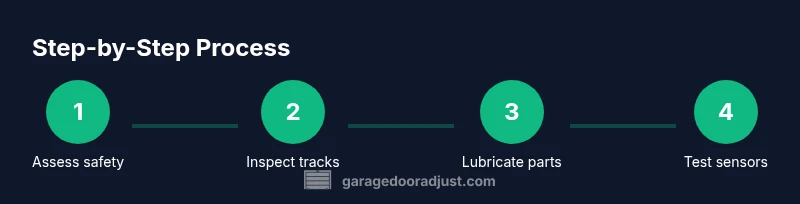
- 1
Power down the opener and secure the door
Unplug the garage door opener or switch off the circuit. This prevents unexpected movement during inspection and establishes a safe baseline. Use a prop to hold the door in the open position if needed, but only after power is disconnected to avoid movement.
Tip: Lockout the circuit or unplug at the source to ensure the opener cannot reset during your work. - 2
Inspect tracks and hardware visually
With the door fully closed, check both tracks for bends, debris, or loose fasteners. Clean any buildup and tighten brackets as needed. A straight, unobstructed path helps prevent binding once you re-energize the system.
Tip: Use a level to confirm track alignment and look for gaps between rollers and tracks. - 3
Test balance and manual operation (non-spring work)
Carefully lift the door halfway and slowly release. If it drifts, sags, or sticks, note that as an imbalance issue. Do not attempt to adjust springs in this step; focus on track alignment and roller wear instead.
Tip: Have a partner assist with lifting the door for safety and accuracy. - 4
Lubricate moving parts
Apply a thin coat of silicone spray or lithium grease on the rollers, hinges, and track interior surfaces. Wipe away excess lubricant to avoid attracting dust. Do not lubricate belts or pulleys unless specified by manufacturer.
Tip: Lubricate in one direction along the track for even distribution. - 5
Check safety sensors and alignment
Ensure photoelectric sensors are clean and aligned within a few inches of each other. A misaligned sensor can cause failure to reverse and create safety hazards. Refit mounting brackets firmly if needed.
Tip: Test sensor function by placing a small object in the door path and confirming the opener reverses. - 6
Reconnect power and run a test cycle
Plug the opener back in or restore power and run a controlled open-and-close cycle. Listen for unusual noises and observe smooth movement. Stop immediately if the door binds again or makes harsh sounds.
Tip: Hold the wall button or remote to observe consistent operation at multiple speeds. - 7
Evaluate noise and balance changes
Compare the door’s performance to the initial symptoms. Improved balance and reduced noise indicate non-spring issues are resolved. If problems persist, plan the next steps and determine if professional service is required.
Tip: Document any recurring issues with dates and symptoms for future reference. - 8
Document results and create a repair plan
Record what you checked, what you cleaned or replaced, and any parts that still show wear. Create a plan for next steps, including potential professional service if the issue involves springs or cables.
Tip: Keep a maintenance log to simplify future troubleshooting and scheduling. - 9
Safety wrap-up and cleanup
Re-secure any tools, wipe down surfaces, and ensure the workspace is clear. Store lubricants and small components safely away from children and pets.
Tip: Always return the opener to its normal power state after verification.
Got Questions?
Is it safe to work on an action overhead door myself?
Yes, for non-spring tasks like track cleaning, lubrication, and sensor alignment, with strict safety precautions. If you encounter springs, cables, or high-tension parts, pause and contact a pro.
DIY is safer for non-spring tasks, but avoid springs. If you see high-tension components, call a pro.
What are the first signs that I need a professional?
Persistent binding, unexpected noises, doors that won’t stay balanced, or any issue involving springs or cables require professional assessment.
If you hear grinding, see misalignment, or suspect spring trouble, get a pro.
How often should I lubricate moving parts?
Lubricate rollers, hinges, and interior tracks as part of routine maintenance, typically every 6-12 months depending on use and climate. Avoid over-lubrication.
Lubricate once or twice a year, depending on use, and wipe away excess lubricant.
What safety checks should I perform after maintenance?
Test the door’s balance manually, run a full opener cycle, and verify safety sensor reversal with an object in the path.
Check balance by lifting halfway, test the opener, and confirm the sensor reversal works.
Can I replace tracks or rollers myself?
Replacing tracks or rollers is generally safe as a DIY task if there is no structural damage and you follow manufacturer instructions. If unsure, consult a pro.
You can replace tracks or rollers if you follow instructions and avoid springs.
Where can I find replacement parts for my overhead door?
Use brand-specific parts or universal components compatible with your door model. Verify part numbers and compatibility before purchase.
Check your door’s model and parts list to ensure compatibility.
Watch Video
Quick Summary
- Inspect tracks and hardware before lubrication.
- Disconnect power before any DIY maintenance.
- Springs require professional handling; DIY should focus on non-spring tasks.
- Test safety sensors and balance after any non-spring work.
- Maintain a repair log for future maintenance.