953estd: Urgent Garage Door Error Repair Guide
Urgent guide to diagnosing and fixing error code 953estd on garage doors. Learn symptoms, quick fixes, a step-by-step repair, safety tips, and when to call a pro.


953estd is a critical garage door opener error indicating a receiver or control fault. The quickest path to safety is to power cycle the opener, reset remotes, and recheck safety sensors. If the code persists, you’re likely facing a faulty receiver board or miswired connections. The GarageDoorAdjust team recommends addressing this promptly to prevent door imbalance or injury.
What 953estd Means for Your Garage Door
953estd is a critical error code that appears on the opener’s display, app, or control panel. It signals a fault in the receiver or control logic that can prevent the door from opening, closing, or stopping at the correct position. Because safety and reliability hinge on proper signaling, this error should be addressed promptly. According to GarageDoorAdjust, the most common root causes are a failing receiver board, loose wiring, or sensor misalignment. Do not ignore it, especially if the door acts unpredictably, makes grinding noises, or falls suddenly. By approaching the problem systematically, you can avoid further damage and reduce the risk of injury. This guide will walk you through a fast diagnostic flow, quick fixes, and when to call a pro.
Symptoms and Early Warning Signs You Should Not Ignore
When 953estd appears, you may notice the door stalling, reversing unexpectedly, or failing to respond to remotes. The opener might run, but the door won’t move, or it moves with irregular pauses. In some cases, the display may flash or a status light will indicate a fault code. These symptoms point toward communication problems between the wall panel, remote, and receiver. GarageDoorAdjust analysis shows that wiring issues, a weak or damaged receiver, or misaligned safety sensors are the most common culprits. Document what you observe to help narrow down the cause.
Quick Fixes You Can Try Right Now
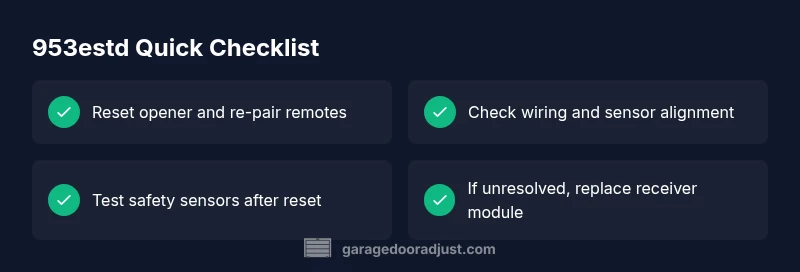
Before diving into complex repairs, try these immediate actions to regain control safely. First, power down the opener by unplugging it or switching off the circuit, wait 60 seconds, then power back up and re-pair remotes. Check all visible wiring for looseness or corrosion at the terminal blocks. Re-seat any loose plugs and reseat the safety sensor wires. If the error persists, perform a clean reset of the opener settings following the manufacturer’s instructions. Do not bypass safety devices during testing. These quick fixes can often resolve the issue without tools or professional help.
Most Likely Cause and the Step-By-Step Repair
The highest likelihood cause is a faulty receiver board or control module within the opener. If you are comfortable with basic electronics, you can attempt a controlled reset and reprogramming, but replacement of the receiver or professional re-wiring is often necessary for lasting reliability. This section details a focused, safe approach to the repair, starting with non-invasive steps and moving toward component replacement as needed. Remember: safety first, and if you encounter burnt smells, arcing, or exposed wires, stop and call a pro.
Alternative Causes and How to Troubleshoot
If the receiver board tests as functional, the issue may lie in wiring harnesses, loose connectors, or misaligned safety sensors. Examine door tracks, photo-eye alignment, and the travel limit switches. A dirty or misadjusted photo-eye can trigger 953estd as a protective fault. Check for obstructions in the doorway, clean the sensor lenses with a soft cloth, and verify the light path is clear. If wiring looks intact but faults persist, consider replacing the receiver with an OEM module and updating the firmware if available.
Safety, Costs, and When to Call a Professional
Safety is non-negotiable: always disconnect power before touching any live components, and never bypass protective sensors or safety devices. Costs for repairs can vary widely depending on parts and labor rates in your area, and a faulty receiver or control board may require professional service. If you’re unsure about any step, or if the door shows signs of imbalance, head separation, or motor overheating, contact a licensed technician to avoid personal injury or further damage. The goal is a reliable, safe opening that won’t surprise you at the worst moment.
How to Verify the Fix and Prevent Recurrence
After completing the repair, perform a full door test: open, close, and pause at intermediate positions to verify smooth operation. Recheck safety sensors and ensure the door reverses on contact with a hand or obstacle. Schedule regular maintenance and inspections to prevent 953estd reoccurrence, including sensor calibration, track lubrication, and connector integrity checks.
Steps
Estimated time: 60-90 minutes
- 1
Power down and reset
Unplug the opener or switch off the circuit, wait a full minute, then plug back in. Re-pair remotes according to the manual and confirm the display no longer shows 953estd. This resets the system and clears transient faults.
Tip: Use the official pairing sequence from your model’s user guide; vague steps can leave the receiver out of sync. - 2
Inspect wiring and reseat connectors
With the power off, inspect all accessible wiring between the receiver, wall console, and sensors. Look for loose terminals, corroded contacts, or damaged insulation. Reseat all connectors firmly and test for improved communication.
Tip: Take a photo of the wiring before disconnecting anything to ensure you reconnect correctly. - 3
Test safety sensors and photo eye alignment
Cut obstructing debris from the photo eye path and align the sensors according to the manufacturer’s tolerances. A misaligned or dirty sensor can trigger faults similar to 953estd. Recheck that the LED indicators behave as expected.
Tip: Use a level or a ruler to set sensor height consistently on both sides of the door. - 4
Check travel limits and force settings
Verify that the door’s travel limits and force settings are appropriate for your door. Overly tight limits or improper force can cause the opener to halt mid-travel and report a fault.
Tip: Refer to the user manual for the exact limit adjustment procedure; small changes can yield big results. - 5
Test receiver and logic function
If the receiver board seems suspect, perform a controlled test of the receiver input signals and logic responses using the opener’s diagnostic mode if available. If symptoms persist, the board is likely failing.
Tip: Do not attempt to replace the receiver without sourcing the correct OEM part for your model. - 6
Reprogram or replace as needed
If tests indicate persistent communication faults, reprogram the opener or replace the receiver/board. After replacement, re-run a full door test and confirm the error code no longer appears.
Tip: Keep a record of replacement parts and firmware versions for future troubleshooting.
Diagnosis: Error code 953estd displayed on wall console or app; door won't fully open or close
Possible Causes
- highFaulty receiver board or control module
- mediumWiring loose or corroded connections
- lowSensor alignment or obstruction
Fixes
- easyPower cycle the opener and re-pair remotes
- easyInspect wires and reseat connectors; look for damaged insulation
- hardReplace receiver board or contact a pro to rewire safely
Got Questions?
What does error 953estd mean on my garage door opener?
953estd signals a fault in the opener’s receiver or control module, interrupting communication between remotes and the door. It often requires a reset and inspection of wiring and sensors. A lasting fix may involve replacing the receiver board.
953estd means the opener’s receiver or control module is faulty. Start with a reset and wiring check, and consider replacing the receiver if the fault persists.
Is 953estd dangerous?
The error itself isn’t dangerous, but it can cause the door to operate unpredictably. Treat it as urgent and stop use if you notice unusual movements, grinding, or electrical smells.
Not inherently dangerous, but treat it as urgent and avoid risky tests.
Can I fix this myself?
You can perform basic resets, inspect wiring, and recalibrate safety sensors. If the receiver board is failing or wiring looks risky, contact a professional to avoid injury or further damage.
You can do some quick resets and checks, but call a pro if you’re unsure.
How much could repairs cost?
Costs vary by model, parts, and region. It’s best to obtain a written estimate after a professional assessment to avoid surprises.
Costs vary a lot depending on parts and service, so get an estimate first.
When should I replace the opener?
If the receiver is burnt, the opener is old, or repair costs approach or exceed replacement value, replacement is safer and more reliable.
If it’s old or the repair is expensive, consider replacing the unit.
Watch Video
Quick Summary
- Identify the root cause before replacing parts.
- Prioritize safety and never bypass sensors.
- Document symptoms for accurate diagnosis and future prevention.
- Consult a professional if you are unsure about any step.