41d7675: Urgent Repair Guide for Garage Door Error
Urgent guide to diagnosing and fixing error code 41d7675 on garage door openers. Practical steps, safety tips, cost ranges, and when to call a professional.


41d7675 indicates a safety/sensor fault in many garage door openers, usually tied to misaligned safety beams or wiring issues. The error stops the door from operating until the fault is cleared. Quick fixes include inspecting the safety sensors, cleaning the sensor lenses, checking the wiring for damage, and realigning the beams. If the code persists, call a professional.
What 41d7675 Means for Your Garage
When you see the error code 41d7675 on your garage door opener, it commonly signals a fault in the safety sensor circuit. This code is designed to protect people and property by preventing the door from closing if the safety beams detect an obstruction or misalignment. In practice, most homeowners encounter this issue after reseating a sensor, bumping the sensor housing, or changing the opener’s mounting. The 41d7675 fault often points to a sensor alignment problem or a wiring fault rather than a motor or track failure. The GarageDoorAdjust team notes that these faults are among the most frequent homeowners encounter, and they can usually be resolved with a few targeted checks. Quick, careful inspection and realignment typically restore normal operation without major parts replacement. What matters most is staying safe and methodical as you troubleshoot.
- Inspect sensors for misalignment and verify the red/green indicators.
- Look for loose wires or damaged insulation near the sensor housing.
- Realign sensors so they face each other directly across the doorway.
- Avoid bypassing safety features; the door should reverse if the beam is interrupted.
Diagnostic Flow: Symptom to Solution
Symptoms: The opener displays 41d7675, and the door refuses to close or fully operate. You may notice the safety beam LEDs blinking or a sensor alignment warning on the opener panel.
Possible causes (ordered by likelihood):
- Misaligned safety sensors (high)
- Dirty or obstructed sensor lenses (medium)
- Damaged or loose sensor wiring (medium)
- Control board glitch or receiver issue (low)
Suggested solutions (progress from quick fixes to more involved repairs):
- Clean sensor lenses and straighten the sensor housing (easy)
- Realign sensors until the beams are clearly aligned across the door opening (easy)
- Inspect and secure wiring connections; replace damaged wires if needed (medium)
- Reset the opener and reprogram safety parameters; if the fault persists, consult a professional (hard)
Step-by-Step Fix: The Most Common Cause
The most common cause for 41d7675 is misaligned safety sensors. This section provides a focused, practical workflow to address that issue without jumping to conclusions about more complex electronics.
- Power down the system and ensure the garage is clear. Unplug the opener from the outlet and disconnect any external remotes to avoid accidental operation. (Tip: use a flashlight to inspect the sensor area without squinting.)
- Inspect the sensor alignment. Both sensors should face each other directly across the doorway at about the same height. If one is angled, gently rotate the mounting bracket until the LEDs indicate a proper alignment (usually solid green).
- Clean sensor lenses. Wipe both lenses with a soft, lint-free cloth. Do not use harsh solvents; residue or smudges can mimic misalignment. (Tip: check for spider webs or debris that could block the beam.)
- Check sensor wiring. Look for loose, frayed, or pinched wires at the sensor and where they connect to the opener. Re-seat connectors firmly. (Tip: take a photo before disconnecting so you can reproduce the wiring order.)
- Re-seat and test. Reconnect power, re-enable the opener, and test the door’s operation using the wall button first, then the remote. If the 41d7675 code returns, proceed to step 6.
- If the fault persists, reset the opener and reprogram safety settings per the manufacturer’s instructions or consider a professional inspection. Note that intermittent issues might indicate a damaged sensor or control board that requires replacement. (Tip: keep a log of when the fault occurs.)
Other Common Causes and How to Verify
Beyond misalignment, several other factors can trigger 41d7675. Dirty lenses or misfolded reflective surfaces can fool the system into thinking the beam is obstructed. Damaged wiring or corroded connectors on the safety sensor circuit can create intermittent faults. A faulty control board or receiver can also produce sensor-range errors that resemble misalignment.
Verification steps include:
- Visually inspect the entire sensor wiring harness for wear and loose plugs.
- Test the door with and without light on the sensors; observe any LED indicators on the sensors themselves.
- Temporarily disconnect one sensor (only if you know exactly how to do this safely) to see if the error changes, which helps isolate the sensor as the culprit. If disconnecting a sensor stops the fault, you likely need a new sensor assembly.
- Consider measuring the return path from the sensor to the control board using a multimeter only if you’re comfortable with electrical testing. If you’re unsure, skip to the safety rules and call a pro.
Safety, Maintenance, and When to Call a Pro
Safety should be your top priority when dealing with garage door openers. Always unplug the opener when inspecting sensors or wiring. If you suspect a damaged control board, a high-voltage component, or if you smell burning plastic, stop and call a professional immediately. While many 41d7675 faults are resolved with realignment and cleaning, persistent or recurring issues may require sensor replacement or control-board service, which typically costs more and requires a professional installation.
- Quick cost ranges (typical, not exact): sensor replacement parts often run $20–$60; a complete sensor assembly may be $60–$150, with labor adding $80–$180 for a service visit. A control-board repair or replacement can range from $150–$500 depending on the model and parts availability.
- Regular maintenance: lubricate tracks and hinges, test safety features monthly, and keep sensors free of dust.
- When to call a pro: if you’re uncomfortable with electrical testing, if the fault persists after correct sensor alignment, or if the door moves erratically (which could indicate track or spring issues).
Steps
Estimated time: 20-40 minutes
- 1
Power down and prepare the area
Unplug the opener and clear the area under the door. Ensure you have safe access to sensors and mounting points. This prevents accidental operation while you work.
Tip: Use a flashlight to inspect the sensor area without bending yourself awkwardly. - 2
Check sensor alignment
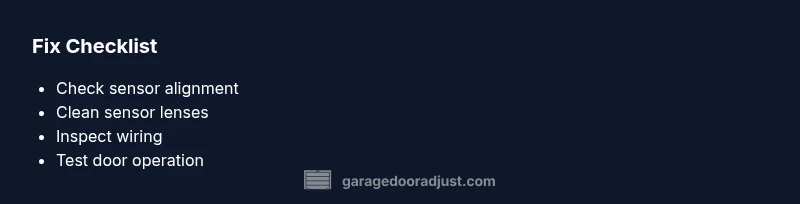
Examine both safety sensors on opposite sides of the door. They should face each other directly; if one is angled, gently adjust the mounting brackets until both LEDs indicate proper alignment.
Tip: If one LED is off, that sensor may be faulty or misaligned. - 3
Clean the sensor lenses
Wipe both lenses with a soft lint-free cloth. Remove any dust, spider webs, or smudges that could block the infrared beam.
Tip: Avoid using solvents that could damage the plastic lenses. - 4
Inspect wiring and connections
Follow the sensor cables to their connections at the opener and nearby terminals. Re-seat any loose plugs and look for signs of wear or damaged insulation.
Tip: Take a quick photo before disconnecting anything to aid reassembly. - 5
Test operation and reset if needed
Reconnect power and test the door with the wall switch first, then the remote. If the code persists, perform a reset following the manufacturer’s instructions.
Tip: Keep a log of the times the fault occurs to help identify patterns. - 6
Decide on next steps
If alignment and wiring checks don’t clear 41d7675, call a pro for a sensor or control-board assessment; continued faults may indicate a failing sensor assembly.
Tip: Pro cost range typically includes parts and labor for sensor replacement.
Diagnosis: Error code 41d7675 appears on the garage door opener and the door won’t complete its cycle
Possible Causes
- highMisaligned safety sensors
- mediumDirty or obstructed sensor lenses
- mediumDamaged or loose wiring to safety sensors
- lowControl board glitch or receiver issue
Fixes
- easyClean sensor lenses and verify straight alignment of both sensors across the doorway
- easyTighten mounting hardware and reseat sensor connectors
- mediumInspect wiring paths for wear, replace damaged cables or reconnect loose plugs
- hardReset or reprogram opener safety settings; replace control board if needed
Got Questions?
What does error code 41d7675 mean on my garage door opener?
41d7675 typically indicates a safety sensor or wiring fault in the opener. The usual fix is to realign and clean the safety beams and inspect the wiring. If the fault remains, a professional inspection may be required.
41d7675 usually points to a safety sensor or wiring problem. Start with sensor alignment and cleaning, then check the wires; if it stays, a professional inspection is recommended.
Can I fix 41d7675 myself, or do I need a pro?
If you’re comfortable with basic electronics, you can try realigning sensors, cleaning lenses, and checking connections. If the fault persists, or if you see damaged wiring or a control-board issue, contact a professional.
You can try basic sensor realignment and cleaning, but persistent faults mean it’s time to call a pro.
Are there safety risks if I ignore 41d7675?
Yes. Ignoring the fault can prevent the door from operating correctly and may leave a door that can fall or strike an obstacle. Always address sensor faults before use.
Ignoring the fault can be dangerous; fix the sensors before using the door again.
What are typical costs to fix this error?
Costs vary by region and issue. Sensor parts typically cost $20-$60, with labor often $80-$180 for a service call; more complex control-board issues can run higher, from $150-$500.
Usually, sensor work is under a couple hundred dollars, but boards can cost more. A pro can give an exact quote after inspection.
How can I prevent this error in the future?
Regularly clean and realign sensors, check wiring for wear, and perform monthly safety tests to ensure the beam remains properly aligned.
Keep the sensors clean and aligned, and test your door’s safety features every month to prevent this error.
Watch Video
Quick Summary
- Identify 41d7675 as a sensor/ safety fault and start with quick fixes.
- Realign and clean safety sensors before exploring complex repairs.
- If the fault persists, consider sensor replacement or control-board service.
- Always prioritize safety and consider a pro for persistent faults.