Wall Mounted Garage Door Opener LiftMaster: A Comprehensive How-To
Learn how to safely install, wire, program, and test a wall-mounted garage door opener LiftMaster with a homeowner-friendly, step-by-step approach from GarageDoorAdjust.


Install and safely test a wall-mounted garage door opener liftmaster by following a step-by-step sequence, verifying power, mounting, wiring, and sensor alignment. For full details, see our complete guide below.
Safety and Planning for a Wall-Mounted LiftMaster Opener
Planning and safety are the foundation of a successful wall-mounted garage door opener LiftMaster installation. Before you touch a drill, pause to review the door's balance, the structural ceiling space, and the power supply. According to GarageDoorAdjust, starting with a safety-first mindset reduces risk and helps catch problems early. This type of opener concentrates the motor and mounting on the wall above the headroom, delivering a cleaner ceiling line and less track clutter. Because a wall-mounted unit uses a heavy torsion spring or torque shaft in the door system, you must handle it with care, keep hands clear of the door as it moves during testing, and verify that the ceiling framing can support the bracket and rail. You’ll be safer and more confident if you map the steps on paper, confirm compatibility with your door type, and keep a clear workspace free of obstacles. Before you begin, switch off the circuit breaker supplying power, and use a GFCI outlet if you’re wiring a new connection.
Tooling, Codes, and Planning
- Confirm local electrical codes; a dedicated circuit is usually required for a wall-mounted LiftMaster opener. - Plan for proper backup power and battery-operated remotes in case of outages. - If you’re unsure about any step, consult a licensed electrician or a professional installer. GarageDoorAdjust Analysis, 2026 emphasizes that following a structured plan lowers risk and improves results when dealing with high-torque doors and ceiling-mounted hardware. - Review manufacturer instructions for your specific LiftMaster model and any included mounting hardware.
The Core Benefit: Space, Safety, and Silence
A wall-mounted LiftMaster opener frees ceiling space, reduces rail clutter, and often operates with quieter, smoother cycles. This configuration is best suited for garages with low headroom or where ceiling-mounted units would interfere with storage or lighting. The key is to ensure the wall mounting location on the wall is structurally sound, has a solid anchor plan, and aligns with the door’s hinge arms. Throughout the process, keep a clean, labeled workspace so that all cables, bolts, and brackets are easy to identify during testing.
Safety Features You’ll Validate
LiftMaster wall-mounted units rely on multiple safety precautions: photoelectric sensors to stop the door if an obstacle is detected, anti-squeeze protection, and secure force limits. After installation, test the sensors by placing an object in the beam’s path and verifying that the door reverses. Confirm that the emergency release is accessible from both inside and outside the garage. These checks reduce injury risk and help ensure compliant operation.
Typical Troubleshooting Scenarios
If the door won’t move, recheck the power connection, sensor alignment, and wall-mounted bracket securement. If the door stops mid-cycle, inspect the track and rail alignment for misalignment or debris. If the remotes don’t work, re-pair the remotes and re-check the opener’s signal connections. For frequent issues, consult LiftMaster’s official troubleshooting guides and document any recurring camera or sensor warnings. This ongoing maintenance is essential for reliability and long-term performance.
The Big Picture: Maintenance Routine
After setup, incorporate a simple monthly maintenance routine: verify fasteners are tight, inspect the rail for burrs or cracks, lubricate moving parts with manufacturer-approved lubricants, and test safety features. Keeping a log of maintenance activities helps you spot wear early and plan for replacement before a failure occurs. A well-maintained wall-mounted LiftMaster opener stays quiet, responsive, and safer for every garage user.
Tools & Materials
- Power drill with assorted bits(PH2 Phillips bit and 1/4 inch SDS bit if needed)
- Stud finder(Locate solid framing for mounting brackets)
- Tape measure(Accurate distances from door to rail and wall)
- Level (minimum 9 inch)(Ensure bracket and rail are level)
- Wrench set and socket set(Tighten mounting hardware securely)
- Ladder or tall step stool(Safe access to ceiling mounting area)
- Pencil or chalk marker(Mark mounting locations)
- Power saw or rotary tool(Only if you need to modify brackets or trim rail)
- Safety glasses(Eye protection during drilling and cutting)
- Electrical tape and wire nuts(Secure and insulate wiring connections)
- GFCI-protected outlet or dedicated circuit(Power supply for the opener)
- LiftMaster wall-mount kit (included with model)(Mounting hardware specific to wall-mounted models)
- Remotes and wall control keypad(Programming after mounting)
- Rotary/torque screwdriver or driver(Fine adjustment on brackets)
Steps
Estimated time: 2-4 hours
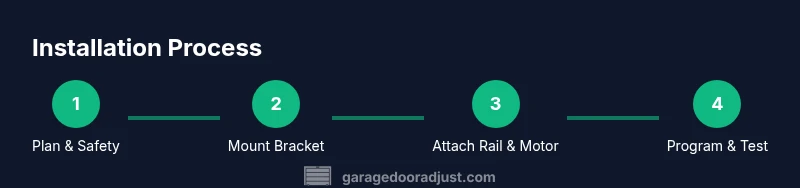
- 1
Plan and safety prep
Power down the circuit, remove the door from the springs if instructed, and clear the workspace. Validate door balance and measure available headroom. Confirm the lift path and ensure no obstacles exist along the rail line.
Tip: Double-check that the door is balanced before mounting to prevent binding. - 2
Mount the ceiling bracket and anchor points
Locate solid studs or joists, mark mounting holes, and install the wall-mount bracket according to the LiftMaster kit instructions. Use level to ensure bracket sits squarely. Tighten fasteners to manufacturer torque specs.
Tip: Use a stud finder to locate multiple anchors for even load distribution. - 3
Install transport rail and arm assembly
Attach the rail to the bracket or ceiling mount as per instructions. Align the arm with the door’s hinge carriage and ensure a straight, unobstructed path for the door to move.
Tip: Check rail alignment visually from several angles to confirm straightness. - 4
Mount the motor unit and attach the rail
Secure the LiftMaster motor unit to the wall, then attach the rail to the end of the motor housing. Verify there is no interference with lights, shelving, or ceiling hardware.
Tip: Leave enough clearance for wiring harnesses and cover plates. - 5
Wiring, sensors, and safety devices
Feed power to the unit through a dedicated circuit or GFCI outlet. Install door sensors and ensure the safety beams align with the door edge. Secure all wiring with cable clamps.
Tip: Keep power off during wiring and avoid pinching wires in joints. - 6
Program remotes, keypad, and test operation
Pair the remotes, program the wall control, and run a full test: door should move smoothly, sensors should stop at obstacles, and reverse on contact. Re-check limit settings and adjust as needed.
Tip: Test multiple cycle repetitions to ensure consistent performance.
Got Questions?
Is it safe to install a wall-mounted LiftMaster opener myself?
DIY installation can be safe with clear planning, proper tools, and strict adherence to the manufacturer’s instructions. If you’re unsure about wiring or structural mounting, hire a pro. Always prioritize safety and use protective gear.
DIY installation is possible if you follow the manual and take safety precautions. If uncertain about wiring, hire a pro.
Do I need special ceiling support or joists for mounting?
Yes, secure mounting requires solid joists or brackets rated for the door’s weight. Use appropriate anchors and follow the LiftMaster kit’s load specifications to prevent failure.
You need solid supports like joists and proper anchors to safely mount the unit.
Will this opener work with my existing garage door?
Compatibility depends on your door’s type, weight, and torsion system. Check the LiftMaster model’s compatibility guide and ensure mounting hardware aligns with the door’s hinge mechanism.
Compatibility depends on your door type and system; verify against LiftMaster guidelines.
What power requirements should I plan for?
Most wall-mounted LiftMaster models require a dedicated 120V circuit with GFCI protection. Do not piggyback onto a shared outlet. Follow local codes and the device’s manual.
Use a dedicated, GFCI-protected 120V circuit as instructed by the manual.
How do I program remotes and sensors?
Begin with the install manual’s pairing sequence for remotes, wall controls, and sensors. Test each device individually and recheck after any adjustment.
Follow the pairing steps in the manual and test each remote and sensor.
What should I do if the door reverses unexpectedly?
Check the safety sensors alignment and ensure no objects interfere with the beam. Verify that the door’s travel limits are set correctly and recenter if necessary.
If the door reverses, fix the sensors and adjust travel limits.
Watch Video
Quick Summary
- Plan safety-first before starting installation
- Mount brackets on solid framing and verify level alignment
- Program remotes and sensors after securing the motor
- Test thoroughly and maintain a regular maintenance routine