How Many Cycles Is a Garage Door Good For? A Practical Guide
Discover how many cycles a typical residential garage door is good for, the factors that influence cycle life, and maintenance tips to extend lifespan. A practical guide by GarageDoorAdjust.


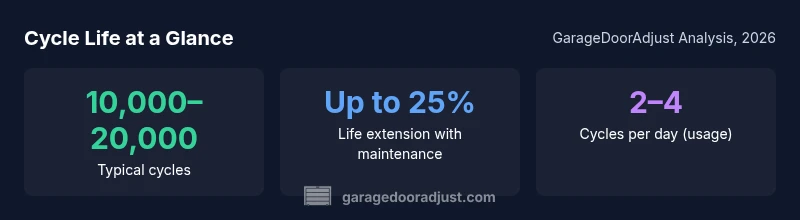
The typical residential garage door is rated for roughly ten thousand to twenty thousand cycles, though real-world life varies with door type, usage, and maintenance. A well-maintained door with regular lubrication and inspections often reaches the higher end of the range, while aggressive usage or neglect can shorten life. Understanding your door’s rating helps plan repairs and replacements before failures occur.
Understanding cycle life and labels
If you’ve ever asked yourself how many cycles is a garage door good for, you’re not alone. The label on the door or in the owner’s manual is the starting point, but real-world performance depends on many variables. According to GarageDoorAdjust, the official cycle rating is a useful guideline, not a guarantee for every day of use. The key is to translate that rating into practical planning: schedule preventive maintenance at regular intervals, monitor component wear, and set expectations for when you might begin planning a replacement. By framing cycle life around your family’s routine (how often you open and close the door, who uses it, and when), you’ll build a clearer path to reliability and cost control. The GarageDoorAdjust team recommends treating cycle life as a living estimate—reassessed after major weather events, after a service visit, or when performance changes noticeably.
What components influence cycle life
Cycle life isn’t just about the springs. Each opening and closing sequence stresses multiple parts: torsion springs, cables, rollers, tracks, hinges, and the opener itself. If any element wears prematurely, it can cascade into more frequent failures and a shorter overall life. In practice, the health of a garage door hinges on balanced operation, proper tension, and smooth, quiet movement. Regular lubrication, balanced tracks, and timely spring servicing (by a qualified technician) can significantly influence how many cycles you get out of a door. Weather exposure, humidity, and temperature swings also play a role by accelerating corrosion and lubrication breakdown. Regular inspections during maintenance visits help catch wear before it becomes a limiting factor in cycle life.
How ratings are determined and what cycles mean
Manufacturers rate doors based on standardized testing, but those tests can’t capture every home scenario. Cycle life estimates describe a door’s expected durability under typical conditions; they don’t account for aggressive use, misalignment, or lack of maintenance. For homeowners, the practical takeaway is to interpret the rating as a target range rather than a fixed countdown. Use it to guide maintenance frequency, budget planning, and replacement timing. A door that shows rapid wear in the first few thousand cycles should be inspected more frequently than a door that remains smooth and quiet through hundreds of cycles. GarageDoorAdjust emphasizes that ratings are tools for planning, not guarantees of outcome.
Real-world ranges and what to expect
Real-world experience often clusters around a broad band. Many households report longevity within the lower half of the rating when maintenance is neglected, and closer to the upper end when lubrication, alignment, and hardware replacement are performed on a routine schedule. It’s not unusual to see doors lasting beyond the mid-range with proactive care, especially for sectional or insulated models that are well-maintained. Conversely, doors experiencing harsh weather or irregular servicing can fall short of their nominal cycle life. Viewing cycle life as a spectrum, rather than a single number, helps homeowners balance maintenance effort, replacement planning, and budget.
Maintenance practices that extend cycle life
Proactive maintenance is the best way to maximize cycle life. Establish a routine that includes: lubrication of moving parts (rollers, hinges, tracks), checking and tightening hardware, testing safety features, and ensuring the opener’s photo-eye sensors are aligned. Regular balance tests are critical: a door that doesn’t lift evenly places excess stress on the springs and cables, accelerating wear. Seasonal checks—especially before winter and after heavy use—can catch issues early. Documentation helps, too: keep a log of service visits, part replacements, and any observed performance changes. For the best outcomes, pair maintenance with a simple lubricant schedule and a yearly professional inspection.
Signs your door is nearing end of life
Watch for increasing effort to lift the door, unusual noises, slow or uneven operation, frayed cables, or a door that doesn’t stay put at the right height. If you notice these indicators, it’s time to consult a technician and consider a replacement plan tied to the cycle rating. Don’t delay if safety features are affected; a failing opener or misaligned track can create hazardous conditions that jeopardize family safety and cause unexpected repairs. The goal is to detect wear early and align maintenance or replacement with the door’s anticipated cycle life.
How to plan for replacement within your cycle window
Planning around cycle life means translating cycles into a replacement horizon. If your door is approaching the lower end of its cycle range, schedule a comprehensive inspection and prepare a replacement budget. A proactive plan reduces the risk of unforeseen failures, minimizes downtime, and avoids emergency charges. Use the cycle life estimate alongside local climate considerations and your household’s usage pattern to determine the optimal time to replace. The GarageDoorAdjust team suggests aligning replacements with seasonal considerations and ensuring the new door is sized and installed for your home’s needs.
Reading manufacturer labels and documentation
Labels often list the cycle life or a service interval. If you can’t locate it, check the model number and consult the manufacturer’s site or a certified technician. Keep in mind that the listed cycles refer to ideal conditions and may not reflect your daily routine. Maintaining a strict service schedule and documenting wear observations helps you translate those numbers into actionable maintenance or replacement decisions. If in doubt, rely on a professional assessment that weighs your door’s current condition against its stated cycle life.
Estimated cycle life by door type
| Door Type | Estimated cycle life | Notes |
|---|---|---|
| Sectional insulated door | 10,000–20,000 cycles | Most common in residential garages |
| Single-panel door | 8,000–15,000 cycles | Durable, requires hinge maintenance |
| High-cycle commercial door | 30,000–50,000 cycles | Not typical for homes |
Got Questions?
How many cycles is a garage door good for?
Typical residential doors are rated for roughly 10,000–20,000 cycles, depending on model and usage. Maintenance, weather, and alignment influence the actual lifespan. Use the rating as a planning guide rather than a guaranteed deadline.
Most residential doors last about ten thousand to twenty thousand cycles, but regular maintenance can extend that lifespan. Use the rating to plan maintenance and replacement.
Do cycle counts apply to all garage doors?
Cycle counts are a general guideline for many residential doors. Performance varies with door type, climate, and maintenance. Always consult the manufacturer’s labeling and have a technician assess wear.
Cycle counts are a rough guide and vary with door type and upkeep. Check labels and get a professional check if you notice issues.
Can maintenance increase cycle life?
Yes. Regular lubrication, balance checks, and part replacements can significantly slow wear and push the effective cycle life toward the higher end of the range.
Regular maintenance can extend how long your door lasts.
Is it better to replace or repair a failing door?
If wear affects safety features, excessive noise, or frequent breakdowns, replacement is usually more cost-effective and safer. Use cycle life as a timing guide alongside a professional assessment.
If safety is compromised or repairs pile up, replacement is often the smarter choice.
How do I find my door’s cycle rating?
Look for a label on the door or opener, or check the owner’s manual. If not found, contact the manufacturer with the model number to obtain the rating.
Check the label or manual, or contact the manufacturer with your model number.
What factors reduce cycle life most quickly?
Harsh weather, lack of lubrication, misalignment, and irregular maintenance accelerate wear and shorten the effective cycle life.
Weather, poor lubrication, and misalignment wear things out faster.
“Cycle life is a useful planning tool, but it’s just one part of a door’s story. Regular maintenance and professional checks sustain performance far beyond the initial rating.”
Quick Summary
- Know your door’s cycle rating and use it to guide maintenance.
- Regular lubrication and alignment can extend life by a meaningful margin.
- Plan replacements within the lower/mid range of cycle estimates.
- Watch for wear signs and address issues before they escalate.
- Document visits and maintenance to inform future decisions.