Which Garage Door Rust: Causes, Prevention, and Repair Guide
Learn what causes rust on garage doors, how to assess rust severity, and when to repair or replace. Practical prevention tips from GarageDoorAdjust to extend door life and maintain safety.


Rust on a garage door signals corrosion that can threaten structural integrity if ignored. For minor surface rust, you can clean, prime, and repaint; for deep rust with pitting, replacement is typically safer and longer-lasting. This comparison weighs repair vs replacement across common scenarios.
Why rust forms on garage doors
In most climates, metal parts of a garage door are exposed to moisture, temperature fluctuations, and, in coastal areas, salt spray. The question homeowners ask most often is which garage door rust patterns indicate a serious problem. Understanding how rust starts helps you decide when to repair, repaint, or replace. According to GarageDoorAdjust, rust typically begins where the protective coating has chipped or worn away—along panel edges, seams, and around fasteners. When moisture reaches bare metal, iron oxide forms and gradually penetrates the surface, weakening the finish and inviting deeper corrosion. Over time, this can lead to increased stiffness, misalignment, and even structural wobble if the door is heavily weathered. Different door materials and finishes react differently; steel doors with epoxy or enamel coatings resist moisture better than uncoated alloys, but any compromise in the coating can accelerate rust. The goal is to limit exposure and halt advancement before pitting becomes irreversible. This section sets the stage for evaluating rust and choosing between repair and replacement.
Surface rust vs deep rust: definitions and signs
Surface rust is a shallow oxidation layer that remains on the metal surface and is typically removable with cleaning, sanding, and repainting. Deep rust penetrates the metal, causing pitting, thinning of panels, and potential loss of structural integrity. Signs include flaking paint, bubbling, rough pits, dull or darkened patches, and soft spots that wobble under pressure. Recognizing the difference matters: surface rust often responds to treatment and repainting, while deep rust may require panel replacement or entire door replacement. The distinction also influences maintenance plans and long-term costs. If you notice rust around fasteners or seams, inspect the substrate beneath the coating to confirm whether corrosion has breached the metal. A proactive approach with proper coatings can slow progression, but it is not a guaranteed fix for extensive rust. In all cases, document the extent of corrosion to guide decisions and future maintenance.
How to assess rust severity on metal vs wood doors
Assessing rust on metal doors focuses on coating integrity, depth of corrosion, and panel condition. Begin by visually inspecting painted surfaces for rust blooms, then gently scratch with a plastic scraper to test coating adhesion. If the coating lifts easily and reveals bare metal, the rust is likely more than superficial. Check for pitting by pressing with a keyed tool or screwdriver—if you feel a hollow or see metal loss, treat this as more serious. For wooden doors with metal components, evaluate the wood for swelling, rot, or water damage that accompanies rust; important notes include the interaction between moisture and wood and how it can amplify corrosion effects around cutouts, hinges, and tracks. In both cases, a professional assessment is valuable when corrosion reaches critical depth or when the door’s structural elements are at risk. Documentation and photos help guide decisions about whether to pursue repair or replacement and assist with warranty considerations.
Repair options: cleaning, rust converter, painting, and protective coatings
Starting with a thorough cleaning removes surface contaminants that accelerate rust. Use a rust remover or converter on light rust, following the manufacturer’s instructions. After converting or removing rust, rinse and dry completely before applying a rust-inhibiting primer. Then apply at least two coats of premium exterior enamel or powder-coated finish to seal the surface. For high-humidity environments, consider a coating that provides extra barrier protection and UV resistance. In some cases, applying a zinc-rich or epoxy primer can improve adhesion and corrosion resistance. Fasteners and hinges should be inspected and treated as well, with lubrication to prevent moisture buildup that invites new rust. Regular maintenance—every 1–2 years—helps keep the protective layer intact and slows future rust progression. Note that repairs address cosmetic and surface-level corrosion but may not fix structural damage; in that scenario, replacement may be warranted for safety and reliability.
When to repair vs replace: decision criteria and cost considerations
Deciding between repair and replacement hinges on rust depth, panel integrity, and the door’s overall condition. If corrosion is limited to surface rust with intact substrate and no significant warping or flex, repair can be economical and quick. When rust has caused deep pitting, panel delamination, or compromised structural alignment, replacement is often safer and offers longer-term reliability and warranty coverage. Consider downtime, energy efficiency, and insulation when evaluating value; a new door can improve curb appeal and insulation, potentially offsetting upfront costs over time. While precise prices vary by region and door type, expect repair-focused work to be substantially less upfront than full replacement, but with potential recurring costs if rust recurs. Consult a professional to obtain a detailed estimate and to verify whether the existing frame and tracks are still adequate for a new door. The GarageDoorAdjust team emphasizes balancing upfront costs with long-term durability and safety.
Preventive maintenance to slow future rusting
Preventing rust starts with controlling moisture exposure and maintaining coatings. Regularly wash the door to remove salt spray, dirt, and pooling water; dry thoroughly after cleaning. Inspect the coating for chips or scratches and repair promptly to prevent exposed metal. Use a rust-inhibiting primer and topcoat on any repaired areas, and consider applying a silicone or wax-based protective layer in harsh climates. Ensure proper drainage away from the door, fix any leaks in the garage, and adjust humidity levels if possible. Annual inspections help catch early signs of corrosion and allow for timely touch-ups. Maintain lubrication on moving parts to reduce friction and moisture accumulation. In environments with heavy exposure to salts or moisture, upgrade finishes or consider aluminum or galvanized steel doors, which resist rust more effectively than untreated steel. Overall, a proactive maintenance routine minimizes rust risk and extends door life.
Materials and finishes that resist rust
The choice of door materials and finishes significantly influences rust resistance. Galvanized steel and stainless steel doors benefit from a protective zinc coating that sacrificially protects against corrosion. Aluminum doors resist rust much better than steel in most environments, though they can dent more easily. Fiber-reinforced polymer doors offer excellent corrosion resistance and low maintenance, though at a higher upfront cost. For steel doors, high-quality powder coatings or enamel paints with UV inhibitors provide robust protection against moisture and salt exposure. Consider insulated doors with moisture barriers and high-quality weatherstripping to reduce condensation and humidity inside the garage. For best results, select finishes rated for exterior use and compatible with your climate, and verify warranty terms for coatings and corrosion protection. A well-chosen material and finish can significantly reduce maintenance needs and extend life span.
Real-world scenarios: checklists for homeowners
- Coastal or snowy climates: prioritize rust-resistant finishes and regular cleanings after storms.
- High humidity basements: ensure proper ventilation and moisture control.
- Older houses with thin coatings: inspect annually for chips and recoat as needed.
- Homes with attached garages: seal gaps that trap moisture and consider weather-stripping upgrades.
- DIY approach vs pro: small patches can be DIY, but major rust and panel replacement should involve a licensed installer.
- Warranty awareness: review coverage for coatings, rust-through, and structural integrity to understand replacement eligibility.
Use these checklists during seasonal maintenance; they help identify early signs and inform whether repair or replacement is the most cost-effective path.
Quick-start rust audit: a practical 10-step checklist
- Visually inspect all visible panels for rust patches, chips, and bubbling paint. 2) Tap gently with a plastic mallet to detect hollow sounds indicating rot. 3) Check hinges, tracks, and hardware for corrosion. 4) Clean the door with a mild detergent and dry completely. 5) Apply rust converter to small areas if needed, then prime. 6) Recoat with high-quality exterior paint or powder coat. 7) Inspect weatherstripping and seals for moisture ingress. 8) Test the door’s operation for alignment and smoothness. 9) Assess substrate integrity; seek professional assessment if you suspect deep rust. 10) Schedule a maintenance plan for yearly checkups.
The role of moisture and environment in rust formation
Environmental factors heavily influence rust formation on garage doors. Salt air, humidity, rainfall, and temperature fluctuations all contribute to protective coating degradation and metal oxidation. Coastal homes experience faster coating wear due to salt exposure, while inland homes with high humidity may see moisture-driven corrosion in hidden areas like panel joints or under weather seals. Proactive measures, including proper ventilation, moisture control, and choosing coated or aluminum doors, reduce rust risk. Regular inspections, early treatment, and timely coating repairs are essential in any climate. A comprehensive rust prevention plan is a long-term investment in safety, appearance, and energy efficiency.
Quick-start rust audit
Note: This section is integrated into the 10-step checklist above for quick reference. Use the list to perform your own rust audit and decide whether repair or replacement is the best path forward.
Comparison
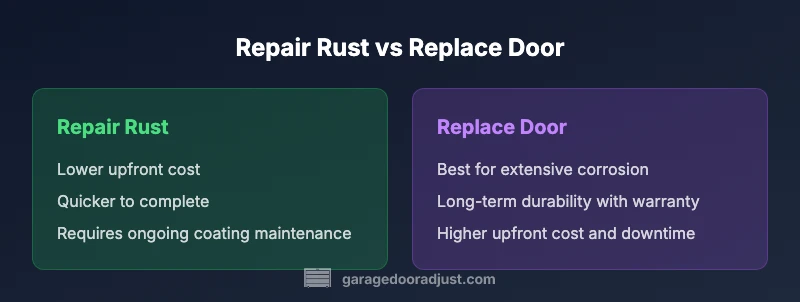
| Feature | Repair rust (surface/limited) | Replace door (full) |
|---|---|---|
| Initial cost (typical) | $50-$300 for surface repair | $800-$2,000+ for full replacement |
| Durability & longevity | Short-to-mid term protection with maintenance | Long-term durability with new parts and warranty |
| Aesthetics match | May require repainting to match existing look | New door ensures uniform appearance |
| Lead time / disruption | Minimal downtime with local repairs | Installation downtime during replacement |
| Maintenance needs | Regular touch-ups and coatings | Minimal maintenance after new installation |
| Best for | Minor rust with sound substrate | Extensive corrosion or structural damage |
Upsides
- Cost-effective fixes for minor rust
- Preserves original door and color
- Faster completion with less downtime
- Allows testing for deeper issues before committing to replacement
- Can extend door life with proper maintenance
Disadvantages
- Surface rust may reappear if underlying metal is compromised
- Repair doesn't fix structural damage in severe cases
- Patchwork DIY fixes can fail if not done correctly
- Replacement has higher upfront costs and longer downtime
Repair minor rust when substrate is sound; replace when extensive corrosion is present.
For most homes, start with a professional assessment of surface rust. If corrosion is superficial, repair and protect. If pitting or structural damage exist, plan replacement to ensure safety and long-term performance.
Got Questions?
What is the difference between surface rust and deep rust on a garage door?
Surface rust is a thin oxide layer that can be cleaned and repainted. Deep rust involves pitting and structural damage, often requiring panel replacement. Correctly identifying the depth guides repair vs replacement decisions.
Surface rust is shallow and fixable; deep rust may require replacement. Identifying the depth helps you decide between repair and replacement.
Can I repair rust on my garage door myself?
For small spots, you can use rust converters, primers, and exterior paint. Large areas or structural rust should be handled by a professional to ensure safety and warranty compliance.
Yes for small spots, but big rust should be done by a pro.
How do I assess rust severity on a garage door?
Look for flaking paint, deep pits, soft spots, and distortion. Tap panels to test integrity and inspect around seams and fasteners for accelerated corrosion.
Check for pits, flaking, and soft spots to gauge severity.
When should I replace rather than repair?
If rust causes deep pitting, warping, or structural weaknesses, replacement is usually safer and more cost-effective long-term.
Replace if corrosion compromises structure or safety.
What maintenance helps prevent rust on garage doors?
Regular cleaning, prompt repainting of chips, and applying rust-inhibiting coatings extend life. Keep seals dry and address moisture sources in the garage.
Keep it clean, dry, and protected with coatings.
Do different door materials resist rust differently?
Yes. Aluminum and galvanized steel resist rust better than untreated steel. Some fiber or polymer doors offer excellent corrosion resistance but may cost more.
Material choice matters for rust resistance.
Quick Summary
- Assess rust depth before acting
- Repair for surface rust; replace for deep corrosion
- Protect with quality coatings and maintenance
- Choose materials suited to climate to prevent future rust
- Document condition and keep a maintenance schedule