Rust on Garage Door: Diagnose, Fix, and Prevent
Identify, fix, and prevent rust on garage door. Safe DIY methods for light rust, when to replace, and a maintenance plan to extend door life and protect your opener.


Rust on garage door is most often caused by prolonged moisture exposure and worn protective coatings on steel components. Start with a quick fix: scrub the rust with a brush and a safe rust remover or white vinegar, then apply rust converter, prime, and repaint. If corrosion has penetrated panels or hardware, plan for replacement parts or a professional assessment. This simple approach buys time while you prepare a full plan.
What rust on garage door means for safety and longevity
Rust on garage door isn't just cosmetic. It signals ongoing corrosion that can weaken metal, hinges, and tracks, compromising operation and safety. According to GarageDoorAdjust, moisture intrusion paired with chipped protective coatings starts this process early. If ignored, rust spreads, leading to panel warping, impaired balance, and potential opener strain. Recognizing rust early helps you plan effective fixes before costly damage occurs. The longer rust is left unchecked, the more likely it is to affect the door’s alignment and the opener’s motor load, which can shorten the life of the entire system.
Understanding the real impact of rust on the door’s performance helps you decide between DIY fixes and professional replacement, ultimately saving time and money while keeping your garage secure.
Common causes of rust on garage doors
The most frequent culprits are moisture exposure, salt in the air, and failing coatings. Steel doors are particularly susceptible, while aluminum resists corrosion but can still rust around hardware when protective finishes fail. Chipped paint, poor drainage, and weather sealing gaps trap moisture in joints and crevices, accelerating rust. Regular exposure to rain and humidity over years compounds the problem, especially in coastal or humid climates. The GarageDoorAdjust analysis shows that consistent upkeep dramatically slows progression, but neglect accelerates it rapidly, even on newer doors. To stay ahead, inspect coatings at least twice a year and address any chips promptly.
Areas of a typical residential door most at risk
Rust often starts where metal meets moisture: the bottom weatherstrip, panel seams, hinges, and track brackets. The leading edge and corners collect water; frame rust can propagate inward causing warping. Hinges and rollers can seize as rust forms around pivot points. Keeping an eye on these hotspots helps catch issues before they affect operation. If you notice rust around the spring area or where weatherstripping compresses, treat those zones with extra care to avoid safety hazards during operation.
Safety and quick checks before you begin
Always unplug or disable power to the opener before inspecting hardware. Wear eye protection and gloves; avoid grinding on moving parts. Check for loose hinges, worn weatherstripping, and signs of rust under protective coatings. If you smell burning insulation or hear grinding, stop and seek professional help. Verify the door is balanced; a misbalanced door can magnify rust-related damage by stressing the opener motor and torsion components. Safety first keeps minor rust from turning into a major repair.
Step-by-step cleaning and treating light surface rust
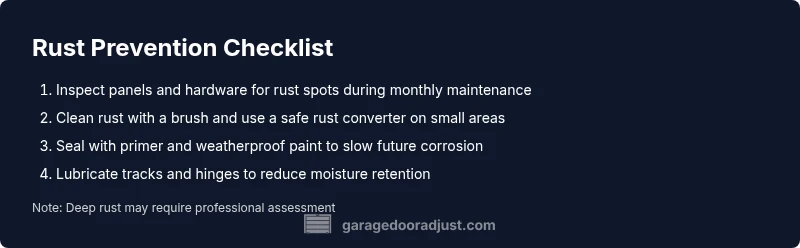
Begin with dry brushing to remove loose rust flakes, then wipe with a damp cloth. Use a rust remover or white vinegar on small spots, scrub until clean, and rinse. Apply a rust converter to neutralize remaining rust, then prime with a metal-safe primer and topcoat with weather-resistant paint. For tracks and hinges, remove stuck components and clean with a solvent before re-lubricating. Finish with a light coat of lubricant on moving parts to slow future moisture intrusion.
When to replace panels or hardware due to deep rust
If rust has penetrated beneath paint into the base metal, or if structural areas show pitting or thinning rails and panels, replacement is often more cost-effective than repair. Deep corrosion can compromise door alignment, balance, and safety, increasing load on the opener. In such cases, consider replacing affected panels, brackets, and springs and consult a pro to ensure proper sizing and installation. Remember that professional evaluation helps confirm whether the rust is surface-only or a sign of broader system wear.
Rust prevention and ongoing maintenance plan
Create a seasonal maintenance schedule that includes cleaning, drying, and inspecting for chips in coatings. Repaint vulnerable areas every few years and reseal weatherstripping to reduce moisture ingress. Use corrosion-resistant hardware and lubricants designed for metal-to-metal contact, especially near the hinges and rollers. Address any moisture sources near the door—poor grading, gutter overflow, or clogged downspouts—to prevent future rust buildup. A proactive plan keeps rust from sneaking back and extends the life of your door and opener.
Tools, supplies, and quick-start checklist
- Wire brush, stiff-bristle brush, microfiber cloth
- Rust remover or white vinegar, rust converter
- Metal primer and weatherproof topcoat
- Sandpaper (medium grit), painter’s tape, drop cloths
- Lubricant suitable for garage door hardware
- Safety gear: gloves, eye protection, mask
Following a simple, repeatable process reduces downtime and cost over the door’s life.
Steps
Estimated time: 60-90 minutes
- 1
Assess rust and safety baseline
Identify all rusted areas, note extent and depth, and ensure the area is safe to work on. Check nearby electrical components and ensure the opener is disconnected before you start.
Tip: Use a flashlight to catch hidden rust in shadowed corners. - 2
Gather tools and prep workspace
Collect brushes, rust remover, converter, primers, paints, sandpaper, and protective gear. Lay down drop cloths and ensure ventilation if using solvents.
Tip: Keep a dedicated toolkit to avoid cross-contamination with household cleaners. - 3
Remove loose rust and clean surfaces
Brush away loose rust and wipe down surfaces with a damp cloth. Dry thoroughly to prevent new moisture absorption.
Tip: Dry thoroughly before applying any chemicals to prevent trapping moisture. - 4
Apply rust converter and prime
Spread rust converter on affected areas according to product instructions, then apply a metal primer as a base for paint.
Tip: Wait for converter to cure fully before priming. - 5
Paint and seal the door
Apply exterior-grade primer and a topcoat suited for metal. Seal joints and hardware with weatherproof sealant if needed.
Tip: Use multiple thin coats for better adhesion and durability. - 6
Lubricate and test the system
Lubricate hinges, rollers, tracks, and springs after painting. Reconnect power and test door balance and opener operation.
Tip: Listen for unusual noises and stop if you notice binding. - 7
Set up prevention plan
Document maintenance steps and schedule, including inspections every season and touch-up painting as needed.
Tip: Keep a maintenance log to track rust prevention outcomes.
Diagnosis: Visible rust on garage door surfaces such as panels, hinges, or tracks
Possible Causes
- highMoisture exposure from rain and humidity causing corrosion on metal surfaces
- highChipped or worn protective coatings allowing moisture access
- lowSalt exposure near coastlines or from road salt
Fixes
- easyClean and neutralize rust with a rust remover or vinegar, then apply rust converter
- easySand, prime, and repaint with exterior-grade coatings to seal surface
- hardReplace severely corroded panels or hardware; consider a pro assessment for safety
Got Questions?
What is the most common cause of rust on a garage door?
Moisture exposure combined with chipped or worn protective coatings is the typical trigger for rust on steel doors. Coastal or humid environments accelerate this process, especially when maintenance is neglected.
Rust usually starts from moisture and damaged coatings, especially near joints and edges.
Can I remove rust without repainting the door?
Light surface rust can often be treated with rust remover and a fresh coat of primer and paint. Deep rust that penetrates the metal usually requires more extensive repair or replacement.
You can treat light rust, but deep rust may need replacement.
When should I replace panels or hardware due to rust?
If rust has compromised the metal’s integrity or warped panels, or if critical hardware is structurally weakened, replacement is recommended over repairs.
If the metal is seriously corroded, replacement is safer and more reliable.
Is rust dangerous to the garage door’s opener?
Rust can affect bearings and tracks, increasing resistance and potentially overloading the opener motor. If you notice unusual noises or jerky movement, stop and inspect further.
Rust can put extra strain on the opener; get it checked if you hear grinding.
How can I prevent rust from returning?
Keep surfaces clean and dry, seal joints, repaint at regular intervals, and store away from harsh salts or chemicals. Regular lubrication helps reduce moisture retention.
Regular cleaning and sealing are key to preventing rust from coming back.
Should I hire a professional for rust repair?
For extensive rust, structural concerns, or if you’re unsure about safety, it’s wise to hire a licensed technician to assess and repair.
If in doubt, call a professional to ensure safety and proper repairs.
Watch Video
Quick Summary
- Take action early to stop rust progression
- Choose the right primers and topcoats for exterior metal
- Replace severely corroded components when needed
- Prevent moisture intrusion to slow future rust
- Keep a maintenance schedule to extend door life