Weather Strip Garage Door: A Complete How-To Guide
Learn how to choose, install, and maintain weather strip garage door seals to stop drafts, save energy, and keep pests out. This educational how-to from GarageDoorAdjust walks homeowners through every step, with tips, safety notes, and maintenance guidance.


Install or replace a weather strip on your garage door to stop drafts, cut energy losses, and improve comfort. This guide covers choosing the right strip, measuring, removing old seal, and installing a new weather seal with a quick, safe process. You'll learn which type suits steel vs wood doors, how to prep the door, and how to test the seal after installation.
Why weather strip garage door matters
According to GarageDoorAdjust, weather strip installation is a low-cost upgrade that dramatically reduces drafts, improves comfort, and lowers energy bills. A properly sealed garage door stops cold air from entering during winter and keeps warm air from escaping. It also helps keep dust, pests, and moisture from entering the garage and can reduce noise from wind and door movement. In addition to energy savings, a good seal can extend the life of the door by reducing temperature-related warping and sticking. This section explains why weather strip matters and what to expect when you upgrade.
Types of weather strips and how to choose
There are several common types of weather strips used on garage doors: vinyl bulb (attached to the door bottom), foam-in-place segments, rubber compression seals, and perimeter jamb gaskets. Vinyl bulbs are durable and compress well; foam seals are inexpensive but can wear quickly in hot climates; rubber seals are flexible and wear-resistant; jamb gaskets seal the sides when the door is closed. Choose based on door material, climate, traffic, and whether you need a bottom seal only or a full perimeter seal. For most residences, a vinyl bottom seal plus side jambs provides the best balance of performance and cost. In all cases, ensure the strip sits flush against the concrete threshold and is not torn or misshapen.
How to assess your door and plan the upgrade
Start by inspecting the current seal: is it cracked, compressed, or torn? Measure the door width and the groove or contact surface to choose a strip that fits without interfering with movement. Check for gaps at the bottom corners and along the sides. If you notice water leakage during rain, plan for a heavier-duty seal or add a threshold seal. This planning stage reduces waste and ensures you select strips compatible with weather, climate, and door material. Write down the measurements and the type of strips you prefer to help procurement.
Measuring, cutting, and preparing materials
Measure the full width of the door and the groove depth for the bottom seal. Unroll the strip on a flat surface and mark where you need to cut. Use a sharp utility knife or scissors to trim cleanly; account for corners. If your seal is adhesive-backed, peel back a small section at a time during installation to maintain control. Clean the door edge and groove with a mild degreaser and allow it to dry completely before applying the new seal.
Installing the bottom seal: step overview
Place the new bottom seal along the door bottom, aligning it with the edge and ensuring it sits evenly from end to end. If your seal sits in a groove, press it into place with even pressure along the entire width. Do not compress too much; the door must seal without binding. If the bottom edge has a threshold, confirm that the seal clears it when the door closes.
Sealing jambs, sides, and top edges for full coverage
Perimeter seals on the sides and top help eliminate drafts that sneak in through gaps around the door frame. Apply or fasten side jamb seals, then seal along the top using the same method. Tape the seal in place with masking tape while adhesive sets. Ensure there are no gaps between the strips and the door frame, and that the seals are not obstructing the tracks.
Testing and adjustments after installation
Close the door slowly to verify the seal contact across the bottom, sides, and top. Look for pinholes or gaps and listen for air leaks around the frame. If you feel resistance or hear rubbing, re-check alignment and adjust the seal position. This is the moment to ensure smooth operation without binding or excessive drag.
Maintenance, care, and common problems
Clean the seals regularly with mild soap and water to prevent buildup that can degrade adhesion. Inspect for cracks, tears, or compression and replace worn sections promptly. Common problems include seal detachment, hardening of foam, and misaligned bottom seals. When replacing, match the material thickness to the door to maintain proper closure.
Seasonal considerations and energy savings
In winter, a well-sealed door reduces heat loss; in summer, it helps keep conditioned air inside. Temperature swings can cause seals to become brittle or soft; inspect after extreme weather. A properly installed weather strip reduces energy bills by reducing load on HVAC systems and may extend the life of your garage door.
Replacement timelines and upgrading advice
Most homeowners replace weather strips every few years depending on climate and usage. If you notice persistent drafts, water leaks, or torn sections, plan a full replacement rather than patching. When upgrading, consider a perimeter seal kit that includes bottom, side, and top components for a complete, lasting solution. This comprehensive approach ensures consistent performance year-round.
Tools & Materials
- Weather stripping (vinyl, foam, or rubber)(Choose based on door type and climate; bottom-seal or full-perimeter options may be needed.)
- Measuring tape(For accurate length and groove width.)
- Utility knife(For clean, straight cuts.)
- Scissors(Alternative cutting tool for some materials.)
- Marker or pencil(Mark cut lines and alignment points.)
- Adhesive or sealant (if required by strip type)(Use only if your strip requires glue or adhesive backing.)
- Cleaner/degreaser(Clean surface to ensure good adhesion.)
- Masking tape(Hold strips in place during adhesive setting.)
- Gloves(Protect hands during cutting and installation.)
Steps
Estimated time: 45-60 minutes
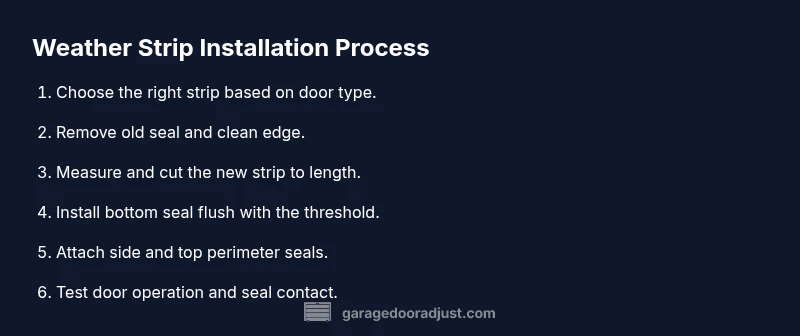
- 1
Inspect door and choose strip type
Assess the current seal and door material to determine whether a vinyl bulb, foam, or rubber perimeter seal best fits your garage door and climate. This choice affects durability and sealing performance.
Tip: Document the chosen type for future maintenance and ensure it matches your door design. - 2
Remove old weather strip
Carefully pry up the old seal from the door edge using a plastic scraper or putty knife, taking care not to scratch the door finish. This creates a clean surface for the new seal.
Tip: Take a photo of the old setup to guide proper placement of the new strip. - 3
Clean the door edge and groove
Wipe down the edge and groove with a mild degreaser to remove oils and dirt that can hinder adhesion. Allow to dry completely before proceeding.
Tip: A dry, clean surface ensures the new seal adheres or seats properly. - 4
Measure and cut to length
Measure the full width of the door and mark the new strip. Use a sharp utility knife or scissors to cut true, accounting for corners and any irregularities.
Tip: Cut slightly longer than needed, then trim for a precise fit. - 5
Install bottom seal flush with threshold
Place the bottom seal along the base, ensuring it sits evenly across the width and clears the threshold without binding when the door closes.
Tip: Avoid over-compressing; a loosely seated seal will be ineffective. - 6
Attach side/top perimeter seals
If using perimeter seals, apply along the jambs and top edge. Press evenly and secure with fasteners or adhesive as required by the product.
Tip: Use masking tape to hold in place while adhesive cures. - 7
Secure with adhesive or fasteners
Follow manufacturer directions for the chosen seal; apply evenly, avoiding air pockets that can create gaps.
Tip: Work in sections to maintain consistent contact. - 8
Test door operation and seal contact
Close and open the door slowly to ensure full contact along bottom and sides. Check for rubbing, binding, or gaps and adjust as needed.
Tip: If you detect drag, reposition the seal slightly away from the track. - 9
Final inspection and cleanup
Wipe away excess adhesive, check for wear, and note any future maintenance points. Keep spare seals for quick replacements in the future.
Tip: Record the installation date for future reference.
Got Questions?
Can I install weather strip garage door myself?
Yes. Most homeowners can replace or install weather strip with basic tools by following proper safety guidelines and the manufacturer’s instructions for the specific strip type.
Yes, you can do this yourself with basic tools; follow the steps in the guide for best results.
What is the best material for weather strips on a metal garage door?
Vinyl bulb seals are a common choice for metal doors because they provide a durable, compressible seal that handles temperature changes well.
Vinyl bulb seals are a popular choice for metal doors due to their durability and good compression.
How do I know if the weather strip needs replacement?
Look for cracks, tears, significant compression, or gaps that allow drafts or moisture to pass through. If the seal no longer contacts the door evenly, replacement is likely needed.
If you see cracks or big gaps, it’s time to replace the seal.
Will new weather stripping reduce noise from the door?
Yes, replacing worn seals can reduce rattling and wind noise by minimizing air movement around the door frame.
Yes, a good seal helps cut down on noise.
How often should I replace weather strips?
Inspect yearly and replace worn or damaged strips as needed. Climate and door use influence lifespan.
Inspect yearly and replace when worn.
Do weather strips stop water leaks from rain?
They help reduce light rain and wind-driven leaks, but heavy rain or flooding may require additional sealing methods and proper drainage.
They help with light leaks but may not stop heavy water intrusion.
Watch Video
Quick Summary
- Choose the right seal type for your door and climate.
- Measure precisely; cut once for a clean fit.
- Install flush with the threshold for maximum effectiveness.
- Test and adjust to ensure smooth door operation.
- Perform annual inspections and plan maintenance before leaks develop.