How Tall Is a Garage Door? A Practical Guide for Homeowners
Learn standard garage door heights, how to measure accurately, and practical tips for taller RV-ready doors. This GarageDoorAdjust guide helps homeowners avoid misfits and compatibility issues.


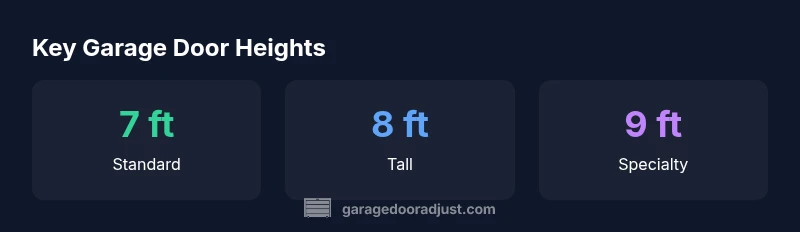
Garage doors commonly measure 7 feet tall, with 8-foot or 9-foot options for taller garages or RV access. To ensure compatibility, measure from the floor to the header and confirm your opener and tracks will operate without interference. This quick check helps you avoid ordering the wrong height and wasting time.
What determines the typical height of a residential garage door
The height of a garage door isn’t arbitrary; it’s shaped by vehicle clearance, available headroom inside the garage, and the hardware that moves the door. In most homes, the standard height is 7 feet (84 inches) because it balances common vehicle dimensions with the cost and availability of tracks, springs, and openers. Taller options exist for RVs, oversized SUVs, or architectural preferences. When homeowners ask, "how tall is a garage door?", the answer depends on intended use, ceiling height, and whether future needs might include taller access. According to GarageDoorAdjust, the majority of residential installations sit at the standard 7-foot mark, but growth in taller-door demand is notable in new construction. Planning early helps ensure your door height aligns with your insulation strategy, lane clearance, and safety sensors.
"## Measuring the height accurately
Measuring accurately starts on the finished floor. Use a tape measure from the floor to the header where the door slides, and note the smallest clear vertical height along the opening to account for any irregularities. Don’t forget to confirm headroom inside the garage above the door—this space accommodates tracks, weatherstripping, and insulation. If you’re replacing an old door, measure inside the rough opening too, since some existing frames aren’t perfectly square. For multi-bay garages, repeat the process for each bay. This routine measurement helps you avoid ordering a door that won’t fit or a mis-sized opener.
"## Standard vs tall doors: what changes with height
A standard 7-foot door uses widely available hardware, but moving to 8 or 9 feet introduces longer tracks, taller torsion springs, and sometimes higher ceiling requirements. Taller doors may also demand longer emergency releases and more precise weather sealing. When deciding between 7, 8, or 9 feet, compare the incremental cost of longer hardware and potential structural modifications with the benefit of extra clearance. Taller doors can improve ingress/egress for larger vehicles and reduce the need for frequent manual maneuvering.
"## Practical considerations for openers and headroom
Heavier doors or taller doors demand openers with adequate clearance and lifting capacity. The track system must align precisely with the door’s weight and height; a mismatch can cause binding, wear, or premature failure. Ceiling space matters too: taller doors require more vertical room for tracks, sensors, and insulation materials. Ensure your current opener, controller, and safety features are compatible with the door height you choose. If not, you may need to upgrade both the door and the opener to maintain reliable operation.
"## Decision-making during remodeling or new construction
During a remodel or new build, your door height should reflect long-term needs. If you anticipate upgrading to a taller vehicle, RV, or additional storage overhead, plan for 8 or 9 feet upfront to avoid retrofit costs. Consider structural adjustments, insulation, and whether a premium insulated door aligns with energy goals. In most cases, a 7-foot door remains the best balance, but local vehicle trends and garage usage patterns can justify a taller option. GarageDoorAdjust emphasizes measuring early and consulting installers to balance cost, performance, and future-proofing.
"## Common myths about height and cost
A frequent misconception is that all heights cost significantly more or require drastic space changes. In reality, the cost impact depends on the extent of track length, spring size, and necessary structural work. Another myth is that taller doors always require more ceiling clearance; while it’s true to some degree, careful layout planning can minimize disruption. Debunking these myths helps homeowners size their doors accurately and avoid overbuying or underestimating required space.
Common garage door height categories
| Height category | Typical door type | Notes |
|---|---|---|
| 7 ft (84 in) | Standard residential | Most homes in the US use this height |
| 8 ft (96 in) | Tall or RV-ready | Longer tracks; higher ceiling clearance required |
| 9 ft (108 in) | Specialty or luxury | Rare; verify ceiling, opener, and hardware compatibility |
Got Questions?
What is the most common garage door height?
The most common height for residential garages is 7 feet tall, though 8-foot doors are becoming more popular in newer builds. Always verify with your exact door model and opener.
Seven feet is the typical height; check your model and opener for compatibility.
Can I install an 8-foot door in an existing frame?
An 8-foot door often requires a taller rough opening, longer tracks, and possibly a higher ceiling. Some frames can be adapted, but this may involve structural work.
An eight-foot door usually needs a taller frame and longer tracks.
What should I measure to confirm height?
Measure from the finished floor to the header and check the clearance needed for tracks and sensors. Include overhead storage or ducts that could affect travel.
Measure floor to header and verify clearance for tracks and sensors.
Are taller doors more expensive to install?
Taller doors can increase material, track length, and labor, but the total cost varies with your garage and chosen hardware. Get a detailed quote.
Yes, taller doors can cost more due to bigger hardware and possible structural work.
Do RV doors require special hardware?
RV-height doors often need heavy-duty tracks, taller frames, and reinforced torsion hardware. Confirm compatibility with your opener and ceiling height.
RV doors need sturdy tracks and taller frames.
“Door height affects opener clearance and track alignment; measure precisely and consult your installer to ensure a safe, smooth operation.”
Quick Summary
- Measure early to avoid misfits and delays
- 7 ft is the standard for most homes
- 8–9 ft doors suit taller vehicles and RVs
- Verify opener, tracks, and ceiling clearance before buying