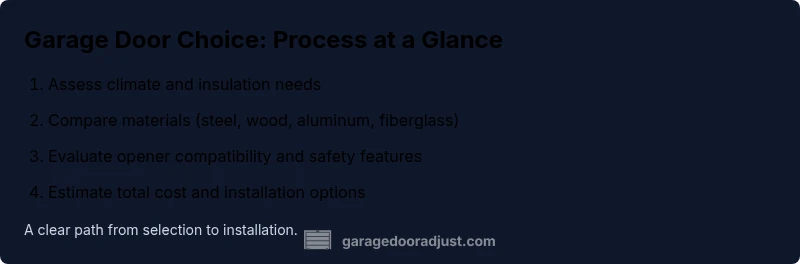
Garage Door Choice: A Step-by-Step Guide
A practical, step-by-step guide for homeowners to select the best garage door based on climate, insulation, style, and budget. Learn material options, energy efficiency, opener compatibility, and installation considerations.


Choosing the right garage door is a balance of durability, energy efficiency, and curb appeal. By evaluating climate, insulation, materials, and opener compatibility, you’ll create a door that saves energy, fits your home’s style, and lasts for years. According to GarageDoorAdjust, a thoughtful garage door choice today reduces maintenance headaches tomorrow. This guide walks you through decisions from measurement to installation.
Why the garage door choice matters
The term garage door choice isn’t just about aesthetics; it defines daily usability, energy performance, security, and long-term maintenance. A well-chosen door can reduce heat loss, dampen street noise, and boost curb appeal. It also determines how easily you operate the door with an opener, what kind of warranty you can expect, and how much you’ll invest upfront versus over the door’s life. According to GarageDoorAdjust, homeowners who start with a clear set of priorities—climate, budget, and desired features—tend to make faster, more confident decisions. This emphasis on the right door design helps homeowners avoid common regrets like choosing an expensive option that isn’t well suited to their climate or choosing a design that clashes with the home’s façade. The goal of this guide is to help you navigate the many options with confidence and clarity so you can optimize comfort, security, and value.
Core factors to weigh when selecting a door
When you begin with the big picture, you’ll save time and avoid missteps. Start by identifying four pillars: climate and weather exposure, budget and total cost of ownership, performance and safety features, and home style alignment. Consider the door’s energy performance, potential maintenance, and how it works with your existing opener or any smart-home setup. Measure your opening accurately, note any obstructions, and decide whether you prefer a classic or modern look. A strong plan will map out which materials and insulation levels best fit your environment and daily routines. By prioritizing these factors, the garage door choice becomes a structured decision rather than an impulse pick.
Material options: steel, wood, aluminum, fiberglass, and composites
Material choice drives durability, weight, maintenance, and price. Steel doors offer strength and low maintenance but can dent more easily; wood doors provide timeless beauty but require regular upkeep; aluminum doors resist corrosion and are lightweight; fiberglass doors resist warping and can mimic wood; composites blend several materials for durability and efficiency. In general, price and upkeep rise from basic steel to high-end wood or composite doors. The GarageDoorAdjust team notes that there isn’t a single best material for every home; the right pick depends on climate, exposure, and how much maintenance you’re willing to perform. For many homeowners, a mid-range steel or fiberglass option paired with good insulation delivers a reliable balance of cost and performance. When comparing manufacturers, look for consistent warranties and local availability of parts and service.
Insulation and energy efficiency: why R-value matters
Insulation limits heat transfer and reduces energy loss, especially in extreme climates. An insulated garage door helps temper indoor temperatures, reduces the load on your HVAC system, and can improve comfort when you work in the garage year-round. The effectiveness of insulation depends on the door’s construction, panel design, and sealing around the edges. The GarageDoorAdjust Analysis, 2026 highlights that insulated doors can meaningfully improve energy performance, particularly in attached garages or spaces adjacent to living areas. Look for doors with well-sealed edges, dense core materials, and an appropriate insulation value for your climate. While higher R-values generally come with higher costs, the energy savings over time can offset the initial premium, especially in homes with poorly insulated garages or large door panels.
Design, durability, and curb appeal
Your door’s design should complement your home’s architecture—whether you lean traditional, modern, or something in between. Panel styles, window inserts, and hardware accents can dramatically alter visual impact. Beyond looks, consider longevity: thicker panels, reinforced tracks, and corrosion-resistant hardware improve durability and reduce maintenance. If you expect heavy use or harsh weather, prioritize doors with robust seals, weatherstripping, and wind-load ratings. A well-chosen design not only enhances curb appeal but also retains resale value and reduces energy costs by minimizing drafts around the door edges.
Opener compatibility, safety features, and smart options
Openers must be matched to the door’s weight and width. Verify shaft height, track alignment, and mounting options to ensure smooth operation. Prioritize safety features such as auto-reverse sensors, tamper-resistant hardware, and secure photoelectric beams. Smart options—like remote activation, activity history, and compatibility with voice assistants—add convenience but should be balanced with reliability and privacy considerations. If you’re pairing a new door with a smart opener, confirm compatibility with your existing home automation platform and check for firmware updates and security features.
DIY vs professional installation: deciding when to hire
A lot depends on door weight, track complexity, and whether you’re replacing the opener. While some homeowners with mechanical skills can handle simple aftermarket kits on light doors, most full door replacements involve heavy lifting, precise alignment, tensioned springs, and potential danger. If you’re unsure about the steps, have a professional install to avoid injury and warranty voids. For the average two-car door, plan for professional installation unless you have substantial experience with frame work and door systems.
Quick-start checklist for your garage door choice
- Measure rough opening (width and height) and note obstructions. - List climate concerns (heat, cold, humidity, salt air). - Decide on material priorities (durability, maintenance, look). - Determine insulation needs based on energy goals. - Check opener compatibility and safety features. - Set a budget for door and installation. - Compare warranties and local service options. - Schedule a professional evaluation if needed.
Market context and future trends
The market for residential garage doors is evolving with better insulation, sustainable materials, and more efficient openers. Homeowners increasingly value energy savings, quiet operation, and curb appeal. Industry sources point to improvements in foam cores, weather sealing, and a wider range of stylistic options. The GarageDoorAdjust team tracks these trends to help homeowners anticipate maintenance needs, stay within budget, and select a door that remains reliable over many years. The emphasis remains on balancing performance, aesthetics, and cost.
Final verdict and next steps
Choosing a garage door is a collaborative process between your budget, climate, and design goals. The GarageDoorAdjust team recommends starting with a clear set of criteria, verifying measurements, and prioritizing insulation and safety features. Engage a qualified installer if you’re unsure about installation or springs, and choose a door with a solid warranty and accessible parts network. With the right criteria in place, your garage door choice will serve you well for years to come.
Tools & Materials
- Tape measure(to measure rough opening accurately (width and height))
- Carpenter’s level(to verify square and plumb surfaces during fitment)
- Safety glasses(protect eyes when removing trim/hardware)
- Ladder or scaffold(reach high sections safely)
- Socket/wrench set(tighten and adjust mounting hardware)
- Screwdrivers (Phillips/flathead)(remove and install fasteners)
- Utility knife and weather stripping(for final sealing and trim adjustments)
- Replacement springs/hardware kit(only if replacing components; springs require professional handling)
- Insulation kit or weather seal kit(upgrade insulation or seal gaps for energy efficiency)
Steps
Estimated time: 4-8 hours total
- 1
Measure the opening and define goals
Accurately measure width, height, and any obstructions. Document your priorities: insulation level, durability, look, and how the door will be used day-to-day.
Tip: Measure in multiple spots (top, middle, bottom) to catch any irregularities. - 2
Assess current hardware and structure
Inspect tracks, rollers, springs, and mounting points. Note any corrosion or wear that could affect a replacement, and identify whether framing is square.
Tip: A small misalignment can cause binding; plan to correct before installing a new door. - 3
Shortlist materials and insulation needs
Compare steel, wood, aluminum, fiberglass, and composites. Decide on insulation level and panel design based on climate and energy goals.
Tip: If you live in a climate with extreme temperatures, prioritize insulation and weather sealing. - 4
Check opener compatibility and safety features
Verify current opener compatibility with the new door and note required horsepower, mounting, and balancing considerations. Plan for safety features like auto-reverse and photo-eye sensors.
Tip: Smart openers add convenience but ensure firmware and security settings are up to date. - 5
Budget planning and warranty checks
Set a budget that includes door material, insulation, hardware, and installation. Compare warranties and service coverage for long-term value.
Tip: Choose a reputable brand with readily available parts in your area. - 6
Decide on DIY vs professional installation
Evaluate your experience with heavy door systems. Consider hiring a pro for safe installation and warranty integrity.
Tip: If you’re in doubt, schedule a professional quote before purchasing parts. - 7
Schedule installation and prepare the site
Clear the workspace, protect surrounding surfaces, and arrange for helper(s). Confirm access to electrical outlets if using an electric opener.
Tip: Have a second person assist with heavy lifting and alignment.
Got Questions?
What is the best material for a garage door?
There isn’t a universal best material. Steel is durable and affordable, wood offers classic style but requires maintenance, fiberglass resists warping, and composites balance durability with insulation. Choose based on climate, budget, and desired look.
There isn’t one best material for all homes. Pick based on climate, budget, and how much maintenance you’re willing to do.
Is an insulated door worth the cost?
Insulated doors reduce heat transfer, improve comfort, and can lower energy costs, especially in attached garages. The payoff depends on climate, insulation quality, and how often you use the space.
Yes, insulated doors help with temperature control and energy savings, especially in attached garages.
What maintenance does a garage door need?
Regular lubrication of moving parts, periodic balance checks, and annual inspection of springs and tracks help extend door life. Replace weather seals as needed to prevent drafts and moisture intrusion.
Keep moving parts lubricated, check balance, and inspect tracks yearly.
Should I replace the opener when changing the door?
If your opener is outdated or incompatible with a new door, upgrade to a compatible, safer model. This often improves reliability and safety, and it can add smart features.
Consider upgrading the opener if it’s old or not compatible with the new door.
How do I measure for a new garage door?
Measure width and height of the opening at multiple points, check for square corners, and note any obstructions. Use these measurements when selecting a door size and order.
Measure width, height, and check for square corners to size the door correctly.
Watch Video
Quick Summary
- Define climate, budget, and style early
- Choose insulation based on energy goals
- Ensure opener compatibility and safety features
- Compare warranties and long-term maintenance