Garage Door 8 Feet: Diagnosis, Repair, and Installation
Learn how to diagnose, repair, and install a garage door 8 feet tall. This expert guide covers opener compatibility, track extensions, springs, insulation, and essential safety for homeowners.


A garage door 8 feet tall is a common tall option for many homes and requires careful compatibility checks, longer tracks, and stronger opener torque. This quick guide distills the essentials for homeowners: how to verify clearance, choose compatible openers, extend tracks, and maintain safety for a taller door.
Why a garage door 8 feet matters
An 8-foot-tall door is a common choice for full-size single-car and some two-car garages, offering extra overhead clearance for tall vehicles, ladders, and oversized gear. The height influences all downstream decisions—from opener torque to track length and safety protocols. According to GarageDoorAdjust, the height also affects insulation strategies and weather sealing because taller doors can exacerbate vertical gaps if the header or jambs aren’t perfectly aligned. The GarageDoorAdjust team found that homeowners often underestimate the importance of extended rails and higher-torque openers when replacing a standard 7-foot door with an 8-foot variant. Planning ahead reduces calls to a professional and minimizes installation delays.
Key takeaway: treat the 8-foot measurement as a material constraint that changes hardware choices and safe operating procedures. This isn’t just a longer door; it’s a taller, heavier system that demands careful alignment and testing.
Compatibility essentials for an 8-foot door
Taller doors impose unique compatibility requirements. The opener must supply enough torque to raise a heavier door, and the tracks plus springs must be rated for the extra moment. Extension springs vs. torsion springs each behave differently when paired with an 8-foot-tall panel. If you’re retrofitting from a 7-foot door, expect that rail length will need adjustment and possibly new brackets. You should also verify ceiling clearance for the motor unit and ensure your sensor wiring doesn’t extend beyond safe zones.
Practical note: measure the door height, width, track height, and the ceiling height before purchasing parts. When in doubt, consult a professional for a precise rail-length calculation and spring-transit assessment. This ensures you don’t over-torque the opener or compromise safety features.
Choosing the right opener for an 8-foot door
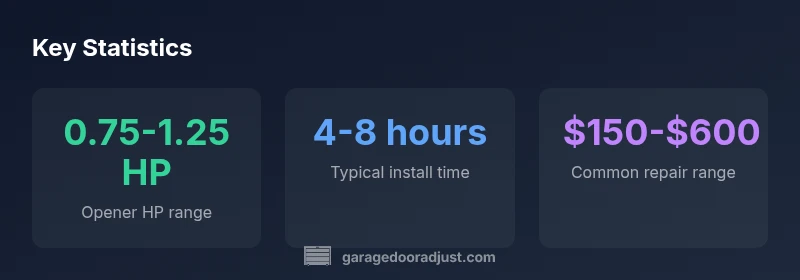
Opener selection hinges on door weight and height. A typical residential setup uses a 1/2 HP to 1 1/4 HP chain-drive or belt-drive unit for standard doors; for an 8-foot door, you’ll often want the upper end of that range or a model specified for heavy doors. Torque, speed, and security features all matter. Check that the rail length is compatible with your ceiling height. Consider smart features, battery backup, and sensor placement to maintain safety protocols during power outages and in dim environments.
Installation considerations for 8-foot doors
Installation becomes more complex with increased height. Longer rails require precise vertical alignment and robust header installation to prevent binding. You’ll likely need a longer torsion spring or a stronger extension-spring configuration, depending on your system. Ensure the track sections are properly lubricated and aligned to avoid skewing. A level subfloor and plumb jambs reduce the risk of door binding when opening and closing. If you’re upgrading from a 7-foot system, factor in additional bracketry and possibly a wider door track.
Bottom line: precise measurement, correct hardware, and careful mounting are non-negotiable for reliable operation of an 8-foot door.
Maintenance tips for 8-feet doors
Regular maintenance includes balancing the door, lubricating moving parts, and testing safety features. A tall door may feel heavier to lift; recheck balance by disconnecting the opener and manually raising the door halfway to see if it stays put. Lubricate rollers, hinges, and track joints with a light silicone-based lubricant. Inspect springs and cables for wear, and replace them only with compatible, code-approved parts. Periodic checks for weather-stripping gaps help keep energy costs down, especially with larger door panels that might create more thermal bridges.
Common problems and quick fixes
If the door hesitates during ascent or lowers unevenly, the issue could be an out-of-balance spring, misaligned tracks, or damaged rollers. Common fixes include tightening hardware, realigning tracks, and lubricating wheels. For safety concerns like sudden reversals, test the auto-reverse function and sensor alignment. Do not attempt spring replacement unless you’re trained; 8-foot doors carry higher spring tension and can cause serious injury if mishandled.
Insulation and weatherization for taller doors
Height amplifies heat transfer risks, so insulation and weather-stripping are more critical for 8-foot doors. Use door insulation kits designed for tall panels and seal the bottom corners to reduce drafts. Inspect the header seal and side jambs for gaps and consider upgrading to a higher R-value option for the door itself. A properly insulated door reduces energy use and improves comfort in attached garages, especially in climates with extreme temperatures.
Cost ranges and time estimates
Budget for a mid-range 8-foot door job by looking at parts plus labor. Typical repair and upgrade projects can fall within a broad range, so prepare for a few scenarios. If you’re replacing a motor, track, and springs together, costs increase and timing may extend. For homeowners, a DIY approach might save money but increases risk if you lack the right tools and safety equipment. Always obtain multiple quotes and verify warranties on parts and labor.
Quick setup checklist
- Measure height, width, and ceiling clearance accurately.
- Confirm rail length and spring type compatibility for 8-foot doors.
- Verify opener horsepower and torque for the door weight.
- Check safety sensors and auto-reverse function.
- Inspect weather-stripping and insulation quality.
- Test balance with the opener disconnected and perform a manual safety test.
- Schedule a professional inspection if you encounter binding or unusual noise.
8-foot door compatibility data
| Aspect | Typical Range | Notes |
|---|---|---|
| Door Height | 8 feet | Standard for tall residential doors |
| Door Width Options | 8-10 feet | Wider doors need longer tracks |
| Opener Horsepower | 0.5-1.25 HP | Residential range for tall doors |
| Rail/Track Considerations | Longer rails often needed | Professional alignment recommended |
Got Questions?
What is the standard height of a residential garage door?
Most homes use a 7-foot-tall door; an 8-foot option is considered a taller variant that requires different hardware and setup.
Most homes have 7-foot doors; eight-foot doors require taller tracks and more torque.
Can I install an 8-foot door without upgrading the opener?
Often you need a higher-torque opener or longer rails to accommodate the extra height and weight of an 8-foot door.
You may need a higher-torque opener or longer rails for an 8-foot door.
What maintenance steps are essential for an 8-foot door?
Regular balance checks, lubrication of moving parts, and safety-reversal tests help keep an 8-foot door operating safely.
Balance checks, lubrication, and safety tests are essential.
How long does installation typically take?
DIY installation for an 8-foot door can take 4-8 hours depending on skill and the existing structure; professional installs may be quicker.
Plan for a half to full day for DIY, shorter with a pro.
Are there safety concerns unique to 8-foot doors?
Yes. Taller doors involve heavier springs and higher tension; maintain a safe work area and never bypass safety sensors.
Yes—heavier springs mean higher tension and extra caution.
What are typical costs for major repairs on an 8-foot door?
Costs vary by parts and labor, commonly ranging from a few hundred dollars to several hundred for substantial repairs.
Costs can range from a few hundred dollars up to more for major repairs.
“An 8-foot garage door adds height flexibility but demands careful compatibility checks, longer rails, and precise balance to ensure safe operation.”
Quick Summary
- Plan for longer rails and higher torque for 8-foot doors
- Measure height and ceiling clearance before buying parts
- Balance and safety tests are essential after any work
- Insulation improves energy efficiency for tall doors
- Consult GarageDoorAdjust for complex installations