Garage Door Opener for 8 ft Door: A Homeowner's Guide
Learn how to choose, install, and maintain a garage door opener for an 8 ft door. This step-by-step guide covers sizing, compatibility, safety, and troubleshooting for a reliable, long-lasting setup.


Install and program a garage door opener sized for an 8 ft door with confidence. This concise version highlights sizing, safety checks, and the essential steps. See our detailed step-by-step guide for full instructions.
Understanding the garage door opener for 8 ft door
When you own an 8 ft tall garage door, you can’t rely on a standard, off-the-shelf opener without addressing rail length, mounting brackets, and sensor placement. The phrase garage door opener for 8 ft door isn’t just marketing jargon; it defines a setup that uses extension rails or a taller trolley/rail kit to reach the door’s track height. According to GarageDoorAdjust, homeowners should verify door height, track clearance, and compatible rails before purchasing an opener. This ensures you don’t buy a unit that can’t reach the door or that requires risky field modifications. In practice, you’ll be balancing rail length, motor power, and drive type to maintain smooth operation, quiet performance, and reliable reversing safety.
A correctly matched system maximizes safety and performance while reducing friction on the belt or chain drive. For an 8 ft door, you’ll want a unit that provides ample closing force, a rail system you can extend, and sensors placed where they won’t be interfered with by top-door hardware. Throughout this guide you’ll see how to measure, compare, and install with confidence, and you’ll learn how small misalignments can cascade into binding or sensor faults. The goal is a safe, dependable opener that handles repeated cycles without excessive noise or binding.
Sizing, compatibility, and extension rails for 8 ft doors
Choosing the right opener for an 8 ft door hinges on a few key compatibility factors. First, confirm whether your door height requires extension rails or a tall-rail system. Most residential openers assume standard door heights; for 8 ft doors, extension rails or a taller rail kit is standard practice. The next factor is drive style and horsepower. A belt or chain drive pairing with 1/2 HP or higher is common for typical residential doors, but you’ll want to verify that the motor’s torque curve accommodates the heavier lifting moments that come with taller doors. Finally, check rail length and mounting hardware compatibility with your ceiling structure, especially if joists or ceiling obstructions are present.
From a safety perspective, ensure the opener includes photoelectric sensors positioned about 6 inches from the floor on each side of the opening. If your garage ceiling is higher than average, you may need a ceiling mount bracket kit or an adapter to prevent rail sag. GarageDoorAdjust analysis shows that improper rail length and sensor misplacement account for many post-installation adjustments, so careful measurement upfront saves time later. In short, plan for rail height, drive choice, and sensor placement before you buy.
- Key takeaway: Don’t assume a standard opener fits an 8 ft door; verify rail extensions and mounting compatibility.
- Quick tip: Have a friend assist with rail alignment while you hold brackets in place to keep everything square.
How to assess your door height and track clearance before buying
The most critical step is an accurate measurement of door height, track clearance, and ceiling height. Use a tape measure to determine the exact height from the floor to the top of the door frame at the hinge line, and verify there’s at least a few inches of clearance between the top of the door and the ceiling when in the closed position. If you see any visible track obstructions, note them and plan to relocate or modify brackets accordingly. Many homeowners underestimate the amount of space required overhead for a tall rail system, which leads to install bottlenecks and misalignment.
Next, inspect the garage ceiling for joists and soffits. A sturdy mounting point is essential for safe operation and long-term reliability. If a joist isn’t in an ideal location, you might need an alternative mounting plan or a different opener model. Don’t forget to check the door’s balance and torsion or extension spring setup—these are critical for safe lifting and safe manual operation if power fails. By the end of this assessment, you should have a clear list of required components: rail length, extension kit, mounting brackets, and a compatible motor profile.
- Brand note: GarageDoorAdjust emphasizes that precise measurements and a prepared mounting plan reduce on-site surprises.
- Practical tip: Take photos of ceiling clearance and track sections to reference during installation.
Selecting an opener: horsepower, drive type, and features for high doors
The balance of horsepower and drive type affects performance, noise, and durability, especially for taller doors. For many 8 ft doors, a 1/2 HP or 3/4 HP rated unit with a belt drive provides smooth operation and quieter performance than a typical chain drive. Belt drives reduce noise and vibration, which is valuable in attached garages. If you frequently open and close in cold climates, consider a model with heaters or lubricants designed to handle low temperatures. In addition, look for anti-sway features and a sturdy mount that supports tall rails without bowing or sagging.
Smart features add convenience: rolling code remotes, smartphone control, and compatibility with home assistants. Ensure the opener supports remote pairing and has sufficient range for your space. Also verify that the motor’s torque and start/stop settings can be adjusted to prevent door bounce at the last few inches of travel. If you’re unsure about load requirements, consult the door’s weight and wind-load considerations from the manufacturer guidance or a professional.
As you compare options, remember that a correct match for your 8 ft door typically includes rail extension or tall-rail hardware, a suitable horsepower rating, and a drive type that minimizes noise and wear. The goal is a long-lasting system that meets your daily use needs without compromising safety.
- Pro tip: Choose a model with easy-to-access battery backup if you rely on the opener during outages.
- Common pitfall: Skipping sensor alignment can create safety risks and false reversals when closing.
Safety first: wiring, sensors, and manual operation checks
Safety is non-negotiable when mounting a garage door opener for an 8 ft door. Before wiring anything, unplug the power and disconnect all energy sources. Anchor the chassis securely to overhead joists, using appropriate fasteners for your ceiling material. When running wiring for safety sensors and control panels, keep wires away from moving parts and corners where they could be pinched. Always test the door’s manual operation after unplugging to confirm it opens and closes safely without the motor, then transition to powered operation only after you’ve verified mechanical balance.
Sensor alignment is another critical area. Place the photoelectric sensors on each side of the door opening, about 6 inches off the floor. The alignment should be precise so the beam remains unobstructed. If you notice a misalignment during tests, adjust the sensor position slightly and re-test. In 8 ft configurations, ensure the wiring is neatly tucked and secured to reduce risk of snagging on the door or track components during operation.
- Warning: If you encounter damaged springs or unusual resistance, stop immediately and call a professional. Improperly balanced doors can cause serious injuries.
- Note: Keep kids and pets away during testing; use a spotter when locating sensors in high-ceiling setups.
Step-by-step execution plan: plan, install, test, adjust, and finalize
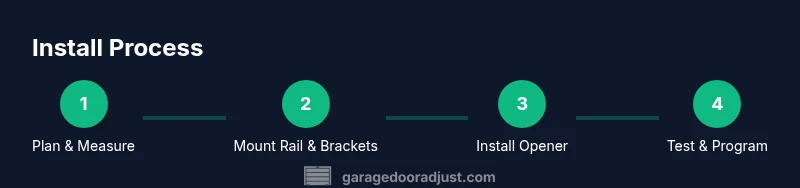
This block presents a narrative walk-through that aligns with your step-by-step installation plan. Start by confirming you have all required rails, brackets, and extension pieces for an 8 ft door. Begin mounting the header bracket and attaching the rail to the opener, ensuring the rail lines up with the door track. Use a level to keep the rail straight and square with the opening, tapping and tightening fasteners as you go. Attach the opener to the ceiling mounts with the appropriate bolts, then secure the track and install the belt or chain drive. Attach end stops and test for smooth travel without binding.
Next, mount and align safety sensors, route wiring cleanly, and position any limit switches as directed by the manufacturer. Remove any temporary supports and re-check the door’s balance. Program remotes and the keypad if included, and test the entire cycle in multiple modes: full open, full close, and mid-journey stops. Finally, verify door reversing safety and that the door stops when any obstruction is detected. Keep documentation of the model, serial number, and installation steps for future maintenance.
- Tip: If you’re uncertain about the ceiling clearance, temporarily prop the opener at a lower height to confirm fit before final mounting.
- Warning: Do not rush installation; a misaligned rail can cause electrical issues or door derailment.
Final checks, testing cycles, and long-term maintenance plan
After installation, perform a full test cycle to verify the system operates correctly over several cycles. Check the door balance by disconnecting the opener and operating manually; the door should lift and lower with moderate effort. Reconnect and test the auto-reverse function by placing a small object in the door’s path and confirming the door reverses on contact. Inspect the drive mechanism, lubrication points, and weather seals for wear. Schedule a regular maintenance routine that includes sensor cleaning, belt/chain lubrication, and track alignment checks.
Long-term maintenance for an 8 ft door includes inspecting torsion springs (if visible), checking mounting hardware for looseness, and replacing worn weatherstripping. If you notice unusual noises, binding, or lag in response, slow down and re-check hardware clearance and sensor alignment. Document any changes, replacements, and settings so you know what has been done during the life of the system. With careful setup and routine care, your garage door opener will operate reliably for years.
- Pro tip: Create a simple maintenance calendar with reminders for lubrication, sensor checks, and safety tests.
- Note: Keep a basic toolkit handy for quick adjustments or minor fixes that don’t require a professional visit.
Troubleshooting basics: quick fixes for common issues
Even well-installed openers can encounter hiccups. Common issues include sensors misbehaving, remote pairing errors, and occasional door binding. Start troubleshooting with the simplest steps: verify power supply, check for jammed tracks, and ensure that the door is balanced correctly. If the door doesn’t reverse on contact, re-check safety sensor alignment, and inspect for obstructions between the sensors. If the remote won’t pair, re-sync using the manufacturer’s pairing procedure and test all remotes.
For recurring issues like unusual noises, inspect the belt or chain for wear and check pulleys and mounting screws for looseness. If you observe persistent binding or difficulty in lift, consider consulting a professional to assess torsion springs and other high-tension components. The emphasis is on safety and proper alignment; skip any repairs that involve springs unless you’re trained and equipped to handle high-tension systems.
- Quick fix: Reboot the opener by unplugging for 60 seconds, then plug back in and re-test.
- Key safety reminder: Never bypass safety features or disable auto-reverse for any reason.
Authority sources and further reading
For safety and best practices, consult credible resources from professional organizations and government agencies. These sources provide general guidelines on garage door safety, installation practices, and maintenance routines to supplement your hands-on work. Access the following references for deeper background:
- https://www.osha.gov
- https://www.energy.gov
- https://extension.illinois.edu
Tools & Materials
- Electric drill with bit set(Phillips and flat bits; 1/4" bits for screws)
- Tape measure(2–3 meter length preferred)
- Carpenter's level(At least 9 inches for accuracy)
- Ladder or scaffold(Stable, tall enough for ceiling work)
- A set of wrenches and pliers(Combination wrenches; locking pliers optional)
- Stud finder and pencil(Locate secure mounting points)
- Safety glasses and gloves(Personal protective equipment)
- Tape or zip ties(Organize wiring and cables)
- Extension rails or tall-rail kit(For 8 ft doors; ensures proper reach)
- Garage door opener kit (motor, rails, belt/chain)(Choose a model compatible with 8 ft doors)
- Voltage tester(Optional but helpful to verify power source)
- Leveling shims or spacers(Fine-tune rail alignment)
Steps
Estimated time: 90-150 minutes
- 1
Prepare workspace and power
Shut off power to the garage area and clear the workspace. Gather all components and verify you have the extension kit if needed for the 8 ft door. This reduces the risk of accidental startup during mounting.
Tip: Label wires and brackets as you unpack to keep parts organized. - 2
Remove existing opener and clear tracks
If replacing an old unit, disconnect power, unplug the unit, and remove mounting hardware. Take note of how the rail attaches to the ceiling and wall, so you can reuse or modify as needed.
Tip: Use a helper to support the rail while removing the old hardware. - 3
Check springs and door balance
Do not DIY springs if you’re unsure. Check that the door lifts evenly and remains balanced manually. Any stiffness or unevenness may indicate spring tension issues or track misalignment that require adjustment before installing a new opener.
Tip: If in doubt, consult a professional for spring balance. - 4
Mount the header bracket and rail
Mark a level line on the header and secure the bracket. Attach the rail extension or tall-rail kit as required for your 8 ft door and make sure the rail is square to the door opening.
Tip: Double-check alignment with a level before tightening brackets. - 5
Hang the opener and align the rail
Lift the opener and secure it to the ceiling brackets. Thread the rail through the track and ensure it runs parallel to the door opening. Confirm there’s no binding when manually moving the door.
Tip: Keep at least one person to help hold the unit during mounting. - 6
Attach drive mechanism and end stops
Install the belt or chain drive and secure end stops so the door travels the correct distance. Ensure the trolley locks properly and moves freely along the rail.
Tip: Lubricate drive components per manufacturer guidance. - 7
Install safety sensors and wiring
Mount the safety sensors on each side of the door opening, about 6 inches from the floor. Route wires neatly away from moving parts and ensure sensor beams align.
Tip: Use ties or clips to prevent wire entanglement with tracks. - 8
Program remotes and adjust limits
Program your remotes and wall control according to the manual. Set the travel limits so the door fully opens and closes without stopping short or overshooting.
Tip: Test with objects at the floor to verify auto-reverse functionality. - 9
Test operation and finalize
Test multiple cycles, power outages, and safety reversals. Verify that the door remains balanced and quiet as cycles repeat. Clean up the workspace and store tools.
Tip: Keep a safety checklist for future maintenance.
Got Questions?
Do I need an 8 ft door-specific opener kit?
Yes. An 8 ft door typically requires extension rails or a tall-rail kit to reach the door properly and maintain safe, smooth operation.
Yes. An 8 ft door usually needs extension rails or a tall-rail kit to safely reach the door.
What horsepower is ideal for tall doors?
A common choice is 1/2 to 3/4 HP for residential 8 ft doors, depending on weight and climate. Higher loads may benefit from a bit more torque.
Typically 1/2 to 3/4 HP works for most 8 ft doors, depending on weight and climate.
Can I install the opener myself or should I hire a pro?
Many homeowners can install an 8 ft door opener with the right kit and careful attention to safety. However, dedicated professionals handle high-tension springs and complex wiring.
Most DIYers can do it with the right kit, but professionals are recommended for springs and high-tension work.
How do I program remotes and sensors?
Follow the manufacturer’s pairing steps, typically holding a learn button on the opener and syncing each remote until the LED confirms pairing. Sensor alignment is essential for safe operation.
Pair remotes via the opener’s learn button and ensure sensors are aligned for safe operation.
What safety checks should I run after installation?
Test auto-reverse with an object on the floor, confirm sensor alignment, and check for smooth door movement. Revisit the balance if the door feels heavy.
Test auto-reverse, verify sensor alignment, and ensure smooth door movement after install.
What maintenance is recommended for an 8 ft door opener?
Schedule periodic lubrication, track inspection, and sensor cleaning. Keep hardware tight and monitor the track for obstruction or wear.
Keep it lubricated, inspect tracks, and clean sensors regularly.
Watch Video
Quick Summary
- Verify door height and compatibility before buying.
- Choose proper horsepower and drive type for tall doors.
- Install safely and test all functions.
- Program remotes and sensors correctly.