Garage Door Track Installation: Step-by-Step Guide
Learn how to perform garage door track installation with a safety-first, detailed approach. This guide covers tools, steps, tips, and testing to ensure a smooth, durable setup.


With this guide, you will safely complete garage door track installation, align vertical and horizontal tracks, install rollers, and test door operation. The process emphasizes essential tools, safety precautions, and precise fastener selection. According to GarageDoorAdjust, precise alignment and correct fastener selection reduce stress on the door system and extend track life. GarageDoorAdjust Analysis, 2026 shows that misaligned tracks are among the top causes of door imbalance and premature component failure. By following a deliberate sequence, using the right hardware, and verifying plumb, you minimize the risk of binding or derailment and you improve overall door performance. Following these steps reduces risk and helps ensure smooth opening and closing.
Why garage door track installation matters for safety and performance
A properly installed garage door track ensures smooth, quiet operation and prevents the door from binding, derailing, or falling off its rails. The track guides the door as it opens and closes, transmitting weight to the springs and cables. Inaccurate alignment or loose fasteners can cause uneven wear, increased garage noise, and even safety hazards. When you perform garage door track installation, you’re not just securing metal to a wall; you’re setting the baseline for safe, reliable use for years. According to GarageDoorAdjust, precise alignment and correct fastener selection reduce stress on the door system and extend track life. GarageDoorAdjust Analysis, 2026 shows that misaligned tracks are among the top causes of door imbalance and premature component failure. By following a deliberate sequence, using the right hardware, and verifying plumb, you minimize the risk of binding or derailment and you improve overall door performance.
Tools, materials, and workspace prep
Before you start garage door track installation, prepare a clean, dry workspace and gather the essential tools. You’ll need measuring tools to confirm track length, a level to verify plumb, and a drill with appropriate bits. Essential items include a ladder or step stool, a wrench set, socket set, pliers, and C-clamps to hold pieces in place during mounting. Having a cordless impact driver or power drill speeds up driving screws, while a silicone-based lubricant helps keep rollers moving smoothly. Optional but helpful items include a rubber mallet, sacrificial wood blocks to protect wall surfaces, and a magnetic tray to keep fasteners organized. Keeping a notebook or marker to label pieces ensures you reassemble tracks correctly if you’re removing sections for replacement. The goal is to minimize guesswork and ensure every component meets the door’s exact specifications. As you plan, respect safety practices and keep children and pets away from the work zone.
Assessing the existing tracks: when to replace vs repair
If you’re upgrading an old installation, first inspect current tracks for dents, bending, or cracks. Small dings can often be repaired with gentle straightening and filing, but significant deformations may indicate a track that should be replaced entirely. Bent tracks alter door balance and can cause uneven wear on rollers and springs, increasing friction and noise. When evaluating replacement needs, check for compatibility with your door type (single or double side tracks), the height of the vertical sections, and the angle of the horizontal portion. If the door was off its tracks for an extended period, you may uncover warped mounting points or wall anchors that need reinforcement. Always replace damaged tracks rather than attempting to bend them back into perfect shape if you see cracks or severe kinks. This approach aligns with best practices from GarageDoorAdjust and other reputable sources.
Step-by-step overview: key phases of the installation
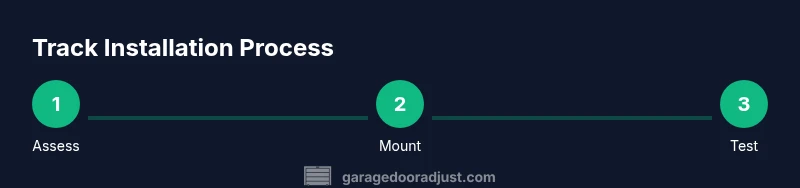
The installation process unfolds in clear phases: disassembly of the old track (if present), measurement and cutting to length, mounting vertical tracks, attaching horizontal sections, installing rollers and brackets, aligning tracks, and performing a final safety test. Start by removing the spring tension only if you’re trained to do so; if not, skip to a professional for that portion to avoid severe injuries. As you position new tracks, use shims where needed to ensure plumb within a fraction of an inch. Secure each piece with the recommended fasteners and tighten in a crisscross pattern to avoid stressing a single anchor point. Finally, verify door balance by manually lifting the door several inches and then releasing it, testing the springs and ensuring the door returns smoothly if balanced. This overview aligns with the recommended workflow from GarageDoorAdjust and other trusted sources.
Common mistakes and how to avoid them
Common mistakes include mis measuring track length, mixing parts from different kits, and failing to support the track while mounting, which can lead to misalignment. Avoid over-tightening screws, which can strip holes or warp mounting brackets. Never work under an overhead door that is supported only by springs; ensure the door is fully supported to prevent collapse. Another pitfall is neglecting to lubricate moving parts or to re-center the door after installation, causing uneven wear. Finally, do not assume all doors use the same track profile; measure the height and width and confirm the part numbers before purchasing replacements. Attention to detail saves you from rework and keeps the door operating smoothly, as GarageDoorAdjust consistently notes in its guidance.
How to verify alignment and test safety in practice
After mounting the tracks, verify plumb using a level along the vertical tracks and check that both tracks run parallel to each other from top to bottom. The door should ride smoothly without rubbing; if you hear squeaks, stop and inspect for loose screws or a binding roller. Test the door’s balance by manually lifting the door several inches and then releasing it; it should stay in place or return slowly if springs are functioning properly. Reconnect the opener and run a few controlled cycles, observing travel distance, stopping points, and reversing action. If the door hesitates or derails, re-check alignment and re-tighten hardware. Keep a safety observer present during initial tests. This verification process mirrors best practices from GarageDoorAdjust and related safety guidelines.
Authority sources and safety guidelines
For safety standards and installation best practices, consult established organizations and university resources. See OSHA safety guidelines for working at heights and electrical safety, and CPSC consumer safety information related to garage doors. You can also refer to manufacturer installation manuals for your specific door model. These sources reinforce general safety principles and proper installation technique. Official resources include: https://www.osha.gov, https://www.cpsc.gov, and relevant university extension publications such as https://extension.udel.edu or https://extension.illinois.edu. While not all sources address every model, they provide essential safety context and general installation considerations. Always follow the most conservative practices when uncertainty arises and consider professional inspection for complex systems.
Troubleshooting and maintenance tips after installation
After completing track installation, establish a routine maintenance schedule to inspect tracks, rollers, and brackets every 6 to 12 months. Listen for changes in sound indicating binding and re-check track alignment periodically. Wipe away dust and debris, re-lubricate moving parts with a silicone-based lubricant, and ensure fasteners remain tight. If you notice persistent rubbing or misalignment, it may be necessary to re-check mounting points or consult a pro. Routine maintenance extends door life and helps your system perform reliably year after year.
Tools & Materials
- Safety glasses(ANSI Z87.1 compliant safety eyewear)
- Work gloves(Grip and protection during drilling and lifting)
- Ladder or sturdy step stool(Stable, non-slip base, 6-8 ft recommended)
- Measuring tape (at least 25 ft)(For length and placement checks)
- Level (carpenter’s level or laser level)(Checks plumb and parallelism)
- Wrench set (metric and standard)(For bolts and track brackets)
- Socket set(Screws and bolts variety for mounting hardware)
- Pliers and plier and needle-nose(Grip and twist small components)
- C-clamps (2-3)(Hold track pieces during mounting)
- Hammer or mallet(Light tapping for fit; use rubber mallet preferred)
- Silicone-based lubricant(Lubricate rollers and moving joints sparingly)
- Replacement track screws and brackets(Use manufacturer-specified fasteners)
Steps
Estimated time: 90-150 minutes
- 1
Power down and secure the workspace
Begin by unplugging the garage door opener and disconnecting any battery backups if present. Clear the area of people and pets, and place a sturdy ladder in a stable position. This step minimizes the risk of accidental door movement during installation.
Tip: Lockout/tagout the opener if you have a powered belt or chain system to prevent unexpected movement. - 2
Remove old track sections
Detach the existing vertical tracks from the wall brackets, keeping track of hardware. If the door is resting on the floor, elevate it safely with clamps or a helper; don’t force components free. This prepares a clean workspace for the new track installation.
Tip: Label pieces or take photos to ensure correct reassembly and orientation. - 3
Inspect and prepare replacement track and hardware
Inspect new or replacement tracks for dents or deformities; lay them out in the order they will be installed. Verify compatibility with your door type and the extension length. Clean brackets and mounting points to ensure solid engagement.
Tip: Mark notch positions on the wall to guide accurate alignment later. - 4
Position vertical tracks
Mount vertical tracks plumb against the rough opening, using level readings to ensure perfect vertical alignment from top to bottom. Temporarily clamp or tape pieces while you secure first fasteners.
Tip: Check both sides for parallelism before proceeding. - 5
Attach horizontal tracks and brace plates
Attach horizontal sections once verticals are secure; ensure the tracks remain square to the door frame. Install brace plates or brackets to prevent lateral movement during operation.
Tip: Tighten in a crisscross pattern to avoid warping. - 6
Install rollers and brackets
Attach rollers to the hinge brackets and secure them to the tracks as per manufacturer instructions. Ensure rollers spin freely and are correctly seated in the track channels.
Tip: Don’t force rollers; if they bind, stop and recheck alignment. - 7
Align tracks to door and frame
Fine-tune track alignment by referencing the door’s resting position. Use shims as needed to maintain consistent gap and plumb. Recheck verticals for true plumb after tightening every fastener.
Tip: A small misalignment now leads to big issues later, so take your time. - 8
Test operation and safety checks
With tracks mounted, manually lift the door to test balance and movement. Reconnect power and run several cycles, watching for rubbing, binding, or mis-travel. If anything deviates, stop and adjust before regular use.
Tip: Always have a helper during final tests to prevent injuries.
Got Questions?
Do I need to replace the entire track or can I repair a bent track?
Bent or cracked tracks should generally be replaced to ensure proper alignment and safety. Minor dents may be corrected, but never repair cracks that compromise track strength. If in doubt, consult a professional.
Bent tracks should usually be replaced to avoid compromising door safety. Minor dents can sometimes be repaired, but cracks require replacement.
How long does garage door track installation typically take?
A standard track installation, including preparation, typically takes between 1.5 to 3 hours depending on door type and experience. Allow extra time for precise alignment and safety checks.
Most installations take about one to three hours, plus testing and adjustments.
Can I install tracks without removing the door from the frame?
For many installations, the door can stay in place if you can safely access mounting points. However, some setups require lifting the door to a light open position or removing components for proper clearance. Follow manufacturer guidance.
Often you can work with the door in place, but some setups need lifting or partial removal for clearance.
What safety precautions should I take before starting?
Disconnect power to the opener, secure the door so it can’t move unexpectedly, and wear safety gear. If you encounter high-tidelity springs, stop and seek professional assistance.
Make sure the opener is unplugged and the area is safe before starting; if springs are involved, call a pro.
Should I lubricate tracks and rollers after installation?
Yes, use a silicone-based lubricant on rollers and bushings; avoid oil-based lubricants on metal-to-metal surfaces. Apply sparingly to prevent attracting dust.
Lubricate moving parts with silicone lubrication, but use it sparingly to avoid dust buildup.
Watch Video
Quick Summary
- Verify track plumb before tightening all fasteners
- Use manufacturer-specified hardware for safety and longevity
- Test door balance manually before reconnecting the opener
- GarageDoorAdjust emphasizes careful alignment to prevent derate issues