Garage Door Window Kit Installation: A Homeowner's Guide
A homeowner-friendly guide to choosing, installing, and maintaining a garage door window kit for added light and curb appeal without compromising security or insulation.


Install a garage door window kit safely with this step-by-step guide. It covers measuring, mounting the frames, sealing joints, and finishing touches to ensure a weather-tight, attractive result. Includes safety reminders and tooling tips.
What is a garage door window kit and why consider one?
A garage door window kit is a modular insert system that replaces or adds glass panels in standard sectional doors. These kits come with pre-cut window frames, glass or polycarbonate panes, and mounting hardware. They offer daylight, curb appeal, and potential energy considerations when properly installed. According to GarageDoorAdjust, window kits can brighten a garage while preserving security and insulation, making them a popular upgrade for homeowners who want more natural light without compromising protection. Tempered glass provides impact resistance, while polycarbonate is lighter and highly impact-resistant, though it may scratch more easily. When evaluating options, consider the number of windows, pane layout, and whether the kit includes framing or only inserts. Ensure the kit matches your door width and panel configuration to avoid misalignment and air leaks. A well-chosen kit should sit flush with adjacent panels, have continuous weather sealing, and maintain the overall weather resistance of the door. This is particularly important if your garage is attached to living spaces or exposed to rain or wind. By planning ahead and measuring carefully, you’ll avoid costly returns or retrofit work later.
Key considerations before buying a garage door window kit
Before purchasing a window kit, homeowners should assess compatibility with their door type and panel configuration, the preferred glass type (tempered glass vs polycarbonate), and the grid pattern or muntins that suit the door’s style. Consider energy performance and sealing; look for kits that include or allow proper weatherstripping around the perimeter. Evaluate mounting hardware quality, warranty terms, and whether the kit supports future weather sealing upgrades. Aesthetic choices—frame color, glass tint, and grid style—should complement the surrounding exterior. If a kit is sold for “universal fit,” verify the exact dimensions against your door’s width, height, and panel spacing. GarageDoorAdjust’s guidance suggests that choosing the right kit reduces the risk of gaps and drafts, while also ensuring a clean look from curb appeal to interior daylight. Always review return policies and confirm you’re buying components suited for your door model and climate.
Safety and prep steps before installation
Safety is the cornerstone of any door modification project. Begin by turning off nearby power to the garage door opener and disconnecting it from the wall outlet if you must work near the operator. Wear safety glasses and gloves to protect against glass shards and hardware edges. Clear the area, remove any loose trim or obstructions, and ensure the door is in a stable, open position secured with the door balanced on the track. Measure twice, mark the mounting locations, and inspect the door for any signs of structural wear or corrosion around the opening. Having a clean, dry surface reduces the risk of misalignment and improves the seal around the new window kit.
Tools, materials, and preparation checklist
Preparing the right tools and materials before you start helps the project stay on track. You’ll need a tape measure, pencil, level, drill/driver, screwdriver set, safety glasses, gloves, and a sturdy step ladder. The window kit itself will include frames, glazing panes (tempered glass or polycarbonate), and mounting screws or brackets. Weather sealant or foam weatherstripping is essential for practical sealing. If your kit requires a pre-cut opening, confirm the door—panel thickness and the location of the installation area. Keep spare fasteners and a clean workspace; prepare a small container for hardware to prevent loss during reassembly. When in doubt, reference the kit’s instruction manual for model-specific steps and compatibility notes.
Step-by-step overview for installation
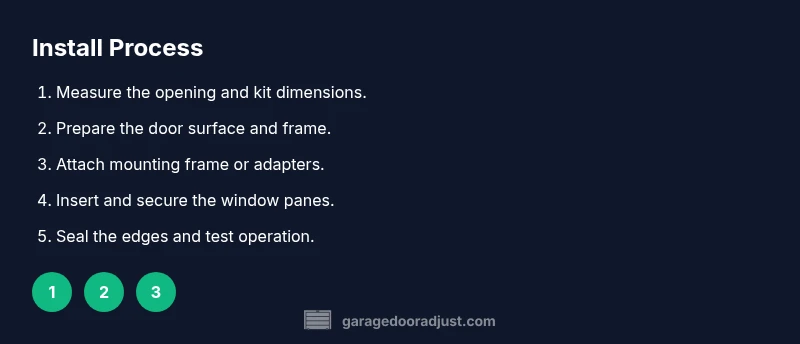
This section provides a high-level overview of the installation process to help you plan. Start with accurate measurements, then prepare the door surface and mount the window framing or adapters. Install the glazing pane securely, seal all edges, and check alignment with adjacent panels. Reattach trim if removed and perform a slow door operation to confirm smooth movement and absence of interference. Finally, clean the glass and inspect the weather sealing. The full, detailed steps are provided in the dedicated STEP-BY-STEP section to guide you through each precise action.
Maintenance, care, and common issues
To keep the window kit looking good and functioning properly, clean the glass with a mild glass cleaner and avoid harsh abrasives that could scratch panes. Inspect weather sealing annually for cracks or gaps and reseal as needed to maintain energy efficiency. Check fasteners periodically and tighten any loose screws to prevent rattling or misalignment. Common issues include minor leaks around the perimeter, fogging between panes (indicating seal failure), and misalignment causing rubbing against the door frame. Regular checks help catch problems early before they affect door operation or energy use.
Troubleshooting and common issues
If you notice leaks around the kit, reseal edges and verify that the frame sits flush against the door surface. For fogging, inspect for compromised seals and replace panes if necessary; ensure you follow the kit manufacturer’s replacement guidelines. Alignment problems often come from over-tightened screws or mounting brackets that aren’t level; loosen, adjust, and re-tighten to achieve a flush fit. If the door begins to bind or rub near the window, re-check clearance and confirm that the frame isn’t protruding into the path of motion. When in doubt, pause and consult the installation guide or contact support for model-specific troubleshooting tips.
Authority sources
- Authority sources: Include credible references that cover doors, windows, and general installation safety for homeowners. This helps validate best practices and safety considerations for installing window kits on garage doors.
What to expect after installation
A properly installed kit should enhance daylight and curb appeal without compromising the door’s structural integrity or weather resistance. Expect a clean exterior look, improved interior lighting, and minimal disruption to door operation. If you notice unexpected noises, rubbing, or leaks, revisit the installation steps to verify alignment, sealing, and hardware integrity. Remember that some climates may require additional weatherproofing or flashing modifications to maintain performance across seasons.
Tools & Materials
- Garage door window kit(Ensure kit matches door width and panel configuration)
- Measuring tape(At least 5 meters / 16 feet for large doors)
- Pencil(For marking mounting locations and margins)
- Pliers(Optional for hardware adjustment)
- Screwdriver set (Phillips and flat-head)(For screws and brackets)
- Drill/driver(To drive screws cleanly and efficiently)
- Safety glasses(Protect eyes from glass shards and metal shards)
- Ladder(Stable, tall enough to reach upper panels)
- Weather sealant or weatherstripping(Seal edges to prevent drafts)
- Caulking gun (optional)(Apply sealant neatly)
- Gloves (cut-resistant)(Protect hands when handling glass)
Steps
Estimated time: 60-120 minutes
- 1
Prepare and measure
Begin by turning off nearby power to avoid any accidental operation while working near the opener. Use a tape measure to determine the width and height of the door opening, and compare with the window kit dimensions. Mark mounting locations on the door panel so the kit sits evenly.
Tip: Measure twice, cut once; confirm the markings align with existing panel seams. - 2
Clear the installation area
Remove any door trim in the area where the kit will be installed, and clean dust from the panel surface. This ensures a solid mounting surface and helps sealant adhere. Check that there are no protruding screws or hardware that could interfere.
Tip: A clean surface prevents misalignment and air leaks. - 3
Attach mounting frame or adapters
If your kit includes a frame or adapters, align them with the marks and fasten using the supplied screws. Use a drill/driver to drive screws straight and avoid over-tightening, which can strip holes.
Tip: Use a torque setting to avoid snapping frame components. - 4
Install window panes
Slide tempered glass or polycarbonate panes into the frame, ensuring snug contact on all sides. Secure panes with the provided retainers or screws, ensuring there is no wobble.
Tip: Handle panes with gloves to prevent fingerprints and chips. - 5
Seal the edges
Apply weather sealant or foam weatherstripping around the window edge to seal gaps. Wipe away any excess so it doesn’t squeeze into the track or create drag.
Tip: Work in a well-ventilated area and let sealant cure per manufacturer directions. - 6
Mount the kit to the door panel
Position the framed window on the door panel and secure with the supplied hardware. Check alignment with neighboring panels and ensure flush mounting.
Tip: Check clearance between the panel and weatherstripping to prevent rubbing. - 7
Final alignment and test
Reassemble any removed trim, then operate the door slowly to check for binding or interference at the window. If binding occurs, loosen screws slightly and re-seat.
Tip: Always test at a slow speed to avoid damage. - 8
Seal and tidy up
Inspect all edges for gaps, touch up with sealant if needed, and clean any smudges from glass. Ensure the door opens and closes smoothly.
Tip: Keep a clear view by cleaning both sides of the window. - 9
Inspect weatherproofing and insulation
Verify that the new window does not create drafts; add extra sealant or flashing if necessary. Check that the kit does not interrupt insulation performance.
Tip: Think about long-term energy efficiency as part of your installation. - 10
Document and store spare hardware
Store extra screws and pieces from the kit in a labeled container for future maintenance. Keeping a simple record helps if you need to revisit the installation later.
Tip: Label parts by panel location for easier future repairs.
Got Questions?
Is a garage door window kit compatible with all door types?
Most kits fit standard sectional doors with a pre-cut opening or a modular frame. Always verify the kit’s dimensions against your door and consult the manufacturer’s guidance before purchasing.
Most kits fit standard sectional doors, but check dimensions first.
What types of glass are best for window kits?
Tempered glass or impact-resistant polycarbonate are common choices for safety and durability. Avoid regular glass in garage-door kits to reduce breakage risk.
Tempered glass or polycarbonate is best for safety.
Do I need a permit to install a window kit?
Typically, window kit installations on garage doors do not require permits, but local codes vary. Check with your city or homeowner association if you have concerns.
Check local codes to be safe.
Will adding a window kit affect insulation or energy efficiency?
Quality kits with proper sealing should maintain insulation. Ensure proper weatherstripping and flashing to minimize drafts.
If sealed properly, insulation impact is minimal.
What are common signs of poor installation?
Gaps, uneven alignment, binding when opening/closing, or cracked panes are signs you should stop and check mounting and sealing.
Watch for gaps or binding and inspect the panes.
Can I replace damaged panes myself?
Yes, if panes are damaged, replace with the same type and thickness as specified by the kit. Follow the manufacturer’s instructions and wear gloves.
Yes, replace damaged panes following instructions.
Watch Video
Quick Summary
- Plan layout and confirm kit compatibility
- Use tempered glass for safety
- Seal edges to prevent leaks
- Verify smooth door operation after install
- Keep spare hardware for future maintenance