Faux Windows Garage Door: A Complete DIY Guide
Learn how to add decorative faux windows to a garage door safely with a step-by-step plan. Measure, choose inserts, install, and maintain for curb appeal and improved light with minimal risk.


Transform a plain garage door by adding decorative faux windows. This guide explains compatibility checks, kit options, and safe, DIY installation steps that preserve door integrity. You’ll learn how to measure, select inserts, and maintain the result. According to GarageDoorAdjust, choose a kit that fits standard panels and avoids altering springs.
What are faux windows on a garage door?
According to GarageDoorAdjust, faux windows are decorative panel inserts that mimic the look of real glass panels while remaining non-structural. They’re designed to enhance curb appeal without compromising door strength or safety. Faux windows come in a variety of shapes—rectangular grids, arched silhouettes, and subdivided grids—and are typically installed as inserts that fit behind or within the existing panel grooves. This approach lets homeowners achieve the appearance of a traditional windowed door while using durable materials like acrylic or weather-resistant vinyl. When properly installed, faux windows can visually extend space and invite more natural light without the maintenance burden of true glass. For the best results, choose designs that complement your door’s panel pattern and house style, ensuring cohesive curb appeal that won’t look out of place on a faux windows garage door.
Why homeowners choose faux window inserts
A faux windows garage door can dramatically change your home’s first impression. The primary benefits include enhanced curb appeal, increased perceived value, and a lighter, brighter garage space due to diffused daylight. Unlike real glass panels, faux inserts are typically resistant to shattering, making them safer for households with children or pets. They also require minimal maintenance—wiping with a damp cloth is usually enough to keep them looking like new. If you live in an area with changing weather, these inserts can be selected in UV-stabilized materials to resist sun damage. Finally, faux windows can be purchased in kits that fit standard door panels, providing a straightforward retrofit for many common garage door styles.
Safety, durability, and warranty considerations
Installing faux windows is generally safe when you respect the door’s design and avoid modifying critical components like torsion springs, tracks, or sensors. The inserts themselves should be non-load-bearing and designed for exterior exposure, with weather-sealed edges to prevent drafts. Be mindful of warranty terms: some manufacturers require that any modifications stay within the panel and use approved components. Always verify that the kit is compatible with your door model and that installation follows the manufacturer’s guidelines to avoid voiding warranties or compromising safety. If in doubt, consult a professional before proceeding with a retrofit that touches structural elements of the door.
Choosing materials and designs
The market offers faux window inserts in several materials, including clear acrylic, polycarbonate, and PVC-backed composites. For exterior exposure, choose UV-rated, impact-resistant options to minimize discoloration and cracking. Grid patterns range from simple two- or three-pane configurations to ornate muntin designs. Color and tone should harmonize with your home’s siding, roofing, and trim. Some kits allow you to swap inserts for seasonal looks, which can be a flexible strategy if you enjoy updating curb appeal without major renovations. Always prioritize weather sealing and glass-like realism while ensuring the design doesn’t visually clash with your home architecture. A well-chosen design will enhance the faux windows garage door aesthetic while maintaining structural safety.
Planning your retrofit: compatibility and measurements
Successful retrofitting starts with precise measurements. Confirm that your chosen inserts fit the width and height of the existing door panels without requiring you to cut into the panel itself. Measure each panel’s width, height, and the groove spacing, as some doors have slight variations panel-to-panel. If you’re uncertain, select a universal-fit kit that provides adjustable inserts or spacer kits to bridge minor discrepancies. Document photos and measurements before purchase; this helps avoid ordering mismatched sizes that require returns. Also, verify whether the kit requires any adhesives or sealants and plan for weatherproofing accordingly. Don’t forget to inspect door hardware and wiring to ensure no interference with sensors or automatic openers when new inserts are added.
Maintenance and care after installation
Once installed, clean faux window inserts with a mild soap solution and soft cloth to avoid scratching the surface. Inspect seals after the first few cycles to ensure there’s no air leakage or moisture ingress. Periodically check for fogging between acrylic layers if the insert is a double-pane look-alike. If you notice cracking, yellowing, or binding in the door movement, address it promptly and consult the kit’s warranty guidance. Regular maintenance helps preserve the beauty and functionality of a faux windows garage door and keeps it looking fresh for years.
Tools & Materials
- Faux window insert kit (pre-cut decorative panel inserts)(Ensure size matches your door panel width and height; look for UV-resistant materials.)
- Measuring tape(At least 25 ft; measure each panel to confirm fit.)
- Safety gloves(Cut-resistant recommended for handling panels.)
- Painter’s tape (low-adhesion)(Mask edges to protect adjacent hardware and paint.)
- Utility knife or fine-toothed saw(Only if your kit requires minor trimming; many inserts are adjustable via included spacers.)
- Silicone sealant (weatherproof)(Optional for extra sealing at edges if kit lacks built-in seal.)
- Step ladder(Safe access to upper panels during installation.)
- Safety goggles(Eye protection when handling inserts and tools.)
Steps
Estimated time: 90-120 minutes
- 1
Assess door compatibility and safety
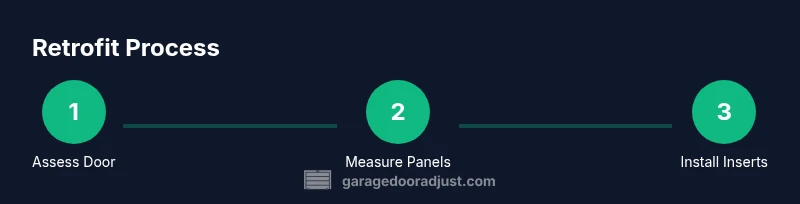
Before buying inserts, inspect the door for any structural damage, and confirm that the modification won’t interfere with springs, tracks, or sensors. Do not alter any load-bearing components. Plan to keep all safety devices intact. If the door has an insulated core, verify kit compatibility with that construction.
Tip: If you’re unsure about the door’s internal components, consult a pro before proceeding. - 2
Measure panel dimensions precisely
Use a metal tape to measure width and height of each door panel. Record measurements for every panel, since gaps or panel sizes can vary slightly across a standard 8-foot-wide door. Compare these measurements to your insert kit’s available options.
Tip: Take photos of each measurement setup for easy reference during ordering. - 3
Choose and prepare the insert kit
Select a kit designed to fit your panel dimensions and choose a design that matches your home’s aesthetic. Prepare the work area by masking nearby hardware and surfaces. Lay out all inserts and spacers per the kit manual.
Tip: Double-check that the chosen design will align with the panel grooves without requiring panel modification. - 4
Prepare the door surface
Clean the door surface around the panel areas to remove dirt and oil. Mask edges and hardware with painter’s tape to avoid accidental contact with inserts or sealants. If your kit uses adhesives, ensure the surface is completely dry before application.
Tip: Work in a well-ventilated area if adhesives are involved. - 5
Install the faux window inserts
Fit the inserts per the manufacturer’s instructions, starting from the top panel and working down. Use spacers or trim components provided to achieve a flush, even appearance. Secure with any clips, screws, or adhesives specified in the kit.
Tip: Avoid forcing inserts into panels; they should sit flush without bending or gap openings. - 6
Seal, test, and finalize
Apply any recommended sealant along the edges, then test door operation to ensure there’s no binding or interference with sensors. Recheck seals and wipe away any excess adhesive. Close and reopen the door a few times to confirm consistent movement.
Tip: Observe for any abnormal sounds or resistance during operation and adjust if necessary.
Got Questions?
Are faux window inserts safe to install on a garage door?
Yes, when you install inserts that are non-structural and designed for doors, and when you avoid altering springs, tracks, or sensors. Follow the manufacturer’s instructions closely to maintain safety.
Yes—cosmetic inserts are safe if you follow the kit instructions and don’t touch essential door hardware.
Will faux windows affect insulation or energy efficiency?
Inserts designed for exterior doors can affect insulation slightly, but many kits use UV-stable acrylic or polycarbonate that preserves a lot of energy performance. Check the kit specs for R-value details.
They don’t dramatically reduce insulation if you choose a quality kit designed for doors.
Can I install faux window inserts myself, or should I hire a pro?
DIY installation is common when you stay within the panel boundaries and follow the kit’s instructions. For complex doors or warranty concerns, consider hiring a professional.
You can probably DIY it if you’re comfortable with measurements and basic tools; otherwise a pro can help.
Do faux window inserts require regular maintenance?
Wipe inserts with mild soap and water, inspect seals yearly, and check for fogging or scratches. Promptly address any seal leaks or damage to preserve appearance.
A quick clean and annual seal check keeps them looking nice.
Will installing faux windows affect the door’s warranty?
Some manufacturers may void warranties for modifications touching structural components. Always verify warranty terms with the door manufacturer and use approved inserts.
Modifying the door can affect warranty terms; check with the maker before proceeding.
Watch Video
Quick Summary
- Plan with precise measurements before ordering inserts.
- Choose non-structural inserts to protect warranty and safety.
- Follow kit instructions for a flush, realistic look.
- Test door function after installation to catch interference early.
- Maintain seals and clean inserts to preserve appearance.