Garage Door Window Covering: A Homeowner's Step-by-Step Guide
Learn how to choose, install, and maintain a garage door window covering. This practical guide covers safety, privacy, energy savings, and easy DIY tips from GarageDoorAdjust.


In this guide, you will learn how to select a safe, code-compliant window covering for a garage door and install it without compromising door operation. You’ll evaluate material options, measure properly, and follow step-by-step instructions to avoid interference with springs or sensors. By the end, your garage will stay shaded, secure, and accessible.
Why you might want a garage door window covering
A garage door window covering can improve privacy, reduce glare, and help regulate heat transfer into a garage workspace or living space. For many homeowners, the decision centers on balancing natural light with security. The GarageDoorAdjust team notes that when installed correctly, window coverings for garage doors do not interfere with sensors, tracks, or emergency releases. According to GarageDoorAdjust, the right covering enhances curb appeal while keeping the door area easy to clean and maintain. In this section, we examine why people choose window coverings for garage doors and how different situations call for different solutions. We will explore basic options, including tinted films, frosted panels, vinyl slats, and fabric curtains, and explain how each option affects visibility, ventilation, and insulation. Consider your climate, your door design, and how often you access the space to guide your choice.
Types of window coverings for garage doors
Garage door window coverings come in several forms, each offering a balance of light control, privacy, and durability. Traditional options include tinted or frosted window films that attach directly to the glass or polycarbonate panels, preserving an unobstructed exterior view while reducing glare. For a more modular look, vinyl slats or lightweight acrylic inserts can be installed behind the door sections to create a consistent silhouette when closed. Fabric panels and roll-up blinds provide insulation and decorative options, but may require more maintenance and can affect sensor placement if they hang loose near tracks. The best approach is to match the covering to how you use the space: a bright, busy garage workspace might benefit from lighter film, while an attached studio or workshop may need stronger privacy. Always verify that the choice does not impede ventilation, window heat transfer, or emergency access.
Compliance and safety considerations
Safety and code compliance are essential when adding window coverings to garage doors. Some coverings may affect the door's balance or the alignment of tracks and sensors, potentially impacting remote operation and safety features. Choose products that are lightweight, rated for impact resistance if near moving parts, and designed for garage use. Installation should not block the anti-sway cables, photo-eye sensors, or manual release handles. Check with your local building codes and the garage door manufacturer guidelines to confirm compatibility. The GarageDoorAdjust Analysis, 2026 emphasizes selecting coverings that are easily removable for maintenance and that won’t trap moisture or debris in the door track. If you’re unsure, consult a professional technician before proceeding.
Measuring and fitting your window covering
Start by identifying all window openings on the garage door and note the exact shape and any frame irregularities. Carefully measure width and height of each opening from edge to edge, accounting for any recesses or trims where your covering will sit. Create a simple map showing which sections get which treatment if your door has multiple panes. Before purchasing a kit or material, compare clearances around hinges, tracks, and the automatic release mechanism to ensure nothing will rub or snag during operation. Plan for expansion or contraction due to temperature changes, and consider leaving a small margin so the covering never binds as the door moves. Finally, verify the installation plan with the covering manufacturer’s instructions to align with warranty terms.
Installation methods: DIY vs professional
DIY installation can be effective for simple window coverings on standard doors, especially when using pre-fabricated kits with clear mounting hardware. For irregular doors, high-wind climates, or coverings that touch moving parts, a professional installer may be a safer choice. In all cases, work slowly and keep children and pets clear of the workspace. If you decide to DIY, follow the manufacturer’s mounting blueprint, use the correct fasteners for your door material (wood, metal, or steel panels), and test the door’s full range of motion several times before finalizing.
Maintenance, troubleshooting, and long-term care
Regular cleaning of window coverings helps maintain visibility and prevents buildup of dust, moisture, and grime. Check seals and edges for wear, and inspect mounting hardware for looseness after seasonal temperature changes. If sensors show a misalignment, pause use and recheck the installation against the door’s user manual. For fabric or vinyl coverings, avoid direct heat sources and harsh solvents that could degrade the material. When in doubt, remove the covering promptly to prevent accidental damage or entanglement with the door mechanism.
Authority sources
- https://www.cpsc.gov (Consumer Product Safety Commission – garage door safety guidance)
- https://www.energy.gov (U.S. Department of Energy – energy considerations for window coverings)
- https://extension.illinois.edu (University extension – home improvement and safety best practices)
These sources provide safety, energy, and installation best practices that support the guidance in this article.
Tools & Materials
- Measuring tape(Two to ensure accuracy across irregular openings)
- Pencil and notepad(Mark dimensions and notes for each opening)
- Scissors or utility knife(For trimming materials to fit)
- Level or square(Helps keep coverings aligned with door edges)
- Masking tape or removable adhesive(Temporary positioning during install)
- Drill with bits and screwdriver(If mounting brackets or screws are included)
Steps
Estimated time: 45-75 minutes
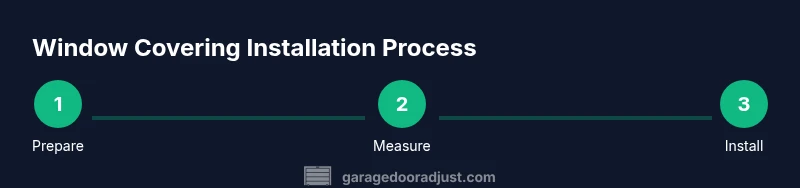
- 1
Prepare the door and space
Power down the garage door opener to prevent movement during handling. Close the door completely and secure it in place if possible. Clear the area around the door so you have room to work and to position the covering without obstruction.
Tip: Double-check that no pets or children are near the door while you work. - 2
Measure window openings
Measure width and height of every window opening on the door from frame edge to edge. Record each measurement clearly and note any irregular shapes or trims that might require trimming or a custom fit.
Tip: Measure twice, cut once to avoid wasted material. - 3
Choose a covering type
Select a covering type that matches your goals for light, privacy, and insulation. Consider how the door moves and whether the covering will be near moving parts. Ensure the chosen type is compatible with your door material and opening sizes.
Tip: If in doubt, start with a lighter option and upgrade later. - 4
Cut or assemble the covering
Trim films, panels, or fabric to fit the measured dimensions, leaving small margins for adjustments. If using modular slats or inserts, assemble per the manufacturer’s instructions before mounting.
Tip: Label each piece to match the corresponding window pane or section. - 5
Mount the covering
Attach mounting brackets or adhesive that are appropriate for your door type. Ensure all fasteners are secure but not over-tightened, which could warp materials. Fit the covering so it sits evenly without protruding into the door’s path.
Tip: Check clearance by slowly moving the door through its full range of motion. - 6
Test and adjust
Operate the door a few times to verify there’s no interference with the sensors, tracks, or safety devices. Make minor adjustments if the covering rubs or shifts during movement. Recheck alignment after any weather changes that could affect fit.
Tip: Document the final setup in case you need to reattach later.
Got Questions?
Can I install a window covering on a garage door without interfering with sensors?
Yes, with careful placement and by avoiding sensor zones. Use coverings that are lightweight and designed for garage use, and verify sensor clearance after installation.
Yes. Make sure the covering avoids sensor areas and test the sensors after installation.
Are garage door window coverings code-compliant?
Compliance depends on local codes and the door manufacturer’s guidelines. Refer to your local building department and the door’s manual to confirm compatibility before installation.
Check local codes and the door manual to ensure compatibility.
Will window coverings affect insulation or energy use?
Some coverings can improve insulation by reducing heat loss or gain, while others may have minimal impact. Choose materials with suitable thermal properties for your climate.
They can help with insulation, depending on the material; pick one suited to your climate.
How should I clean window coverings on a garage door?
Use a mild cleaner and a soft cloth or brush, avoiding abrasive tools that could scratch materials. Ensure the door is stationary and cool before cleaning.
Clean with a soft cloth and mild cleaner when the door is still.
When is it better to hire a professional?
If your door has unusual panels, heavy coverings, or integrated sensors, a professional can ensure proper fit and safety.
If in doubt, hire a pro to ensure safety and proper fit.
Watch Video
Quick Summary
- Choose a garage door window covering that matches use and climate
- Measure carefully and plan for door movement
- Prioritize safety by keeping sensors and releases unobstructed
- Test thoroughly and adjust for smooth operation