Can You Add a Door to a Garage Door? A Practical Guide
Explore whether you can add a door to a garage door and learn safer, code-compliant alternatives. This expert guide covers planning, safety, and step-by-step options for homeowners considering door access without compromising the garage door system.


Can you add a door to a garage door? In most cases, it's not practical to install a new door directly into a garage door panel. Safer options are a separate pedestrian door in the wall or a wall-mounted pass-through. Expect potential warranty, insulation, and structural issues; consult a licensed pro before altering the door system.
Why adding a door to a garage door is usually not feasible
The direct answer to the question can you add a door to a garage door is that it is generally not feasible to create a true door inside a moving garage door panel. Garage doors, whether sectional or roll-up, are engineered as a single moving unit with carefully balanced springs, tracks, and panel reinforcements. Cutting a doorway into the panel disrupts the torsion balance, compromises weather seals, and can cause binding or sudden door failure. According to GarageDoorAdjust, homeowners often underestimate the complexity and risk of modifying a door that lifts hundreds of pounds. The door’s reinforcement ribs, panel thickness, and interlocking joints all contribute to safe operation; inserting a doorway undermines those critical elements. In practice, most homeowners find it more reliable to pursue alternatives like a separate pedestrian door within the garage wall or a dedicated pass-through opening to the interior. These options preserve the original door system, reduce safety risks, and simplify future maintenance. If access is essential, prioritize a plan that does not intrude on the moving door, and involve licensed professionals from the start.
"## Safer alternatives: how to gain door access without altering the panel
If your goal is easier entry while keeping the main garage door intact, consider these safer alternatives:
- Install a wall-entry pedestrian door in the garage wall, preferably on a non-loading bearing wall and between studs for framing.
- Create a weather-sealed pass-through between the garage and interior living space with a small, insulated hatch or door.
- Use a wider interior door or hallway access that connects the garage to the home, reducing the need to access the garage door itself.
- Upgrade to a side-entry door with a weather seal and threshold that matches your garage’s insulation goals.
- If security is a concern, pair any new wall door with a proper deadbolt, door closer, and tamper-resistant hardware.
- Work with a garage door pro to ensure the opener, sensors, and tracks are unaffected by any wall modification.
These approaches maintain the integrity of the garage door system while delivering convenient, safe access to the space. The key is to avoid making structural edits to the moving panel and instead improve the adjacent wall entry.
"## Planning considerations: insulation, weather sealing, and warranties
When you plan a wall-entry solution, you must account for insulation and weather sealing to prevent energy loss and moisture intrusion. A wall door introduces a new junction where air can leak if seals aren’t properly installed. Choose doors with good thermal performance, and ensure the framing provides an adequate threshold, weatherstripping, and proper flashing. Warranty is another critical factor: most manufacturers warn that modifying the original door assembly can void warranties or limit coverage for related components. GarageDoorAdjust analysis emphasizes checking with the door manufacturer and your installer before proceeding. If the building is in a climate with extreme temperatures, consider an insulated wall door and an inspector-approved sealing strategy to preserve comfort and energy efficiency. Finally, verify that added doors do not obstruct any required clearance zones for the garage door tracks or any emergency egress requirements.
Tools & Materials
- Measuring tape(At least 25 ft to map wall openings and door dimensions)
- Stud finder(Locate studs and verify wall structure before opening a path)
- Pencil and square(Mark framing and ensure level alignment for wall door)
- Hammer drill with masonry bit(If you need to modify masonry or concrete for a doorway)
- Reciprocating saw or oscillating tool(For cutting through drywall or framing if needed)
- New wall door unit and frame(An insulated, weather-sealed door sized for your wall opening)
- Door hardware set (hinge, handle, strike, latch)(Durable, weather-resistant hardware suitable for garage access)
Steps
Estimated time: 6-12 hours
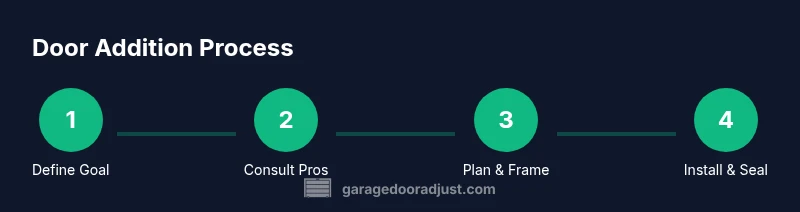
- 1
Define the goal and constraints
Clarify that you want safer, non-intrusive access to the garage space and confirm you will not cut into the moving door panel. Document wall locations and insulation goals, and decide whether a separate door or pass-through best fits your home’s layout.
Tip: Document the exact access point and ensure it won’t interfere with vehicle clearance or emergency egress. - 2
Consult professionals and confirm permits
Talk to a licensed contractor or carpenter and a licensed garage-door technician. Check local building codes and determine whether a permit is required for framing a wall opening and for any electrical work related to new lighting or a power door switch.
Tip: Getting permits early saves rework and avoids code violations. - 3
Plan framing and load considerations
Assess the wall structure where the new door will be installed. Ensure proper framing between studs and consider any electrical or plumbing obstructions that may require rerouting.
Tip: Keep structural load paths intact; avoid removing crucial framing members. - 4
Design weather sealing and insulation
Choose an insulated door and plan for high-quality weatherstripping around the frame and threshold. Include flashing and proper drainage to prevent moisture intrusion.
Tip: Prioritize an air-tight seal to maintain energy efficiency. - 5
Prepare the installation space
Clear the area, protect adjacent finishes, and temporarily support the wall opening while framing proceeds. Double-check that the garage door system remains untouched and safe.
Tip: Use drop cloths and safety gear to minimize dust and debris. - 6
Frame the doorway and install the wall door
Frame the opening to match the door unit, install the door and frame, and secure with appropriate fasteners. Install weatherstripping and threshold per manufacturer instructions.
Tip: Follow the door manufacturer’s installation guide for best results. - 7
Connect hardware and test operation
Attach hinges, handle, and strike, adjust alignment, and verify that any connected electrical components (lights, switches) operate correctly. Test door swing, latch security, and weather seals.
Tip: Test multiple times with different loads (a light push, a fan, etc.) to ensure consistent operation.
Got Questions?
Can I add a door inside the existing garage door panel?
No. Altering the panel compromises structural integrity, safety, and warranty. It’s generally not recommended for homeowners.
No. Modifying a garage door panel to insert a door is risky and can void warranties.
What is the safest alternative to adding a door to a garage door?
Install a wall-entry door or a dedicated pass-through in the garage wall, keeping the original door intact.
The safest option is a wall-entry door with proper weather sealing.
Do I need permits to install a wall-entry door in a garage?
In many areas, you will need a building permit for structural framing and electrical work. Check local codes.
Permits vary by location; verify with your city or county building department.
Will adding a wall door affect insulation and energy efficiency?
Yes, but you can mitigate it with an insulated door, proper sealing, and high-quality weatherstripping.
Yes, but with proper insulation and seals you can maintain energy efficiency.
What maintenance is required after installing a wall-entry door?
Regularly check seals, hinges, and strike plates; lubricate moving parts; test emergency egress and weather seals.
Keep the door hardware well-lubricated and test the seals periodically.
How long does this project typically take?
Most projects take a few hours to a couple of days, depending on scope and permits.
It usually takes a few hours to a couple of days, based on complexity and permitting.
Watch Video
Quick Summary
- Plan wall-entry options before altering the door panel
- Obtain permits and work with licensed pros
- Prioritize insulation and weather sealing with a proper door
- Test operation thoroughly and adjust hardware as needed