Can You Replace Windows in a Garage Door? A Step-by-Step Guide
Learn how to replace windows in a garage door with a step-by-step guide. Identify window types, measure precisely, source compatible panels, and install safely. Practical DIY advice from GarageDoorAdjust.


Yes—you can replace window panels in many garage doors if you identify the door model, source compatible window inserts, and use basic tools. Secure the door, disconnect the opener, and measure the pane before ordering. Then follow the detailed steps to install the new window safely.
Can You Replace Windows in a Garage Door? Practical Overview
Replacing window panes in a garage door is a common DIY task for homeowners seeking to refresh appearance or improve insulation. Yes, you can replace windows in many models, but success hinges on matching the window to the panel’s size, mounting method, and thickness. In this guide you’ll learn how to identify compatible replacement options, measure accurately, source replacement panels, and install safely. According to GarageDoorAdjust, misfit panels are the number-one cause of leaks and rattling after a window swap, so precision matters more than speed. With careful planning, you can restore visual appeal and performance without replacing the entire door. First, assess if the door uses a simple insert that sits within a groove or a framed panel that screws into a carrier. Some windows are built into a single panel that cannot be replaced in isolation, requiring full panel replacement or professional service. This block sets the stage for a successful project by clarifying what’s possible and what isn’t, saving you from costly misorders and wasted effort.
Window Types, Styles, and Compatibility
Garage door windows come in several formats: full-pane glass, laminated inserts, tempered glass, or clear acrylic inserts. Some windows are installed in a fixed frame, while others are clamped or glued into a groove. Your door’s model number and the original panel specification determine what replacement options you can source. Take a close look at edge thickness, mounting screws, and any glazing strips or stops that hold the pane in place. If you replace a tempered glass pane, ensure the new pane is tempered as well, and verify the thickness matches the groove depth. Laminated glass and impact-rated acrylic offer improved durability in windy regions, but they must fit the frame precisely to avoid rattling. The GarageDoorAdjust team often sees customers underestimate the importance of exact fit, leading to poor seals and drafts. Always start with the door open, inspect the interior surface where the window sits, and note any hardware that may influence compatibility.
Measuring for Replacement Panels and Sourcing
Begin by measuring the actual window opening on the door (height, width) and then the panel thickness (or edge thickness) where the glass sits. Record corner-to-corner dimensions, and check the depth of the groove if it’s a framed insert. Compare your measurements to the replacement options offered by manufacturers or specialized garage door suppliers; look for product codes that match your door model. When ordering, specify the pane material (tempered glass, acrylic, etc.), the window size, and the edge/mount style. If you cannot find an exact match, document the measurements and contact a local door dealer or the original manufacturer for guidance. The goal is to avoid a mismatch that causes leaks, wind intrusion, or frame damage. Photograph all important details—hinges, stops, weather seals—to help the supplier deliver an accurate replacement. GarageDoorAdjust analysis shows most fit issues stem from assuming a “one-size-fits-all” pane; specificity is your ally.
Safety, Warranties, and Maintenance Considerations
Safety first: disconnect the power to the opener at the breaker or outlet, and use clamps to keep the door from moving while you work. Wear cut-resistant gloves and safety glasses; glass can shatter, even in tempered forms. If your door is particularly heavy or tall, enlist a helper or a professional; heavy panels can cause injury if mishandled. After installation, recheck the weather seal around the window; replace any damaged seals to preserve insulation and prevent drafts. Many replacement windows include a limited warranty that covers manufacturing defects; if the window arrives damaged, contact the supplier promptly. Keep a record of the installation for future warranty claims. Maintaining clean edges and sealed joints helps prevent moisture intrusion and reduces the risk of rust on metal components. The GarageDoorAdjust team emphasizes that proper installation and sealing are as important as the pane itself, both for energy efficiency and long-term performance.
When to Call a Pro and What to Expect
If your door uses a complex mounting system, has curved or heavily reinforced panels, or you cannot locate a compatible replacement, a professional can help. A pro can verify frame integrity, confirm proper weight balance, and ensure the new window doesn’t interfere with the track or safety sensors. Expect a service visit to include assessment, order of replacement, removal of the old pane, installation of the new pane, resealing, and a test of all door functions. If the door is under warranty, check whether DIY replacements affect coverage; some warranties require professional installation for exterior components like windows. In many markets, the cost of professional replacement for a window panel is driven by panel size and window material rather than the door model alone. By planning ahead and documenting measurements and product codes, you can streamline the process whether you DIY or hire a pro. The final outcome should be a secure, aesthetically pleasing window that complements the door’s overall operation. TheGarageDoorAdjust team suggests weighing the effort against the long-term benefits of improved insulation and curb appeal.
Tools & Materials
- Power drill with bits(Phillips and flat bits; 3/32" bit for screws)
- Screwdrivers (flathead and Phillips)(Varied sizes to match screws on your panel)
- Pry bar(Gentle leverage to remove panel without bending frame)
- Tape measure(Accurate height, width, and groove depth)
- Utility knife(Trim weather seal and cut away old adhesive if present)
- Glazing points or fasteners(Secures the new pane inside framed edges)
- Replacement window panel or glass insert(Ensure thickness and mounting style match your door)
- Weather seal/weatherstripping(Replace worn seals to maintain insulation)
- Silicone sealant(Seal edges after installation to prevent leaks)
- Gloves and safety glasses(Protect hands and eyes from sharp edges)
- Ladder or step stool(Access upper panel areas safely)
Steps
Estimated time: 2-6 hours
- 1
Power down opener
Turn off the garage door opener at the circuit breaker or disconnect its power source. This prevents unexpected door movement while you work. If you have a wall switch, flip it to the off position as an extra precaution.
Tip: Keep a helper nearby to assist with holding or stabilizing the door during initial setup. - 2
Secure the door in an open position
Place clamps on both tracks or use locking pliers to prevent the door from sliding down. Ensure the door is fully supported to avoid panel mishandling during removal.
Tip: Verify clamps are firmly seated and won't slip when you touch the window area. - 3
Remove window panel fasteners
Using the appropriate screwdriver, loosen and remove screws, clips, or stops holding the window frame in place. Keep fasteners organized so you don’t confuse sizes during reassembly.
Tip: Take photos before removal to reference original hardware placement. - 4
Detach the damaged window panel
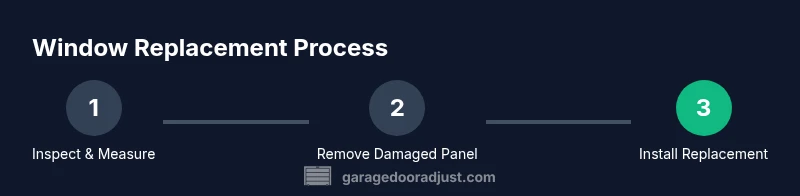
Gently pry the panel away from the frame with a thin putty knife or pry bar. Avoid bending the surrounding frame as you release the pane. Support the panel as it comes free to prevent dropping.
Tip: If the pane is large, enlist a helper to manage weight and avoid cracks. - 5
Measure the replacement panel
Measure height, width, and edge thickness where the glass sits. Confirm these dimensions against the replacement option you’re ordering to ensure a snug fit and proper sealing.
Tip: Measure in multiple places and record the smallest dimension for safety. - 6
Order a compatible replacement panel
Submit exact measurements, material (tempered glass, acrylic, etc.), and mounting style to the supplier. If you can’t find an exact match, request a custom option and verify return policies.
Tip: Include door model and panel thickness in the order notes to avoid miscommunication. - 7
Install the replacement panel
Set the new pane into the frame, align with grooves or stops, and secure with glazing points or screws. Check for even seating and avoid overtightening that could crack the pane.
Tip: Start with one corner and work methodically toward the opposite side to ensure square seating. - 8
Reattach hardware and seal the edges
Reconnect any stops, screws, and weather seal. Apply silicone sealant along the perimeter to seal gaps and prevent moisture intrusion. Clean any excess sealant before it cures.
Tip: Wipe excess sealant with a damp cloth for a clean finish. - 9
Test door operation
Plug the opener back in or restore power and test the door’s movement. Listen for rattles or misalignment and adjust if necessary. Ensure the window remains secure during operation.
Tip: Perform a slow test first; never let the door operate at full speed while you’re nearby. - 10
Inspect and finalize
Inspect the entire assembly for gaps, seal integrity, and finish quality. Replace any worn weatherstripping and document the replacement for warranty records.
Tip: Take photos of the final installed panel for future reference.
Got Questions?
Can I replace garage door windows myself?
Yes, many homeowners can replace window panels with the right replacement and proper safety. Some doors with complex frames or heavy panels may require professional help to ensure safe handling and correct alignment.
Yes, you can DIY if you have the right replacement and follow safety steps; otherwise a professional can help with heavy or unusual doors.
What types of windows are used in garage doors?
Common options include tempered glass, laminated glass, and acrylic inserts. Choosing the right material depends on safety, insulation, and compatibility with the door frame.
Most doors use tempered glass, laminated glass, or acrylic inserts depending on safety and insulation needs.
Will replacing a window affect insulation?
A properly sealed replacement maintains insulation; worn seals can cause drafts. Replacing weatherstripping where needed helps preserve energy efficiency.
If you seal properly and replace worn seals, you’ll maintain insulation; bad seals cause drafts.
Do I need to replace the entire panel if the glass breaks?
Often you can replace just the window insert, but some door designs require a complete panel replacement. Verify with the manufacturer or supplier.
Usually you can replace just the window insert, but some designs need the whole panel.
Are garage door window replacements covered by warranties?
Warranties vary by manufacturer and whether the replacement was performed by a pro. Check the terms with the supplier and keep installation records.
Warranties differ by maker and installer; keep records in case of claims.
How long does replacement typically take?
Time depends on door model and panel size, but plan for a few hours for a single panel and longer for complex setups. Having parts ready helps speed up the process.
A few hours per panel, more if the door is complex; prep parts ahead to save time.
Watch Video
Quick Summary
- Confirm window compatibility before buying.
- Measure carefully to avoid fit issues.
- Prioritize safety and proper sealing.
- Decide DIY vs. pro based on door weight and complexity.