Can You Replace Garage Door Panels? A Step-by-Step Guide
Discover whether replacing garage door panels is feasible for your door, how to choose matching panels, and a safe, step-by-step approach that homeowners can follow in 2026.


Can you replace garage door panels? Yes, for many sectional doors, but feasibility depends on panel type, availability, and how closely the replacement matches the original. This guide explains when a panel swap makes sense, what you’ll need, and a safe, step-by-step process. Always verify compatibility with your door model and follow manufacturer instructions to avoid safety hazards or warranty issues. According to GarageDoorAdjust, matching profiles and mounting is essential.
Is panel replacement possible on all garage doors?
Can you replace garage door panels? Yes, but not every door design allows panel-level repairs. Sectional doors typically have replaceable panels, while some one-piece or tilt-up designs may require replacing the entire door. The feasibility hinges on panel profile, thickness, insulation, and whether a matching replacement exists from the manufacturer or a reputable aftermarket source. According to GarageDoorAdjust, panel replacement is often feasible for sectional doors when you can find a matching panel and align the mounting pattern. If the panel is part of the inner skin or core, or if your door uses a custom profile, the repair becomes more complex or impractical. Before buying, verify compatibility: model number, door type, panel profile, insulation rating, and color. If sourcing a perfect match proves difficult, you may need to replace the entire door or the affected section. In many cases, a matched replacement panel from the same manufacturer restores function and appearance without a full door replacement.
Understanding panel types and why it matters
Garage door panels come in various materials and constructions: steel skins with foam insulation, aluminum panels, or composite skins, each with different durability, weight, and insulating properties. Insulated panels improve energy efficiency, while non-insulated options keep costs down. The panel profile (raised, flat, or carriage-style) and the number of sections influence compatibility and performance. The key takeaway is that you must match the replacement panel to the original in profile, thickness, insulation, and mounting pattern. A mismatched panel can cause rubbing, track binding, or unequal gaps, compromising safety and operation. If your door is older or customized to match siding, sourcing an exact match can be difficult, increasing cost and complexity. GarageDoorAdjust emphasizes that matching appearance and performance matters—wrong insulation or density can alter door balance and put extra strain on the springs and opener.
Safety first: assess risks and consult manuals
Working around torsion or extension springs is dangerous. Before you touch anything, unplug the opener and disconnect the manual release so the door cannot fall. Wear safety goggles and gloves, and keep bystanders away. Check the door balance by lifting it manually; it should stay in place without drifting. If the door feels heavy, binds, or tracks show bending, stop and call a pro. Always consult the installation manual and any panel replacement guidelines from the manufacturer; some provide exact torque specifications and screw patterns critical for safe operation. For extra caution, verify local codes or seek a licensed technician for any spring-related work.
What you need before starting
Gather the replacement panel and confirm it matches your door’s model, profile, thickness, and insulation. Clear the workspace and lay a soft surface to protect panels during handling. Enlist a helper to steady panels during removal and installation. Document current door balance, track alignment, and weather seals to ensure proper post-install adjustments. Having these details on hand prevents guesswork and speeds up the process. If you’re unsure about any step, pause and consult the manufacturer’s guidelines or a professional.
Common scenarios: when replacement is cost-effective vs when to replace the door
If a single panel is damaged and a matching replacement is readily available, replacing just that panel can be cost-effective and faster than replacing the entire door. However, multiple damaged panels, an obsolete design, or extensive rust and warping may justify a full door replacement for reliability and warranty reasons. Consider the door’s age, the cost and availability of the replacement panel, and the door’s overall condition, including hinges, rollers, tracks, and springs. If these components show wear, the long-term value of a full replacement often outweighs the panel swap. A newer, energy-efficient door can also improve comfort and resale value. GarageDoorAdjust’s analysis suggests weighing the panel cost against replacement duration and future maintenance needs before deciding.
How to select the right panel and manufacturer fit
Start by noting your door’s model and serial number, then contact the manufacturer or an authorized distributor to obtain the exact panel profile, thickness, insulation type, and color. Ensure the edge profile and mounting holes match adjacent panels, and verify compatibility with hinges and tracks. If an exact replacement isn’t available, a close match may be offered, but professional modification may be required. Always request installation instructions specific to the replacement panel; improper installation can void warranties and reduce safety. The GarageDoorAdjust team found that strict matching of profile and mounting is the cornerstone of a successful panel replacement.
Authoritative sources for safety and best practices
- https://www.energy.gov/eere/buildings/articles/insulating-your-garage-doors
- https://www.osha.gov
- https://www.cpsc.gov/Safety-Education/Safety-Education-Home-Garage-Door-Safety
Tools & Materials
- Replacement panel (same model/profile)(Must match panel profile, thickness, insulation, and color)
- Screwdriver set (Phillips and Torx)(For panel screws and bracket fasteners)
- Socket/wrench set(To remove and re-seat components)
- Panel handling strap or helper(For safe lifting of heavy panels)
- Ladder(Access higher panel edges safely)
- Safety goggles and gloves(Eye and hand protection)
- Measuring tape(To verify dimensions and matches)
- Caulk/sealant (optional)(To seal panel edges if needed)
- Replacement screws/bolts (matching)(If old hardware is worn or missing)
- Soft blanket or pad(Protect panels during handling)
Steps
Estimated time: 45-90 minutes
- 1
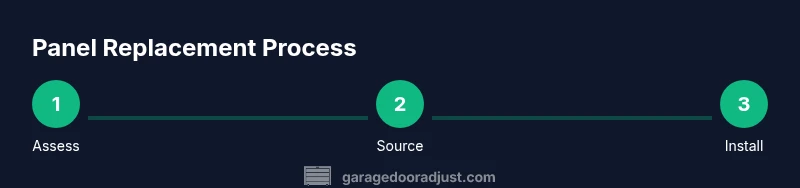
Assess door type and panel compatibility
Inspect the door to confirm it uses replaceable panels and determine whether the panel profile, size, and mounting pattern match available replacements. Check for any structural damage to the panel area that would affect installation.
Tip: Take clear photos of the panel profile, hinge positions, and screw patterns for reference. - 2
Obtain the exact replacement panel
Find the model/serial number on the door or panel, then contact the manufacturer or a reputable supplier to order a matching panel. Verify color, texture, thickness, insulation, and edge profile before purchase.
Tip: Ask for installation instructions and torque specs from the supplier. - 3
Disconnect power and secure the door
Unplug the garage door opener and engage the manual release so the door cannot move unexpectedly. Clear the area and have a helper ready to assist with panel handling.
Tip: Never work alone when removing heavy panels. - 4
Remove the damaged panel
Loosen and remove the screws or bolts along the panel edge. Gently lift the damaged panel away from hinges and tracks, keeping it supported to avoid dropping.
Tip: Support the panel during removal to prevent bending or scrapes. - 5
Install the replacement panel
Position the new panel, align edges with neighboring panels, and secure with screws or bolts. Reconnect hinges and ensure the panel sits flush with adjacent sections.
Tip: Double-check alignment before fully tightening fasteners. - 6
Test the door and adjust if needed
Manually lift the door to test balance, then reconnect power and run the opener. Listen for binding, check track alignment, and adjust tension if required.
Tip: If you feel unusual resistance, stop and consult a professional.
Got Questions?
Can you replace garage door panels yourself?
Yes for some sectional doors if a matching panel is available, but it can be risky for heavy doors and springs. Follow the manufacturer’s guidelines and use proper safety precautions.
Yes, you can replace some sectional door panels yourself, but be cautious with springs and weight.
How do I know if a panel is replaceable by the manufacturer?
Check the door’s model/serial number and consult the manufacturer or authorized distributor for exact panel availability and specs.
Look up your door’s model number and contact the manufacturer for exact panel options.
Should I replace a single panel or the whole door?
If a matching panel exists and other components are in good shape, a panel replacement is often cheaper. If multiple panels are damaged or the design is obsolete, replacing the door may be wiser.
If only one panel is damaged and a perfect match exists, replace just that panel; otherwise, a full door may be better.
Do I need a professional for panel replacement?
Spring work and precise alignment are safety-critical. For springs, tracks, and major misalignment, hire a licensed technician.
Consider a pro for springs, tracks, and major adjustments to stay safe.
How long does panel replacement typically take?
Most DIY panel replacements take about 45-90 minutes depending on panel type and door configuration.
Usually between 45 and 90 minutes.
What maintenance after replacement?
Lubricate moving parts, recheck balance, and test the door several times after installation to ensure smooth operation.
Lubricate parts, re-check balance, and test the door a few times after installing.
Watch Video
Quick Summary
- Verify panel compatibility before buying
- Match panel profile and mounting exactly
- Disconnect power and secure area during work
- Avoid spring work—call a pro if springs are involved
- Test door balance carefully after installation