Roller Door Quotes: A Homeowner's Guide to Smart Comparison
Learn how roller door quotes break down costs, scope, and timelines; compare line items, spot hidden fees, and choose the best value for your garage project with a practical, data-driven approach.


Roller door quotes are itemized estimates from suppliers or installers that outline the cost, scope, and schedule for installing or repairing a roller door. They typically include parts, labor, warranties, and optional upgrades, plus site-specific factors such as door size, insulation, and opener compatibility. Compare multiple quotes to avoid hidden fees.
What a roller door quote covers and why it matters
A roller door quote is more than a price tag. According to GarageDoorAdjust, a high-quality quote should spell out the exact scope, parts, labor, and schedule for your project, whether you’re installing a new roller door, upgrading insulation, or replacing an opener. It serves as a budgeting tool, a basis for comparison, and a contract reference if any changes occur.
A good quote will help you answer key questions before committing:
- What door is being installed? (material, size, insulation, color)
- What hardware and components are included? (tracks, springs, rollers, weather seals)
- Is the opener included, and what features does it support? (remote access, battery backup)
- Are there site-specific factors that could affect price? (headroom, ceiling height, access)
- What warranties and after-sales support are offered, and for how long?
- What are the payment terms and the expected timeline? Are permit fees or disposal costs included?
- Are there any exclusions or allowances that could reduce price if you adjust scope?
Understanding these elements helps ensure you’re comparing apples to apples and reduces the risk of surprises after you sign.
Typical line items in a roller door quote
A thorough quote lists every cost so you can see where your money goes. Typical line items include:
- Door kit and materials — the core shell (steel, aluminum, or composite) and any insulation upgrades.
- Insulation and climate control — R-value, panel thickness, and adhesives.
- Tracks, springs, cables, and rollers — the hardware that makes the door operate smoothly.
- Opener and accessories — included opener, remote controls, keypads, and safety sensors.
- Labor — hours and rates for installation, wiring, and adjustment.
- Site prep and removal — old door removal, surface prep, and debris disposal.
- Warranties and service plans — duration and what's covered post-installation.
- Taxes, permits, and disposal — any city fees and recycling charges.
- Optional upgrades — weather seals, upgraded finishes, or smart features.
Review each line item and check whether upgrades are mandatory or optional. A well-structured quote should clearly separate required work from add-ons.
Material choices and their impact on price and performance
Door material and construction significantly influence both price and long-term performance. Steel sectional doors offer durability and solid security but may be heavier and pricier than aluminum or composite options. Insulated panels improve energy efficiency and noise control, but insulation adds cost. The choice of finish, color, and protection coating can affect price and lifespan. While non-insulated doors may be cheaper upfront, you might pay more in energy costs if your garage is attached or used as a workspace. When evaluating quotes, compare the same material and insulation level to isolate differences caused by labor or hardware.
In addition to material, the door’s thickness, seal quality, and coating affect maintenance needs and longevity. A higher upfront cost can be justified by lower future repair expenses and better energy performance. GarageDoorAdjust’s data shows that homeowners often recoup some of the extra investment through reduced heating and cooling usage, especially in climates with extreme temperatures.
Consider the overall bundle: door panels, weather stripping, tracks, and the installation team’s experience. The right combination balances cost with durability and comfort over the life of the door.
Opener options and compatibility considerations
Choosing an opener is not just about convenience; compatibility and safety features matter for performance and security. Chain-drive openers are usually the most affordable but can be louder, whereas belt-drive models operate more quietly and are popular in shared living spaces or bedrooms above garages. Screw-drive openers are compact but can be less robust in high-usage scenarios.
Battery backup is a key feature if you experience power outages. Smart openers enable remote control and monitoring, which can add value for busy households or rental properties. When you request quotes, ensure the opener model is compatible with your door’s weight and size and that the mounting hardware can be installed without modifying structural elements.
Do not overlook safety features like auto-reverse and sensors. A high-quality quote will specify the exact model, horsepower rating, and any required installations to ensure safe, reliable operation. If a quote is missing opener details, ask for a separate line item so you can compare it apples-to-apples with other bids.
How quotes are prepared: on-site assessment vs online bids
On-site assessments are the most accurate way to capture site-specific conditions. A technician measures the door opening, checks ceiling height, headroom, and access constraints, and evaluates electrical circuits and wiring routes. This in-person evaluation often yields a more precise labor estimate and fewer post-install surprises. Online bids, by contrast, can be quicker and cheaper to obtain, especially for straightforward installations, but they may require assumptions about room constraints or door size.
When collecting quotes, provide the same specifications to every vendor: door size, material, insulation level, color, desired opener features, and wiring or sensor requirements. Use a standardized form to ensure you are comparing equivalent scope and avoiding hidden costs. After you receive quotes, flag any that omit measurements, electrical work, or permit fees, and request revisions until all bids align with the same scope.
Red flags and hidden costs to watch for
Hidden costs can appear as line items labeled as “extra work,” “site modification,” or “waste disposal.” Common red flags include:
- Unclear scope with no itemized parts or labor
- Large shipping or fuel surcharges not explained in the quote
- Separate charges for removing an old door or disposing of old materials
- Upcharges for non-standard door sizes or unusual headroom
- Vague warranty terms or exclusions that shift costs to you
- Requests to sign before a site inspection or a written quote is provided
To protect yourself, request a fixed-price quote for guaranteed scope, ask for a warranty certificate, and confirm whether permit fees and disposal are included. If in doubt, ask for a revised quote that explicitly lists every item and wattage, with all taxes included.
How to compare quotes: a practical checklist
Use a side-by-side comparison to keep quotes aligned:
- Confirm scope: identical door size, material, insulation, and opener features across quotes.
- Itemize line items: verify parts, labor, and all add-ons are shown separately.
- Check warranties: note duration and what is covered (parts, labor, service calls).
- Review timelines: start date, installation window, and lead times.
- Consider total cost: include taxes, permits, disposal, and potential financing.
- Assess vendor credibility: check reviews, certifications, and response times.
- Request clarity: ask vendors to justify any price differences and provide a best and final offer.
By focusing on apples-to-apples comparisons, you’ll identify true value and reduce the risk of overpaying for unnecessary features. The goal is a reliable, durable door within your budget, not the lowest initial quote alone.
Real-world scenarios: interpreting three sample quotes
Quote A (Standard installation)
- Door: Steel insulated, 9x7 ft, gray finish
- Opener: Basic chain-drive
- Included: tracks, springs, rollers, weather seals, remote, basic wiring
- Price range: $1,600–$2,100
Quote B (Mid-range upgrade)
- Door: Aluminum, non-insulated, 9x7 ft, white finish
- Opener: Belt-drive with keypad
- Included: upgraded weather seals, sensors, and remote
- Price range: $1,300–$1,800
Quote C (Premium, high-value)
- Door: Steel insulated, 9x7 ft, textured finish
- Opener: Smart-enabled belt-drive with backup battery
- Included: premium weather seals, insulation upgrade, remote monitoring
- Price range: $2,400–$3,200
Interpretation: Quote A offers a solid value for a standard setup, with reliable insulation and a basic opener. Quote B is cheaper due to non-insulation and a simpler setup, good for budget-conscious projects but with higher energy costs over time. Quote C represents a feature-rich option with smart capabilities and superior insulation, justified if you value energy efficiency and modern tech. Always compare the same scope across bids to determine true value.
Common roller door quote varieties and what they typically include
| Quote Type | Includes | Typical Range | Notes |
|---|---|---|---|
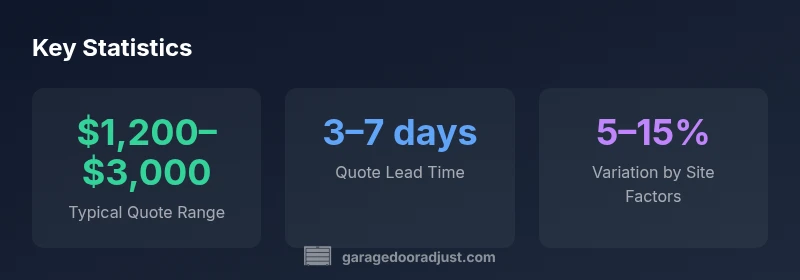
| Standard Installation | Door kit, tracks, springs, opener, labor | $1,200–$2,500 | Value for basic needs |
| Insulated Upgrade | Insulated panels, seals, upgraded tracks | $1,800–$3,000 | Better energy efficiency |
| Premium Smart Opener | Smart features, battery backup | $2,400–$4,000 | High-end options |
Got Questions?
What is included in a roller door quote?
A typical quote lists door material, insulation, tracks, springs, rollers, opener, remote controls, labor, site preparation, disposal, warranties, and any taxes or permits. It should separate mandatory items from optional upgrades.
A roller door quote normally lists the door, insulation, hardware, labor, and any add-ons. It should clearly separate must-have parts from optional upgrades.
How long does it take to receive roller door quotes?
Most quotes arrive within a few days after an on-site assessment or after vendors review your specifications. If you’re online-only, expect two to seven days depending on the supplier’s workload.
Quotes usually come in a few days after a site visit, or within a week if you’re collecting bids online.
Why do quotes vary so much between suppliers?
Variation comes from door material, insulation level, opener features, labor rates, and site-specific factors like ceiling height and access. Always ensure each quote covers the same scope to compare fairly.
Prices differ because of materials, insulation, openers, and site specifics; compare quotes with the same scope.
Should I request a fixed-price quote?
Yes. A fixed-price quote commits the vendor to a defined scope and price, reducing the risk of price creep. Ensure the terms specify what happens if you modify the project.
Ask for a fixed-price quote so you know exactly what you’re paying for and what could change if you adjust the project.
Are permits and disposal fees included in quotes?
Some quotes include permits and disposal, while others itemize them separately. Always confirm whether these fees are included and who handles them.
Check if permits and disposal are included or billed separately, and who handles them.
“Clear, itemized quotes help homeowners avoid surprise costs and align the project with their space and budget. The GarageDoorAdjust Team emphasizes matching scope precisely across bids to ensure you’re comparing true value.”
Quick Summary
- Get apples-to-apples quotes for accurate comparison
- Demand itemized line items to see where costs come from
- Consider insulation and opener features for long-term value
- Watch for hidden fees like disposal or permits
- Ask for fixed-price quotes to lock in scope