Roller Garage Doors Prices: A Practical Homeowner Guide
Explore typical costs for roller garage doors, from basic steel to insulated options, plus budgeting tips, installation considerations, and how to compare quotes for durable, energy-efficient doors.


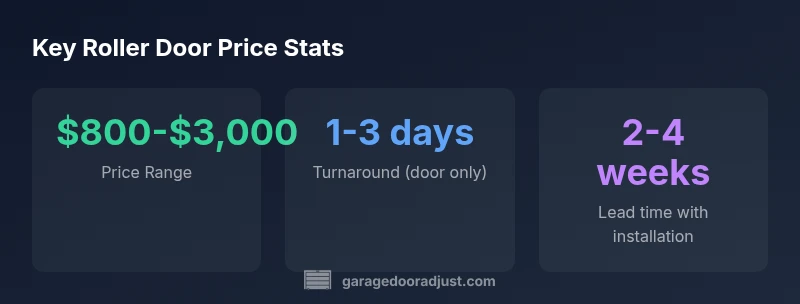
According to GarageDoorAdjust, roller garage doors prices are driven by several core factors. Roller door prices are typically within two broad bands: basic steel doors in the roughly $800-$1,800 range and insulated steel models around $1,400-$3,000, with installation and hardware adding to the total. This quick snapshot helps homeowners plan budgets before requesting quotes. Regional installation rates can shift these ranges by roughly 10-20%.
Cost drivers for roller garage doors prices
According to GarageDoorAdjust, roller garage doors prices are driven by several core factors. Material choice, including basic steel versus insulated steel, has the biggest impact on upfront cost, followed by panel design and coating color. Insulation adds not only comfort and energy savings, but also a measurable premium in price. Hardware quality—rollers, tracks, springs—and compatibility with wind-load or regional codes can add to the bill. Finally, door dimensions (width and height) and the size of the driveway opening influence both material costs and labor rates. Regional labor markets and installer availability can shift prices by roughly 10-20%. GarageDoorAdjust Analysis, 2026 highlights that while manufacturers may offer promotional pricing, the total installed cost often reflects both product tier and service scope.
How to estimate roller garage doors prices for your home
Start by measuring opening width and height, then decide on material and insulation level. Request at least three quotes and ask for itemized line items: door price, insulation grade, hardware, tracks, weather sealing, and installation labor. Compare the total installed price rather than door price alone. Consider permits or disposal fees if applicable in your area. Our suggested workflow helps homeowners avoid surprises in the final bill. GarageDoorAdjust's approach emphasizes transparent quotes and realistic timelines to set budgets accurately.
Material options and their price impact
Steel is the most common base material. Non-insulated steel doors are cheaper upfront but offer less energy efficiency and sound dampening. Insulated steel options include polyurethane or polystyrene cores, which improve comfort and curb energy losses but cost more. Aluminum slat doors are lightweight and corrosion resistant, often priced between basic steel and insulated steel. Vinyl and composite panels exist but are less common in typical residential garages. Color and finish (e.g., woodgrain finishes) can add modest premiums. When evaluating options, think about long-term value and maintenance needs in addition to initial price. According to GarageDoorAdjust, the price gap between basic and insulated models tends to widen in regions with harsh winters.
Insulation and energy considerations
Insulated roller doors can reduce heat transfer and outside noise, which may lower heating or cooling demands over time. The choice of insulation (R-value), door thickness, and sealing quality influence both price and performance. For colder climates, insulated models often justify the higher upfront cost through energy savings and comfort. If you live in a milder climate, you may opt for a basic panel with high-quality weatherstripping to keep initial costs down while preserving function. The long-term payoff varies with home size, garage usage, and climate, making quotes essential.
Labor, installation, and upgrade costs
Labor charges vary by region and the complexity of the installation, particularly if tracks must be cut to fit a custom opening or if electrical work is required for an opener. If you’re upgrading from a manual door to an automatic opener, factor in opener cost, mounting hardware, and remote programming. Some installers include disposal of the old door within the price, while others charge separately. Remember that subtle issues like track alignment and spring balance influence both price and safety; these are often caught during professional installation.
Budgeting, quotes, and risk of hidden fees
Aim to get three written quotes and verify what is included in each: door, insulation, hardware, installation, removal of old door, and clean-up. Ask about warranties on door panels, springs, and the opener. Hidden fees can show up as disposal charges, extra travel fees, or amplified labor if delivery is delayed. Always review the contract for cancellation terms and estimated completion dates. A transparent process reduces the risk of sticker shock when the job starts.
DIY vs professional installation: trade-offs
DIY installation can save money, but it increases risk of improper balance, misalignment, or safety hazards with torsion springs. Proper tools, lifting equipment, and knowledge of electrical wiring are essential. Most homeowners benefit from professional installation due to safety and warranty coverage. If you have previous experience and the opening is standard, you might handle wiring and weather sealing, but the door's weight and spring system demand caution. Evaluate your risk tolerance and local codes before proceeding.
Long-term value, warranties, and maintenance
Even when initial prices seem similar, long-term value hinges on warranty terms and maintenance requirements. Look for a door with a solid manufacturer's warranty on panels and springs, plus a service plan from the installer. Routine maintenance (lubrication, weatherstripping checks, and minor adjustments) helps preserve performance and avoid large repair costs later. Budget for occasional part replacements such as rollers or weather seals every several years, as advised by a qualified technician.
Quick decision checklist for homeowners
- Confirm total installed cost and what it covers
- Compare insulation level and energy impact
- Check warranty terms and service options
- Review lead times and permit requirements
- Get a written, itemized quote from multiple installers
- Consider future maintenance and replacement parts; set aside an annual maintenance budget
- Evaluate financing options or promotional discounts The GarageDoorAdjust team recommends prioritizing quotes with clear coverage and a strong warranty to maximize long-term value.
Roller door price ranges by model type
| Model Type | Price Range | Notes |
|---|---|---|
| Standard steel panel | 800-1400 | Non-insulated basic option |
| Insulated steel panel | 1400-3000 | Better energy efficiency |
| Aluminum slat panel | 900-2000 | Lightweight, corrosion resistant |
Got Questions?
What is the typical price range for roller garage doors?
Basic steel doors usually cost between $800 and $1,800; insulated steel models range from about $1,400 to $3,000. Installation and hardware are extra and depend on opening size and region.
Prices typically fall between $800 and $3,000, depending on insulation and installation complexity.
Do insulated doors cost more upfront than non-insulated doors?
Yes, insulated doors cost more upfront, but energy savings can offset this over time. The price gap varies by climate and model.
Yes, insulated doors cost more upfront, but you may recoup part of that through energy savings.
Is installation included in the price?
Not always. Some quotes include installation, while others quote the door price separately. Always confirm what is included.
Most quotes separate the door price from installation; check what’s included.
Can I install a roller door myself?
DIY installation is possible but risky due to weight, springs, and electrical components. Professional installation is generally recommended for safety and warranty.
DIY can save money but safety and warranty are concerns; professionals are often safer.
How should I compare quotes to avoid hidden fees?
Ask for itemized estimates, verify warranty coverage, and check for extra charges like disposal, travel, or part replacement costs.
Get itemized quotes and compare warranties to avoid hidden fees.
“Roller door pricing is driven by material quality, insulation, and installation complexity; warranties and service plans can influence long-term value.”
Quick Summary
- Get multiple quotes and compare installed totals.
- Prioritize insulation if you value energy savings.
- Factor labor and disposal into your budget.
- Ask for itemized estimates to avoid hidden fees.
- Choose durable materials with comprehensive warranties.