One Garage Door vs Two: A Comprehensive Comparison for Homeowners
Compare one garage door vs two to understand space, cost, insulation, and opener options. This analytical guide helps homeowners choose the best setup for reliability, energy efficiency, and value.


When deciding between one garage door vs two, the typical rule of thumb is to favor a single, wider door unless your garage width or vehicle sizes demand a broader opening. A single door usually saves on installation, maintenance, and opener complexity, while two doors offer flexible access for larger vehicles but add hardware and space considerations.
Why this comparison matters\n\nIf you're deciding between one garage door vs two, you're weighing how much space your driveway needs, what sizes of vehicles you park, and how you use your entry. The one-vs-two question isn't just about styling; it changes structural needs, insulation options, opener setup, maintenance, and resale value. GarageDoorAdjust's guidance in 2026 emphasizes that most homes benefit from a single, wider door when the garage opening is standard and vehicles fit comfortably. However, if you have an exceptionally wide bay or you frequently navigate large vehicles, two doors can provide practical advantages. The decision should reflect real-world use: number of vehicles, typical length of trips, and whether you want to maximize curb appeal or maximize ease of use. By understanding the main variables—width, space when doors are open, and installation complexity—you can make a choice that lasts for years.
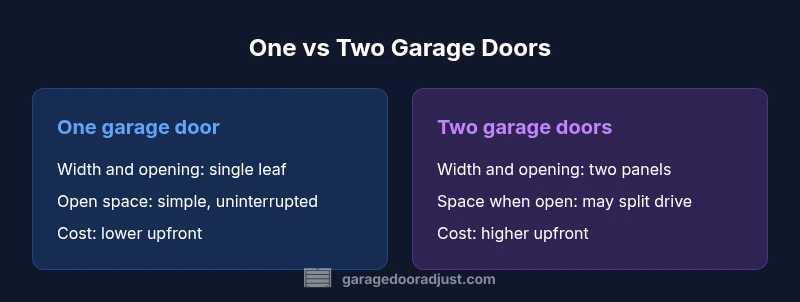
Space and opening width\n\nThe primary mechanical difference between one garage door vs two is how the opening is framed and how the doors move. A single, wider door typically spans the full bay and opens as a single panel, which can simplify weather sealing and insulation. In contrast, two doors split the opening into two panels, which may require more precise alignment but can offer a wider overall clearance when the doors are open, depending on the track design. Consider your vehicle widths, family needs, and whether you want a dramatic, uninterrupted opening or the flexibility of separate access. If your bay is standard in width, a single door often provides the best balance of cost, reliability, and ease of use.
Structural implications and installation complexity\n\nChoosing between one garage door vs two has direct implications for installation labor and structural requirements. A single door usually involves a wider header and a simpler track system, which can translate to shorter installation times and lower labor costs. Two doors require two sets of tracks, hinges, and potentially separate torsion springs, which increases both material costs and the risk of misalignment if not installed correctly. If you are replacing an existing setup, evaluate whether your existing frame can support a broader single panel or if it already accommodates two smaller panels without compromising structural integrity. Engaging a professional ensures correct header sizing, fastener torque, and proper spring balance for safe operation.
Cost and value trade-offs\n\nCost is a central consideration when choosing one garage door vs two. A single, wider door generally has lower upfront costs due to fewer components and faster installation. Two doors tend to increase material and labor costs, and the ongoing maintenance can be higher due to more moving parts and potential alignment issues. However, two doors may offer long-term value in scenarios where space constraints or vehicle width demand it, and they can be more forgiving when it comes to minor misalignments or dent repairs since each panel is independent. In every case, consider total cost of ownership over 10–20 years, including potential replacements, weather sealing upgrades, and opener compatibility.
Insulation, energy efficiency, and weather sealing\n\nInsulation strategies differ subtly between one garage door vs two. A single door may provide a larger continuous seal, making it easier to reduce drafts if the door and frame are well-insulated. Two doors allow independent insulation of each panel, which can be advantageous in very cold climates if you can seal gaps effectively at the header and jambs. In practice, the energy impact hinges on the door’s R-value, weather-stripping quality, and the effectiveness of the track housing. Regardless of choice, ensure proper weather stripping, minimum air gaps, and a well-sealed threshold to control heat loss and dust intrusion.
Opener compatibility and automation considerations\n\nMost modern openers can accommodate either configuration, but there are practical differences. A single-door setup often works best with a standard, single-track opener. For two doors, you can use a dual-track opener or two synchronized openers, which can increase reliability but adds wiring and control considerations. Consider smart-home integration, battery backup requirements, and safety sensors when comparing one garage door vs two. The goal is to maintain smooth opening/closing performance while minimizing the risk of misalignment and sensor interference.
Maintenance, durability, and service frequency\n\nMaintenance needs scale with complexity. A single door has fewer moving parts and typically requires less routine inspection of hinges, rollers, springs, and tracks. Two-door systems introduce more joints and potential wear points, increasing the need for lubrication, balance checks, and occasional panel alignment. Routine maintenance—such as lubricating moving parts, testing reversing sensors, and inspecting weather seals—remains essential regardless of configuration. Budget extra time for periodic checks if you choose two doors, but understand that quality components and professional tune-ups can keep both options reliable for many years.
Design, aesthetics, and curb appeal\n\nThe visual impact of one garage door vs two can be meaningful. A single, wide door can deliver a clean, streamlined façade that often enhances curb appeal. Two smaller doors can create a classic, traditional look that suits some architectural styles or finishes better, especially if you want to break up a large door panel and emphasize symmetry. Consider your home’s architectural language, color and texture choices, and whether you prefer a modern minimalist feel or a more decorative factor in the garage area. Both options can be visually appealing when matched with the right hardware and hardware finishes.
Real-world scenarios when one shines, and when two shines\n\nFor tight garages or homes with standard vehicle sizes, a single door frequently provides the best balance of cost, reliability, and maintenance simplicity. If your bay is notably wide, you may gain by two doors—especially if you need flexible access for multiple drivers or you want to minimize the risk of a single door being damaged by a misaligned panel. In regions with heavy snowfall or wind, the durability and sealing of a single, larger door can simplify weatherization, whereas two doors can limit damage in case of impact to one panel. Your decision should reflect your daily routines and the variability of your driveway.
Safety, codes, and professional assessment\n\nBefore finalizing the choice between one garage door vs two, verify local safety standards and building codes, especially if you’re altering wall framing or header dimensions. A pro inspection can identify potential header reinforcements, track alignment, and spring balance requirements that affect long-term safety. If you’re uncertain about load-bearing requirements, or if your garage houses utilities or unusual structural features, a professional assessment can prevent costly mistakes and ensure compliance with safety standards.
When DIY makes sense—and when to call a pro\n\nDIY is feasible for minor adjustments, weather-stripping upgrades, or panel replacements when the system is well-balanced and you have the right tools. For major decisions—like changing the header size, deciding on a dual-track versus single-track opener, or rebalancing springs—hire a professional. Incorrect installation or misbalanced springs can create safety risks. GarageDoorAdjust recommends seeking professional guidance for any work that involves structural changes, door weight, or potential impact to home safety.
Quick decision checklist\n\n- Measure your total bay width and vehicle width to determine whether a single door can accommodate your needs.\n- Compare installation time, labor costs, and material costs between a single door and two doors.\n- Assess insulation and weather sealing options for your climate.\n- Check opener compatibility and any smart home requirements.\n- Plan for maintenance needs over the next decade.\n- Consider curb appeal and architectural harmony with your home's style.
Putting it all together: your decision checklist\n\nUse the checklist above to evaluate the practical and aesthetic implications of one garage door vs two. Balance initial costs against long-term maintenance, energy efficiency, and future flexibility. Remember that the best choice aligns with your garage width, vehicle sizes, daily usage, and long-term plans. By documenting your needs and getting a professional inspection where appropriate, you can select the configuration that will serve your home well for years to come.
Comparison
| Feature | One garage door | Two garage doors |
|---|---|---|
| Width and opening | Single, wide opening (one leaf) | Wider overall opening split into two leaves |
| Space when open | Opens into a single footprint; often clearer driveway | Two leaves leave space between them when open, potential driveway impact |
| Cost Range | Lower upfront cost on average | Higher upfront cost due to extra hardware and labor |
| Insulation options | One continuous panel; straightforward sealing | Two panels; possible per-panel insulation but more joints |
| Opener compatibility | Typically one compatible opener | Can use a dual-track opener or two openers; verify compatibility |
| Maintenance frequency | Fewer moving parts, typically lower maintenance | More components to inspect and lubricate, higher maintenance |
| Security considerations | Fewer seams can reduce points of entry | Two doors offer independent security sections but more hardware to guard |
| Best for | Narrow bays and budget-conscious homes | Wide bays or vehicles requiring broad clearance |
Upsides
- Single-door setups are typically cheaper to install
- Faster installation with standard tracks and springs
- Simplicity reduces potential points of failure
- Cleaner look for standard-width garages
- Easier to integrate with smart openers when using a single unit
Disadvantages
- Single-door width may not accommodate large vehicles
- Two-door configurations require more hardware and alignment
- Future space needs may necessitate costly changes
- Two doors can complicate weather sealing and insulation if not properly installed
One garage door is usually the better default choice for typical garages.
For most homeowners with standard-width garages, a single door provides simpler installation, lower upfront costs, and reliable operation. Opt for two doors only if your bay is unusually wide or you frequently park large vehicles and want flexible separate access.
Got Questions?
What factors should I consider when deciding between one garage door and two?
Consider garage width, vehicle size, daily usage, insulation needs, and the total cost of ownership. Also weigh installation time and future-proofing against curb appeal and maintenance requirements.
Think about width, vehicles, usage, insulation, and long-term costs when choosing between one door and two.
Are two doors better for insulation than a single door?
Two doors can be insulated similarly to a single door, but joints between panels introduce potential heat leaks. A well-sealed two-door system can perform comparably if installed correctly.
Insulation quality depends on sealing; two doors can be as effective as one if properly installed.
What is the typical cost impact of choosing one versus two doors?
Cost varies by region, but a single door generally costs less upfront due to fewer panels and hardware; two doors add material and labor. Long-term maintenance costs may differ based on usage and wear.
Single doors usually cost less upfront; two doors add materials and labor.
Is a two-door system compatible with standard openers?
Most standard openers can handle either configuration, but a wider header or dual-track system may require a compatible opener setup or two controllers.
Most openers fit both, but check header size and track configuration.
What maintenance differences exist between one door and two doors?
Two-door systems have more moving parts and joints, so they require more frequent inspection and lubrication. A single door is simpler and usually quicker to service.
Two doors mean more parts to maintain; single doors are simpler.
When should I hire a professional vs DIY for this decision?
For structural changes or header resizing, hire a professional. Minor tuning and weather-stripping upgrades can sometimes be DIY if you follow safety guidelines.
Consult a pro for structural work; DIY is possible for small tweaks with caution.
Quick Summary
- Evaluate bay width against vehicle width before choosing
- Single doors save upfront costs and simplify maintenance
- Two doors can offer wider clearances but add complexity
- Insulation and weather sealing depend on installation quality
- Professional inspection helps ensure safety and code compliance
- Plan for long-term value and future needs when deciding