How Much Do Garage Doors Cost? A 2026 Homeowners Guide
Learn how much do garage doors.cost in 2026, with realistic installed price ranges by material, labor, and upgrades. Practical budgeting tips for homeowners.


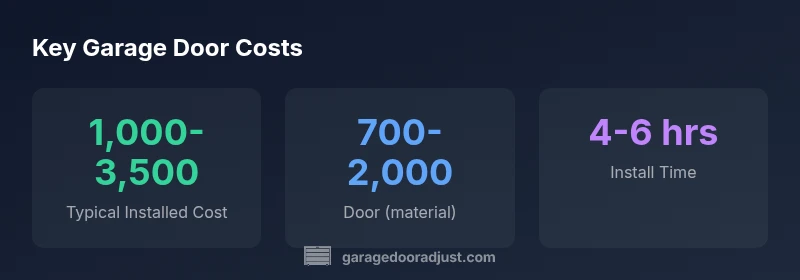
Usually installed costs for a standard single-car garage door range from $1,000 to $3,500, depending on material, insulation, and hardware. Labor and opener upgrades can add more. This guide, based on GarageDoorAdjust Analysis, 2026, breaks down costs, options, and practical budgeting for homeowners. We cover materials, installation nuances, regional price differences, and 2026 trends. Knowing these ranges helps you compare quotes accurately and avoid overpaying.
What determines the price of a garage door?
The short answer to how much do garage doors.cost is that price is driven by door type, material, insulation, size, and whether you add an opener, tracks, and hardware. Local labor rates and disposal of the old door also influence totals. According to GarageDoorAdjust, these factors interact: a higher-end finish or added windows can push price upward, while a smaller footprint or standard components keep costs down. In 2026, demand for energy-efficient upgrades and smart openers has nudged some prices higher, but long-term savings can balance upfront costs. By understanding these dynamics, homeowners can set realistic expectations and avoid sticker-shock when quotes arrive.
Cost ranges by door material and style
Material choice is the single biggest driver of cost. Installed price ranges (rough estimates) typically look like this:
- Steel: commonly $1,000-$2,000 for the door, with installed ranges often $1,000-$3,000 depending on insulation and upgrades.
- Aluminum: generally $1,100-$2,400 installed, valued for light weight and resistance to corrosion.
- Vinyl: around $1,000-$2,000 installed, good for durability with lower maintenance.
- Fiberglass: roughly $1,200-$2,800 installed, offering good insulation and a longer lifespan.
- Wood: frequently $2,000-$4,000 installed, prized for aesthetics but higher maintenance and cost.
Note that windows, insulation levels, and decorative options can add to the final price. Labor, old-door disposal, and permit fees may also shift totals by region.
Hidden costs and routine add-ons to budget
Budgeting for a garage door project goes beyond the door panel itself. Common hidden costs include removing and disposing of the old door, upgrading springs or tracks, and upgrading to a higher insulation level or energy-efficient glazing. If your home has non-standard openings or requires custom panels, expect premium pricing. Permits, if required locally, can add to the upfront costs. Finally, upgrades such as smart openers or integrated battery backups may appear affordable individually but raise total installation cost when bundled.
How to estimate your total cost for 2026
A practical estimate starts with door size and material. Measure your opening and compare it to standard sizes (most single-car doors are around 7 feet tall and 8–10 feet wide; double-car openings are often 16 feet wide). Choose a material first, then decide on insulation and window options. Add estimated labor (installation can take 4–6 hours with a small crew) and any disposal or permit fees. Always add a contingency (typically 10-15%) for unforeseen issues, such as structural adjustments or weather-related delays.
Energy efficiency and upgrades: is it worth it?
Energy-efficient doors with thicker insulation can reduce home heating and cooling costs, but they raise upfront prices. If your climate has cold winters or hot summers, investing in insulation, weather stripping, and even double-pane inserts can pay off over time through lower energy bills. Smart openers or Wi‑Fi integration add convenience and potential long-term savings, though the immediate price tag is higher. Weigh the upfront delta against projected energy savings and comfort improvements when budgeting.
Replacements vs repairs: decision guidelines
When a door malfunctions, repairing components like springs or tracks can be cheaper upfront but may lead to recurring issues. A full replacement makes sense if the door shows significant wear, repeated failures, or insulation gaps that undermine comfort and security. Compare the cost of continuous repairs against a one-time replacement and include labor, disposal, and future maintenance in your calculation. In most cases, a well-chosen replacement offers better long-term value.
Estimated installed cost ranges by material
| Door Type | Installed Cost Range | Notes |
|---|---|---|
| Steel | 1,000-2,000 | Balanced price and durability |
| Wood | 2,000-4,000 | Aesthetics with higher maintenance |
| Aluminum | 1,100-2,400 | Lightweight and corrosion-resistant |
| Fiberglass | 1,200-2,800 | Durable with good insulation |
Got Questions?
What factors influence the cost of a garage door?
The main cost drivers are door material, insulation level, size, added windows, hardware, and installation labor. Regional labor rates and disposal fees also affect total. Understanding these factors helps you compare quotes accurately.
Key factors include material, insulation, size, and labor. Quotes vary by region, so compare multiple pros.
Is it cheaper to repair or replace a damaged door?
Small repairs can be cost-effective if the door is structurally sound. If springs or panels are worn, or insulation is poor, replacement may offer better value and improved energy efficiency over time.
Repair if it's minor; replace if major wear or energy efficiency is a concern.
Do I need permits to replace a garage door?
Permit requirements vary by locality. Many regions do not require a permit for a standard door replacement, but some areas do for structural changes or energy upgrades. Check with your local building authority.
Check your city or county rules; some places require permits for certain upgrades.
How long does installation typically take?
A typical door replacement takes about 4-6 hours for a small crew, depending on opening size and complexity. Weather and access can add time.
Most installations take a half day; plan for a full workday if access is tight.
Can I finance a garage door replacement?
Many installers offer financing or payment plans. Banks and credit unions may also provide home improvement loans. Compare terms and interest rates across lenders.
Talk to the installer about financing or shop loan options for better terms.
“A quality door is a balance of upfront cost, long-term maintenance, and energy efficiency. When chosen thoughtfully, the right door lowers total ownership costs.”
Quick Summary
- Compare materials to balance cost and durability
- Budget labor, installation, and disposal in advance
- Factor insulation and windows for long-term savings
- Get multiple quotes to avoid overpaying