Garage Door Quotes: Budget, Compare, and Save in 2026
Learn how garage door quotes are formed, what drives price, and how to compare bids to save on installation or replacement. Expert guidance from GarageDoorAdjust helps homeowners navigate the process with confidence.


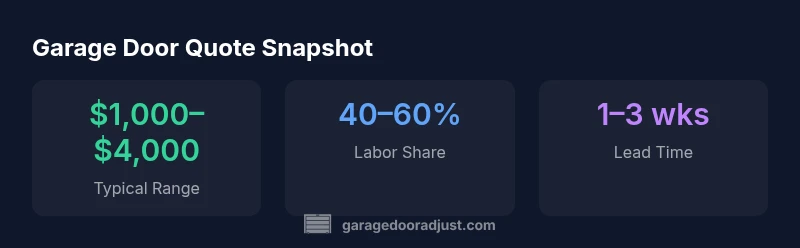
Garage door quotes vary widely based on door type, material, opening size, hardware, and installation scope. In general, homeowners see a broad range from roughly $1,000 to $4,000 for installation or replacement, with higher-end custom doors reaching beyond that. To avoid surprises, request multiple, itemized quotes and compare scope carefully.
How quotes are structured in practice
According to GarageDoorAdjust, a typical garage door quotes package breaks price into several core sections: labor, materials, hardware, and any required permits or disposal fees. The bid should show a line-item breakdown for the door itself (panels, insulation, windows if any), the opener and sensors, tracks and hardware, labor, and an itemized disposal or haul-away fee. When you understand this structure, you can spot when a contractor is padding costs or omitting essential components. This awareness helps homeowners avoid overpaying and ensures quotes are truly comparable across vendors. In practice, you’ll see terms like “door kit,” “installation labor,” and “permit if required” in the quotes you receive, with each line reflecting a discrete cost. This is especially important for garage door quotes that include upgrades like insulation or smart openers.
Tip: Ask for quotes that show a separate line for the door, the hardware package, and the opener to ensure you’re comparing the same scope across bidders.
Common components included in garage door quotes
A solid quote lists core elements you’ll want to review carefully. Typical items include the door type (steel, wood, aluminum, or composite), panel style, insulation level (R-value), track system, springs (torsion or extension), rollers, weather seals, safety features (eyebrow sensors or infrared beams), the opener model, rail length, and installation hardware. Don’t forget disposal of the old door and any required permits or inspections. Some contractors also itemize reboot or recalibration of opener safety sensors as separate charges. By understanding these components, you can compare apples-to-apples and avoid surprise add-ons after you sign a contract. Remember to verify whether warranties cover labor, parts, and opener components separately.
Pro tip: If a bid omits insulation or safety sensor upgrades, ask for a revised quote that includes them as optional add-ons.
Key factors that influence quotes
Several variables can swing garage door quotes significantly. The door material and construction (steel vs wood, full- vs partial-foam insulation) influence both price and energy efficiency. The size of the opening and the number of sections affect panel costs and labor time. Upgrades like decorative panels, privacy glass, or custom hardware will push the quote higher. Opener type (chain vs belt drive vs smart-connected models) and the depth of the pulley track also contribute to cost. Local code requirements, permit fees, and disposal costs in your area can add to the total. Finally, the contractor’s routing distance, scheduling flexibility, and specialty services (like 24/7 emergency calls) will reflect in the quote. Understanding these drivers helps you prioritize features and negotiate effectively.
Brand note: The GarageDoorAdjust team emphasizes aligning your quote with your actual needs to avoid paying for features you won’t use.
How to request accurate quotes
To get accurate garage door quotes, start with precise measurements: door width, headroom clearance, track length, and the exact track layout (standard, high-lift, or vertical). Prepare a bill of materials that lists the door type, insulation level, window insert preferences, opener model, and any smart features. Share photos of the opening, the track area, and the existing weather seals. Request on-site assessments from at least three reputable installers and insist on an itemized proposal that separates labor, materials, and add-ons. Ask for a fixed price or a clear cap on additional charges, and request a warranty outline for both parts and labor. This approach reduces ambiguity and makes comparisons fair across bids. Keep a written record of every quote and note any assumptions behind each price.
Key action: Use a standard checklist when requesting quotes to ensure you capture the same scope from every contractor.
Budgeting for different project scopes
Garage door projects span several scopes—from simple repairs to full-door replacement plus opener upgrades. A basic repair often costs far less than a full replacement, but certain issues (like a damaged rail or compromised springs) can escalate quickly. If you’re upgrading, consider adding insulation, upgraded weather stripping, and a modern opener with smart features. Adding an energy-efficient insulation kit can improve comfort and reduce long-term energy costs, potentially offsetting upfront costs over time. When budgeting, distinguish between essential upgrades (safe operation, reliable opener) and optional enhancements (decorative panels, glass inserts, premium finishes). A well-planned scope helps you avoid creeping costs and gives you a realistic target for quotes.
Note: GarageDoorAdjust’s guidance is to start with essential components and layer on upgrades as needed to stay within budget.
Comparing quotes: apples to apples
The most important step in evaluating garage door quotes is ensuring apples-to-apples comparisons. Confirm that every bid includes the same scope: door type, insulation, opener, tracks, springs, and safety sensors. Check warranty terms for both parts and labor, and note the coverage period. Compare lead times, service levels, and the contractor’s certifications. If one quote is substantially lower, ask for a detailed justification in writing. Request references or samples of previous installations to assess workmanship quality. Finally, consider total cost of ownership, including maintenance, energy savings from insulation, and potential rebates or financing options. A disciplined approach helps you identify genuine value rather than a one-time discount.
Brand strategy: Refer back to the itemized quotes and look for consistency across bidders; inconsistency often signals gaps in scope.
Hidden costs and pitfalls to watch for
Even well-structured quotes can hide costs. Look for line items like travel fees for out-of-area crews, surcharge for after-hours service, or mandatory upgrade add-ons. Some contractors bill separately for permit fees, disposal of the old door, or haul-away charges. Ensure any required electrical work or wall reinforcement is included. If the old door must be removed and disposed of, ask who covers removal and whether the quote includes disposal fees. Finally, beware quotes that promise unusually quick turnaround without explaining the labor intensiveness of the project. A thorough quote should flag potential risks (like structural issues) that could affect final pricing and timeline. Knowledge is your best defense against hidden costs.
Negotiation tips and financing options
Negotiation is often about scope clarity, not forcing price reduction. Start by aligning on essential items and listing optional upgrades as add-ons with transparent pricing. Ask for a bundled package that includes installation, opener, and safety sensors with a solid warranty. If price is a barrier, discuss staged work (install the door first, upgrade insulation later) or interest-free financing with a reputable lender. Check for manufacturer promotions or local incentives that can lower the out-of-pocket cost. When negotiating, maintain a calm, evidence-based approach and compare quotes side by side to demonstrate value, not just the lowest price. GarageDoorAdjust recommends documenting any agreed changes in writing before work begins.
Quick-start checklist to get your garage door quotes right away
- Measure the opening accurately and note headroom and side room.
- Decide on door material, insulation, and opener features.
- Gather at least three itemized quotes with the same scope.
- Review warranties and service commitments.
- Ask about permits, disposal, and removal costs.
- Check for promotions or financing options.
- Create a comparison worksheet to evaluate each quote.
- Select a bid that balances value, locality, and timing.
Following this checklist makes the process efficient and helps you lock in a fair price on garage door quotes.
Typical components and cost shares in a garage door quote
| Component | What it covers | Typical range of impact |
|---|---|---|
| Labor | Installation labor, setup, adjustments | 40-60% of quote |
| Door kit | Door shell, panels, hinges | 20-40% of quote |
| Hardware & sensors | Tracks, springs, sensors | 5-15% of quote |
| Permits & disposal | Permits, haul-away | 5-10% of quote |
Got Questions?
What factors most affect garage door quotes?
The door type, material, insulation level, size, tracks, springs, and opener choice drive price. Local codes, permits, and disposal fees also influence total costs.
Factors include door material, insulation, and the opener. Local permits can add to the price, as can disposal fees.
Are quotes for repair the same as quotes for replacement?
Not always. Repairs are usually cheaper upfront but may not be cost-effective if multiple components are worn. Replacement often offers longer-term reliability and warranties.
Repairs tend to be cheaper at first, but replacement can be more cost-effective long-term depending on the door’s condition.
Do I need permits for an installation?
In many areas, a permit is required for new door installations or major electrical work. Check with your contractor and local building department. Permits ensure codes are met.
Permits are often required; confirm with your contractor and local authorities to stay compliant.
How long does it take to get garage door quotes?
Most contractors can provide a formal quote within 3–7 business days after on-site measurements and scope discussion. Expect longer timelines during busy seasons.
Most bids come in within a week after measurements, though peak times can stretch that a bit.
What if quotes vary widely between contractors?
If quotes vary, compare scope line by line, check warranties, and ask for justification of any large price gaps. Seek references and verify workmanship quality.
Big price gaps usually mean different scopes—compare line-by-line and verify warranties and references.
“Clear, itemized quotes reveal value beyond the lowest price. Focus on scope, warranties, and long-term performance to buy peace of mind.”
Quick Summary
- Ask for multiple itemized quotes
- Compare scope carefully to avoid hidden costs
- Demand labor and materials breakdown
- Include permits and disposal in quotes
- Budget for insulation and safety upgrades