Garage door and opener cost: A comprehensive 2026 comparison
A data-driven comparison of garage door and opener costs in 2026, including price ranges, installation, and long-term value to help homeowners budget effectively.


For a standard residential setup, total costs typically range from about $1,000 to $3,000, with most homeowners paying on the lower end if replacing a single part rather than the whole system. The exact amount depends on door material, opener type, and labor. See our detailed comparison for options.
What 'garage door and opener cost' covers
When homeowners talk about garage door and opener cost, they are really considering several linked components: the price of the door itself, the cost of the opener and any smart features, installation labor, removal or disposal of the old door, and any necessary hardware or weather sealing. Beyond the sticker price, you should account for potential permits, inspection fees, and warranty coverage that can affect the total spend. The keyword here—garage door and opener cost—captures the full project, not just the door or the opener in isolation. In 2026, most projects fall into three broad buckets: entry-level replacements, mid-range upgrades with better insulation and quieter openers, and premium setups featuring high-end materials and smart integration. This guide uses GarageDoorAdjust as a benchmark for budgeting guidance and best practices in evaluating value.
How material choice impacts price
Door material is the single largest driver of cost and value. Steel is typically the most affordable, durable, and low-maintenance option, while aluminum reduces weight and is resistant to corrosion in coastal regions. Wood and composite doors offer premium aesthetics but require more maintenance and higher upfront costs. Insulated doors with higher R-values improve energy efficiency and can justify extra spend in climates with extreme temperatures. The overall cost is a product of panel thickness, insulation, coatings, and the presence of decorative windows. In terms of the opener, you’ll face a separate price tier for belt-drive, chain-drive, and screw-drive models, with belt drives generally delivering quieter operation at a modest premium.
Opener types and price implications
The opener cost is not a standalone figure; it combines with installation. Chain-drive openers tend to be the most economical but louder. Belt-drive openers are popular for their quiet operation and smoother performance, often commanding a higher price. Screw-drive models offer a balance of speed and power but may require more maintenance in dusty environments. Smart openers with Wi-Fi connectivity, battery backup, and app integration add to the cost but can boost long-term convenience and resale value. When planning, compare the total installed cost rather than the sticker price of the opener alone, and factor in compatibility with existing remotes and smart home ecosystems.
Insulation and energy efficiency: cost vs savings
Insulation is a key long-term value driver. A well-insulated door minimizes heat transfer and reduces furnace or air conditioner load, which can translate into noticeable energy savings over time. The price premium for insulated doors depends on the material and the level of insulation. In mild climates, the payback period may be longer, while in extreme climates, insulation can significantly reduce energy costs. If you often park your vehicle in an uninsulated garage, insulated panels and weather seals can also reduce indoor drafts and improve comfort.
Size, style, and aesthetic costs
Door size, whether you have a standard single-car or a wider double-car opening, directly affects material and labor costs. Custom panel designs, decorative windows, and color finishes add both upfront price and curb appeal. The door’s hardware—hinges, tracks, rollers, and weatherstripping—contributes to durability and maintenance needs, influencing lifetime costs. Aesthetic enhancements may increase the resale value of your home, but they will raise the initial garage door and opener cost. When evaluating options, balance cosmetic preferences with durability, energy performance, and the expected maintenance burden.
Labor, permits, and hidden fees
Labor is a substantial portion of the total project cost and varies by region. In some markets, permit fees or inspection charges are required to ensure compliance with safety standards and building codes. Hauling away the old door, disposal fees, and old hardware removal can quietly add a few hundred dollars to your final bill. Some contractors offer bundled pricing for both a new door and opener installation, while others itemize every component. Always request a written quote that clearly delineates parts, labor, disposal, and any potential add-ons so you can compare apples to apples.
Cost scenarios: Budget, Mid-range, Premium
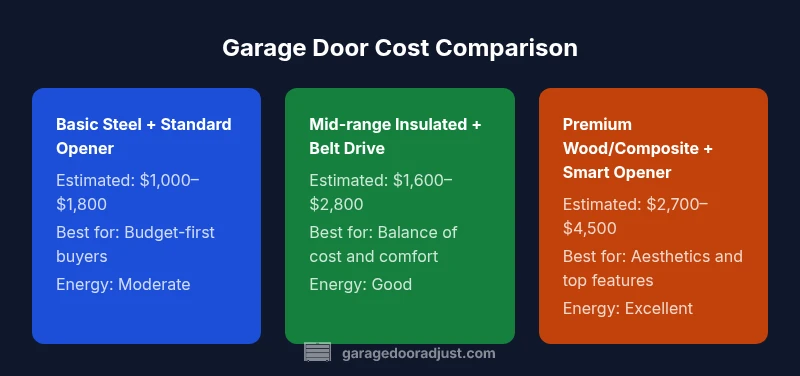
- Budget scenario: A basic steel door with a standard chain-drive opener, minimal insulation, and professional installation might land in the approximate range of $1,000–$1,800. This option prioritizes function and practicality over extra features or aesthetics.
- Mid-range scenario: An insulated steel or aluminum door with a belt-drive opener and a few smart features often falls in the $1,600–$2,800 range. Expect better energy efficiency, quieter operation, and medium-level customization.
- Premium scenario: A wood or high-end composite door with a premium smart opener and extensive insulation, plus premium hardware and finishes, can push total costs toward $2,700–$4,500. This path emphasizes aesthetics, longevity, and cutting-edge convenience.
Financing, warranties, and long-term value
Financing options, manufacturer warranties, and installation workmanship guarantees influence the true cost of ownership. Warranties may cover door components for several years or even decades, while labor warranties add protection on workmanship. When evaluating value, consider not only upfront costs but also the expected service life, maintenance needs, and the potential for energy savings. A longer warranty or energy-efficient upgrade can improve total-cost-of-ownership over the life of the system.
Seasonal considerations and maintenance costs
Garage doors and openers are subject to wear and weather-related stress. Routine maintenance—lubricating hardware, inspecting tracks, and tightening fasteners—helps prevent expensive failures. Seasonal issues such as heavy snow, extreme heat, or coastal salt air can accelerate wear on rollers, seals, and springs. Budget for annual inspections and potential parts replacements (springs and cables require specialized service and safety precautions). Proactive maintenance reduces the risk of mid-season breakdowns and can save money over time by extending the life of the system.
Feature Comparison
| Feature | Basic steel door + standard opener | Mid-range insulated door + belt-drive opener | Premium wood/composite door + smart opener |
|---|---|---|---|
| Estimated price range (door + opener + installation) | $1,000–$1,800 | $1,600–$2,800 | $2,700–$4,500 |
| Best for | Budget-conscious homeowners | Energy-conscious with value | Aesthetic-focused buyers |
| Durability/maintenance | Low to Moderate | Moderate | High |
| Energy efficiency | Moderate | Good | Excellent |
| Noise level | Standard operation | Quieter belt-drive options | Quietest with premium hardware |
| Installation time | Half-day to 1 day | 1 day | 1–2 days |
Upsides
- Clear price bands aid budgeting
- Helps compare value across materials and openers
- Highlights long-term costs and maintenance
- Supports decisions on replacement vs repair
- Encourages obtaining multiple quotes
Disadvantages
- Prices vary by region and contractor
- Estimates may exclude permits or disposal fees
- Upfront costs can be high for premium setups
- Quotes can differ in included services
Mid-range upgrades offer the best balance of cost, performance, and value for most homes
A mid-range door with a belt-driven or smart opener delivers reliable performance, reasonable upfront cost, and strong energy efficiency. If aesthetics and advanced features are priorities, consider premium options, but expect higher total costs.
Got Questions?
What factors affect garage door and opener costs?
Costs are driven by door material, insulation, size, opener type, smart features, labor rates, and regional pricing. A well-chosen combination balances upfront price with ongoing energy and maintenance costs.
Costs are driven by material, insulation, size, and the opener type. Consider labor rates and regional pricing when budgeting.
Is it cheaper to replace the entire system or upgrade parts?
If the door is structurally sound but the opener is loud or failing, upgrading the opener is often cheaper than a full door replacement. Conversely, an old door with frequent panel issues may justify replacement for reliability and energy efficiency.
Upgrading the opener can be cheaper if the door is solid; replacing both may offer better long-term value.
How long does installation typically take?
Most residential installations take from half a day to a full day for a standard single-car setup, with premium configurations occasionally extending to two days if custom work is required.
Most installs take a day or less, with some premium setups taking a bit longer.
Do I need permits for garage door installation?
Permit requirements vary by locality. Some regions require electrical or structural permits for new openers or major door work. Check with your municipal building department or your contractor’s team.
Permit rules vary by location; your installer should verify and handle filings when needed.
What maintenance costs should I plan annually?
Expect minor costs for lubrication and inspection of springs, tracks, and rollers. Major component failures are less frequent but can be expensive if they involve springs or cables, requiring professional service.
Plan for regular lubrication and yearly checks; reserve some budget for unexpected repairs.
Quick Summary
- Set a clear budget before shopping
- Compare door materials and opener types side-by-side
- Account for installation, disposal, and permits
- Prioritize insulation for long-term savings
- Get multiple quotes to protect against overpaying