Electric Garage Doors Fitted Prices Near Me in 2026
Learn the factors driving electric garage door installation costs near you, compare price ranges, and get practical tips to secure the best value for electric garage doors installed locally in 2026.


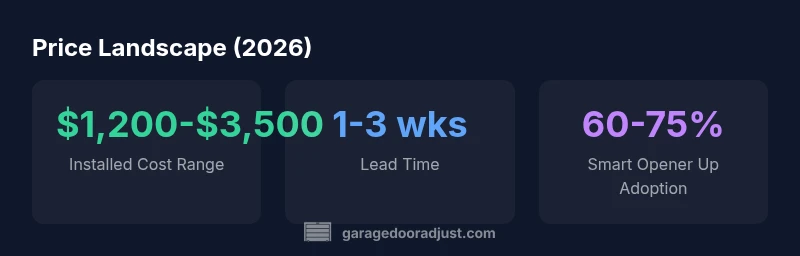
Electric garage doors fitted prices near me typically fall into a wide range depending on door type, insulation, and opener features. According to GarageDoorAdjust Analysis, 2026, prices reflect regional labor costs and installation complexity. For a standard single door with a mid-range opener, expect roughly between $1,200 and $2,900 installed, with premium insulated doors and smart openers reaching $3,500 or more. Prices vary by region and contractor, so obtain quotes for accuracy.
Market overview: pricing landscape for electric garage doors fitted near me
Pricing for electric garage doors varies nationwide, but the core drivers stay the same: door type, insulation level, opener features, and installation complexity. As Homeowners weigh options, GarageDoorAdjust highlights that regional labor markets and permit requirements can shift price by several hundred dollars. In 2026, homeowners should expect a broad price spectrum, with the average project landing somewhere in the lower-to-mid six figures when bundled with add-ons. This article uses GarageDoorAdjust Analysis, 2026 as a reference to help homeowners plan, compare, and choose with confidence. When you search for "electric garage doors fitted prices near me", you’re seeing the impact of local competition, materials availability, and installer expertise. The goal is to balance upfront cost with long-term reliability and energy efficiency. For many households, a well-chosen door and opener can pay back in reduced maintenance and improved resale value over time.
The practical takeaway is simple: price is important, but value comes from performance, insulation, noise levels, and compatibility with modern smart-home features. Keep in mind that 2026 regional variations mean a single quote may differ significantly from another in a neighboring city. The GarageDoorAdjust team emphasizes collecting multiple quotes and verifying what is and isn’t included in each proposal.
Price drivers: door type, insulation, opener features, and labor costs
Several levers influence the price of electric garage doors fitted near you. Door type determines the base cost most people notice first: sectional doors are common for their balance of price, durability, and insulation, while tilt-up and rolling steel options can shift costs up or down. Insulation level (R-value) affects both price and operating efficiency, with better-insulated doors reducing energy loss and indoor temperature swings. Opener features—ranging from basic chain-drive units to belt-driven, smart-connected systems—also impact the total. Finally, installation complexity (existing structure compatibility, electrical work, permitting, and disposal) drives labor charges. GarageDoorAdjust’s methodology incorporates these factors and notes how regional labor costs and permit requirements heighten totals in some markets. When you request quotes, ask for a line-item breakdown to compare apples-to-apples.
Tip: ask about high-security features, such as rolling code openers and auto-reverse sensors, which add value and reduce future repair risk but can elevate upfront costs.
Door types and installed costs: sectional, rolling, foam-insulated options
Door type strongly influences price. A typical sectional insulated door provides a solid balance of value and performance, while rolling doors can be advantageous in tight spaces but may incur higher track and hardware costs. Foam insulation adds to the price but improves energy efficiency and noise reduction. Based on GarageDoorAdjust Analysis, 2026, you can expect rough ranges: standard sectional insulated doors tend to land in the mid-range of installation costs, while premium models with extra insulation meet higher price brackets. A table in the data section offers a more granular view of common door types and their installed cost bands, along with lead times and notes on performance.
Moreover, the selection of panels, finishes, and color options can push costs up, particularly for custom or premium finishes that match architectural aesthetics. Homeowners should weigh appearance against durability and maintenance needs—some finishes resist denting and weathering better than others, affecting long-term value and repair costs.
Opener options and features: how they change the budget
Openers add substantial value but come with price implications. A basic opener might suffice for a budget project, but many homeowners opt for belt-drive units with integrated wireless connectivity, battery backup, and smartphone control. The price delta between a simple opener and a feature-rich model is meaningful but often justified by convenience and potential energy savings from smarter operation. In 2026, smart features—such as app control, voice integration, and remote diagnostics—have become more common, driving demand upward. GarageDoorAdjust’s analysis indicates that the incremental cost for smart features typically runs a few hundred dollars, but the long-term energy and maintenance savings can tip the difference in favor of the smarter choice for many homes.
When budgeting, specify whether the opener includes safety features (auto-reverse, adjustable force settings) and compatibility with existing smart-home ecosystems to avoid costly retrofits later.
Labor, permits, and disposal: hidden costs to anticipate
Labor is a major portion of the installed price, and regional wage variations can create noticeable differences across cities. Permitting requirements vary by municipality and may require inspections, adding time and fees to the project timeline. In some cases, disposal of the old door and hardware is charged separately, and some contractors include it while others bill it as an add-on. The GarageDoorAdjust Analysis, 2026 framework emphasizes obtaining a detailed written quote that itemizes labor, materials, disposal, and permits. A well-scoped contract helps prevent surprise charges and ensures you understand what services are included, such as trenching for wiring or upgrading electrical circuits if necessary.
Tip: ask for a pre-installation assessment to confirm electrical compatibility and to flag any structural adjustments before work begins.
Value of insulation and energy savings: long-term benefits
Insulated doors reduce heat transfer and air leakage, which can lower heating and cooling costs in an attached garage. The trade-off is that higher insulation levels add to the upfront price, but the payback period can be favorable in climates with extreme temperatures or significant energy use. The 2026 GarageDoorAdjust analysis notes that homeowners who choose well-insulated doors and properly matched openers often realize lower energy bills and improved comfort, especially in winter. Additionally, reducing temperature fluctuations helps protect stored items and can extend the life of attached living spaces adjacent to the garage. When evaluating quotes, consider estimated energy savings, rather than focusing solely on upfront price.
A quiet operation is another benefit of premium insulation and balanced hardware, which reduces wear on the opener and can prolong system life.
How to compare quotes and steer clear of hidden fees
To maximize value, obtain at least three written quotes from reputable installers. Request itemized breakdowns for door, insulation, opener, wiring, labor, disposal, and permits. Confirm warranty coverage across door components and the opener, and check for post-installation service options. Use a standardized checklist to compare proposals side-by-side, including lead times, payment terms, and any required site preparation. The GarageDoorAdjust Analysis, 2026 guidance stresses transparency and documentation to prevent scope creep and surprise charges. A well-documented contract reduces the risk of delays and unanticipated costs.
Finally, verify credentials, insurance, and references; a high upfront price can be justified by experienced installers with strong track records for safety and reliability.
Regional differences and planning for 2026
Price dispersion remains a reality in 2026, driven by regional cost of living, sourcing of materials, and local demand. If you live in a high-cost area, you may see tighter quote ranges but potentially higher quality service and faster scheduling. Conversely, in markets with ample competition, quotes may be more favorable, but ensure that lower prices don’t compromise safety or warranty terms. GarageDoorAdjust recommends planning for a realistic budget buffer (allowing for permit fees, disposal, and minor adjustments) and scheduling installation during local off-peak seasons to secure better availability and technician attention. By understanding these regional dynamics and the major price drivers, homeowners can map a practical path to a well-performing, durable electric garage door system in 2026.
Comparison of common electric garage door types and installed prices
| Door Type | Typical Installed Cost | Lead Time | Notes |
|---|---|---|---|
| Standard sectional insulated | $1,200-$2,800 | 1-2 weeks | Value-focused and common |
| Premium insulated sectional | $2,000-$3,500 | 1-3 weeks | Best insulation and quietness |
| Aluminum/steel rolling | $2,200-$3,000 | 1-2 weeks | Space-saving, lightweight |
| Double-car premium insulated | $3,200-$4,500 | 2-4 weeks | Largest doors, best performance |
Got Questions?
What factors influence the price of electric garage doors fitted near me?
Several elements shape the final price: door type, insulation level, opener features, warranty terms, and installation complexity. Regional labor costs and permit fees also play a significant role. Always request a line-item quote to understand what drives the total.
Prices depend on door type, insulation, opener features, and local labor costs. Get a detailed quote to see what each factor adds.
Are there hidden costs to expect when installing an electric garage door?
Yes. Hidden costs may include permits, disposal of the old door, wiring upgrades, or structural adjustments. Request a breakdown of all fees in writing to avoid surprises on the invoice.
Permits, disposal, and possible wiring upgrades can add to the price. Ask for a full line-item invoice.
How long does installation typically take?
Most installations take 1-3 weeks from quote to completion, depending on scheduling, door type, and any required electrical work. Weather and access can also affect timing.
Most installs are within 1 to 3 weeks, depending on door type and wiring needs.
Do I need a permit to install an electric garage door?
Permit requirements vary by locality. Some areas require inspections for electrical work and structural changes, while others do not. Your installer should confirm permit needs before work starts.
Local permits may be required for electrical work and inspections; your installer will confirm.
Is insulation worth the extra cost for an attached garage?
In climates with temperature extremes, higher insulation can lower energy bills and improve comfort, often justifying the upfront cost over time. Consider your climate, usage, and energy goals when choosing insulation levels.
In tough climates, better insulation can save energy and improve comfort over time.
“Smart features are valuable, but verify compatibility and total lifetime costs before purchase. A well-insulated door paired with a reliable opener often delivers the best long-term value.”
Quick Summary
- Get multiple quotes to account for regional differences
- Expect a broad price range based on door type and insulation
- Smart openers add cost but can improve convenience and efficiency
- Factor in permits, disposal, and potential wiring upgrades
- Choose insulation with long-term energy savings in mind