Choice Warranty Garage Door: A Practical Comparison for Homeowners
Meta description: Compare manufacturer and extended warranties for your choice warranty garage door, learn how to read terms, avoid gaps, and maximize value for homeowners exploring repair and installation scenarios.


TL;DR: For most homeowners, the best path is a balanced approach—manufacturer coverage with optional extended protection for the choice warranty garage door. Compare coverage scope, duration, and transferability across plans, and weigh the value of labor against parts. The goal is predictable service and minimal out-of-pocket costs.
What a warranty for a choice warranty garage door covers
When you buy or install a garage door, the warranty defines what is protected, for how long, and under what conditions. A well-structured coverage under the choice warranty garage door umbrella should clarify components (springs, cables, tracks, rollers, door panels), the door opener and related hardware, and the labor you can expect for repairs. In practical terms, homeowners should look for a single-issuer warranty that ties all major parts of the door to a consistent service standard. The GarageDoorAdjust team emphasizes that the best coverage spells out what is excluded, such as wear from frequent usage, environmental damage, or pre-existing conditions. Always read the fine print and compare the exact language used for the choice warranty garage door program across manufacturers to avoid gaps later. Remember: the goal is not the longest warranty, but the most predictable coverage that aligns with your home’s usage and climate.
Understanding types of warranties
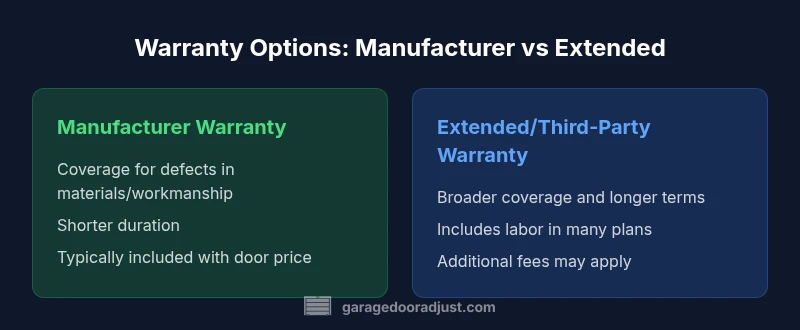
Warranties come in several flavors, and the one you choose—whether a manufacturer warranty or an extended/third-party plan—shapes your protection for the choice warranty garage door. A manufacturer warranty is issued by the company that built or sells the door and typically covers defects in materials or workmanship for a stated period. An extended warranty or third-party plan broadens that baseline, often including labor, service calls, and broader component coverage. For the choice warranty garage door, you’ll want clarity about what exactly is covered under labor versus parts, and whether the terms remain valid if the door is repaired by an independent technician. The GarageDoorAdjust team notes that transferability, exclusions, and renewal options can significantly impact long-term value.
How to compare warranty terms
When evaluating the choice warranty garage door options, start with four core criteria: coverage scope, duration, service levels, and exclusions. Create a simple side-by-side checklist that asks: Does labor come with the plan, or just parts? How long does the coverage last, and is there a prorated scale after the initial term? Is the warranty transferable if you sell the home? Are there any exclusions for pre-existing damage, environmental conditions, or DIY repairs? In practical terms, a robust comparison will reveal that some plans look cheaper initially but impose costly service fees later. The goal is to map every plan to your real-world usage and climate, minimizing surprise bills and downtime for the choice warranty garage door.
Real-world scenarios: when to choose warranty options
Consider scenarios that often drive the decision to purchase or skip an extended warranty for the choice warranty garage door. A new installation in a climate with wide temperature swings might justify broader coverage due to increased stress on springs and tracks. A high-traffic garage in a multi-car household could benefit from faster service and labor coverage. An older door nearing the end of its life cycle may require a plan that includes more comprehensive labor and replacement allowances. In each case, align the decision with your tolerance for risk, maintenance habits, and your plans to stay in the home over the next several years.
Step-by-step guide to evaluating your current warranty
- Locate the exact policy language on your documents or digital account for the choice warranty garage door. 2) Identify the coverage scope for all major components and for labor. 3) Note the duration and any renewal or transfer provisions. 4) Review exclusions and any required maintenance tasks to keep eligibility intact. 5) Assess whether the policy is standalone or bundled with maintenance or opener installation. 6) Compare the out-of-pocket costs for service calls and diagnostics. 7) Check for gaps that would require a rider or additional coverage. 8) Contact the provider with questions and seek a written amendment if needed. 9) Document all interactions for future claims. 10) Decide whether to upgrade or combine plans to optimize the choice warranty garage door.
Common pitfalls and how to avoid them
A frequent mistake is assuming a longer-term warranty automatically saves money. The choice warranty garage door may have hidden exclusions or high service fees that invalidate claims when the door experiences normal wear. Another pitfall is neglecting to maintain records of routine maintenance, which can jeopardize eligibility. Some plans promise broad coverage but limit repairs to authorized technicians only, creating delays if you prefer a local contractor. Always read the exclusions, insist on clear transferability terms, and verify whether labor is included for the choice warranty garage door when you need urgent service.
Strategies for maximizing value from the choice warranty garage door
To extract maximum value, pair a solid manufacturer warranty with an affordable extended plan if your usage or climate warrants it. Keep a maintenance log and receipts to prove regular servicing and component checks, which many warranties require. If you anticipate frequent service, seek plans that cover labor, diagnostic fees, and travel costs. Consider bundling with an opener installation or a periodic maintenance agreement, as some providers offer discounted rates for bundled coverage. In the end, the best strategy for the choice warranty garage door is to reduce risk while maintaining predictability and manageable annual costs.
The role of maintenance in warranty eligibility
Maintenance is not optional if you want to keep warranty protections intact. Most warranties require regular lubrication, balance checks, track alignment, and spring tension verification. Missing scheduled maintenance can void coverage on the choice warranty garage door. Set reminders, follow manufacturer guidelines, and use only recommended lubricants and tools. When maintenance is documented, it strengthens your case during a claim and demonstrates responsible ownership, which is especially important for extending the life of the door and preserving the value of any extended warranty on the choice warranty garage door.
How to file a claim and what to expect
Filing a claim begins with contacting the provider and supplying documentation of the issue, maintenance history, and proof of purchase. Expect a review period during which the company confirms eligibility and determines whether a technician will be dispatched. Some plans require inspection before approval, while others authorize immediate service for urgent failures. Always request a written claim number and keep a log of all communications. For the choice warranty garage door, you’ll benefit from clear instructions, defined response times, and a transparent cost structure that minimizes delays and guesswork.
Final considerations for homeowners evaluating warranties
When finalizing your decision, consider how well the coverage aligns with your day-to-day needs and the specifics of your climate. A strong warranty should feel like a partner in maintenance rather than a one-time promise. Balance the upfront premium against potential repair costs, downtime, and the likelihood of needing service in the next several years. Remember that the best choice warranty garage door plan is the one that remains predictable and affordable while protecting your investment in a hard-working entry system.
Comparison
| Feature | Manufacturer Warranty | Extended/Third-Party Warranty |
|---|---|---|
| Coverage scope | Parts and some labor for core components | Parts, labor, and service calls across a broader set of components |
| Duration | 1-2 years typical | 3-10 years or lifetime where offered |
| Transferability | Typically non-transferable | Often transferable to a new owner (check terms) |
| Service levels | Standard response times | Priority or faster service options in some plans |
| Exclusions | Pre-existing conditions and cosmetic wear often excluded | Pre-existing conditions, improper installation, and improper maintenance exclusions vary |
| Cost / Value | Generally included in the door price with limited riders | Additional annual or one-time fee with wider coverage |
| Best for | Homeowners wanting baseline protection | Homes with high usage or harsh environments |
Upsides
- Provides predictable protection against common door failures
- Can increase resale value with transferable terms
- Labor coverage reduces out-of-pocket service costs
- Bundling with maintenance can lower overall fees
Disadvantages
- Premiums can add long-term costs
- Exclusions may limit practical coverage in real-world failures
- Claims processes can be slower or bureaucratic
Balanced coverage typically offers the best value for most homeowners.
Start with a solid manufacturer warranty and add an affordable extension if you expect higher use or environmental stress. Prioritize transferability and clear terms to minimize future conflict.
Got Questions?
What does a typical manufacturer warranty cover on a garage door?
A typical manufacturer warranty covers defects in materials or workmanship for specified components such as springs, tracks, and door panels. Labor coverage is often limited and may require service by authorized technicians. Always verify whether the choice warranty garage door includes labor or only parts.
Most manufacturer warranties cover defects in materials or workmanship for major door parts, but labor coverage varies. Check if labor is included for the choice warranty garage door.
Should I buy an extended warranty for my garage door?
An extended warranty can be valuable if you expect frequent service needs, operate in extreme climates, or want longer-term coverage beyond the manufacturer. Weigh the incremental cost against your risk tolerance and maintenance habits for the choice warranty garage door.
Consider an extended warranty if you expect higher service needs or want longer-term protection beyond the basics.
Is labor covered by standard warranties?
Labor coverage is not always included in standard warranties and may be limited. Some extended plans include labor, while others require you to pay service calls. Read the terms carefully for the choice warranty garage door.
Labor coverage varies; some plans include it, others don’t. Check the exact terms for your choice warranty garage door.
Can warranties be transferred if I sell my home?
Many extended warranties offer transferability, which can enhance resale value. Transfers may require a fee or a simple documentation update. Confirm transfer rules for the choice warranty garage door before listing.
Transferable warranties can boost resale value, but check the transfer rules.
Do warranties cover accidental damage or misuse?
Warranties typically exclude accidental damage, misuse, and improper installation. Some plans may offer limited rider coverage, but such exceptions are not universal. Always verify exclusions for the choice warranty garage door.
Accidents and misuse are usually excluded; check for rider options if needed.
What’s the difference between warranty and maintenance plans?
A warranty covers defects and failures due to design or materials, while maintenance plans cover routine service and lubrication. For the choice warranty garage door, coordinating both can maximize uptime and reduce repair costs.
Warranties cover defects; maintenance plans cover routine service.
Quick Summary
- Assess usage and climate to pick coverage.
- Prioritize transferability for resale value.
- Read exclusions to avoid denied claims.
- Compare scope, duration, and labor coverage.
- Document maintenance to maximize claim eligibility.