How Often to Lubricate Garage Door Springs: A Homeowner’s Guide
Learn how often to lubricate garage door springs, choose the right lubricant, and follow a safe maintenance plan to reduce noise and extend spring life for torsion and extension systems.


If you're wondering how often to lubricate garage door springs, follow a practical schedule based on use and environment. A common starting point for many homeowners is every 3-6 months, with more frequent care in humid climates or heavy daily use. According to GarageDoorAdjust, a regular lubrication routine helps reduce friction, noise, and wear while keeping your door running smoothly.
Understanding the role of springs and lubrication basics
Garage doors rely on springs to balance the weight of the door, making it easier to lift and lower. Lubrication reduces friction between coils, bearings, and mounting hardware, which minimizes wear, noise, and heat buildup. When you lubricate springs, you’re helping the system operate more efficiently and extending its life. Use a light, non-penetrating lubricant and apply sparingly to the coils and pivot points. Avoid heavy oils that can attract dust and grime. For safety, never service springs while the door is under tension; consult a professional if you’re unsure. According to GarageDoorAdjust, a planned maintenance rhythm keeps the door quiet and dependable, and it gives you a clear point of reference for replacing worn components.
Types of garage door springs and what lubrication does
There are two common spring designs: torsion springs mounted above the door and extension springs along the sides. Both types benefit from periodic lubrication, though the approach differs. Torsion springs live under higher tension, so many homeowners opt to lubricate only after a professional has confirmed the springs are safe to touch. Extension springs, located along the track, may be more accessible for lubrication, but you should still exercise caution. Lubrication helps reduce friction, prevent squeaks, and slow wear, but it won’t fix a broken spring. Always use a suitable lubricant (white lithium grease or a silicone-based spray) and apply lightly to coated surfaces to avoid drips.
How often to lubricate garage door springs: factors that affect frequency
The ideal interval depends on how often you use the door, the climate where you live, and the type of springs in your setup. For heavy daily use or humid environments, you may need lubrication more often to prevent corrosion and stiffness. In milder climates or lighter use, a semiannual check can be enough to keep things moving smoothly. Inspect for rust, pitting, or frayed cables at each service and adjust the schedule if you notice louder operation or resistance. Always base your plan on your door’s behavior and manufacturer guidance, and consult a pro if you’re unsure about the springs’ condition.
Safety first: preparing to lubricate the springs
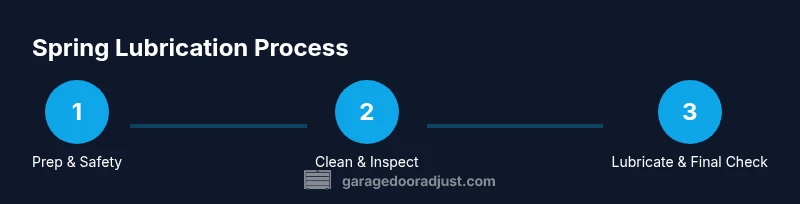
Prioritize safety before you touch any springs. Unplug the garage door opener and disconnect its power source. Secure the door in the fully open position using clamps on the tracks or a pair of locking pliers to prevent accidental movement. Wear safety glasses and gloves, and keep children and pets away from the work area. If you suspect the springs are damaged or under excessive tension, stop and call a professional. This prep step reduces the risk of injury and ensures you can access the springs safely.
Choosing lubricants and applying them properly
Choose a light lubricant such as white lithium grease or a silicone-based spray designed for metal. Avoid penetrating oils or heavy oils that attract dust. Apply a thin, even layer along the coils of torsion or extension springs and on nearby pivot points or bearings. For torsion springs, apply carefully and in short bursts, allowing time for the coating to settle. Wipe away any excess with a clean cloth to prevent drips or residue on the track. The goal is a thin, protective film—not a thick glaze.
Maintenance schedule and monitoring
Create a simple maintenance calendar that notes when you lubricate, inspect, and replace worn components. A typical approach is to schedule lubrication at regular intervals based on usage and climate, then adjust as needed if you notice increased noise, stiffness, or changes in door balance. Keep records of observations (noise level, door balance, velocity) and review them before the next service. Consistency is more important than chasing exact dates—your door will benefit from predictable care.
Tools & Materials
- Safety glasses(Protect eyes from debris and chemical splashes)
- Locking pliers or C-clamps(Secure door in open position to prevent movement)
- Ladder(Gain stable access to springs and hardware)
- Light lubricant (white lithium grease) or silicone-based spray(Choose a product designed for metal surfaces)
- Rags or lint-free towels(Wipe excess lubricant away)
- Gloves(Hand protection during handling)
- Mild degreaser or cleaner wipes(Optional for removing heavy grime)
Steps
Estimated time: 30-45 minutes
- 1
Power off the opener
Unplug the garage door opener or switch off the dedicated circuit to ensure the door cannot move unexpectedly during maintenance.
Tip: Double-check the power is off at the outlet and the breaker is open. - 2
Brace the door in the open position
Place locking pliers or clamps on the tracks to prevent the door from moving while you work.
Tip: If possible, have a second person nearby to monitor the door during the procedure. - 3
Identify spring type and condition
Determine if you have torsion springs or extension springs and inspect for rust, corrosion, or frayed cables before applying lubricant.
Tip: Do not attempt to adjust tension or disassemble springs yourself. - 4
Clean the springs and nearby hardware
Wipe down coils and adjacent hardware to remove dust and old oil so the new lubricant can adhere evenly.
Tip: Use a dry rag and avoid moisture near electrical components. - 5
Apply lubricant to springs and pivot points
Apply a thin coat along the coils and pivot points, using short bursts for even coverage. Rotate the spring area slightly if accessible to coat all surfaces.
Tip: Avoid over-lubricating; a light film is enough to reduce friction. - 6
Wipe away excess and inspect
Remove any visible excess with a clean rag and recheck for drips or buildup that could attract dirt.
Tip: Excess lubricant can attract dust and cause more noise later. - 7
Test door operation and safety
Restore power, move the door slowly up and down to ensure smooth operation, and listen for unusual sounds or binding. If anything feels off, stop and call a professional.
Tip: If you notice unusual movement or heat near the springs, stop immediately.
Got Questions?
Do I need to lubricate both torsion springs and extension springs?
Lubrication can benefit both types, but torsion springs carry more tension and should be approached with caution. If you’re unsure about the tension or safety, consult a professional before proceeding.
Lubrication can help both, but torsion springs are riskier. If you’re unsure, contact a professional.
What lubricant should I use for garage door springs?
Choose a light lubricant such as white lithium grease or a silicone-based spray. Avoid penetrating oils or thick oils that can attract dirt.
Use lightweight lubricants like white lithium grease or silicone spray, not heavy oils.
Can lubrication fix a noisy garage door?
Lubrication can reduce many common noises caused by friction, but persistent grinding or loud popping may indicate worn components that need replacement.
Lubrication helps with noises caused by friction, but persistent sounds may require replacement.
How often should I lubricate springs exactly?
A practical interval is every 3-6 months for many homes, with more frequent care in use-heavy or humid environments. Adjust based on observed operation.
Most homes benefit from lubrication every 3-6 months; adjust based on use and climate.
Is it dangerous to lubricate springs yourself?
Lubricating springs can be hazardous if done incorrectly. If you’re not confident about safety, hire a trained technician to perform the task.
It can be dangerous if not done safely; consider hiring a professional if unsure.
Should I lubricate other door components?
Lubricate moving metal components like hinges, pivots, and rollers if recommended by the manufacturer. Avoid tracks and nylon rollers unless advised.
Lubricate other moving metal parts per manufacturer guidance; avoid tracks unless specified.
Watch Video
Quick Summary
- Lubrication reduces friction, noise, and wear on springs.
- Frequency depends on use intensity and climate; adjust as needed.
- Use the correct lubricant and apply sparingly.
- Safety comes first—when in doubt, hire a professional.