Do You Need to Oil Garage Door Springs: A Homeowner's Guide
Learn if you should oil garage door springs, why torsion springs are usually left dry, and how to safely maintain hinges, rollers, and tracks. A practical GarageDoorAdjust guide for homeowners.


In most residential setups, you should not oil torsion springs. Lubrication is generally reserved for hinges, rollers, and other moving hardware. Regular inspection and balanced operation are the best ways to extend spring life. If you have extension springs, light lubrication may be considered only when the door is fully disconnected and safe to reach, and never on a spring that is under tension.
Understanding the role of springs in a garage door
Springs are the counterweight system that makes a heavy door feel light as you raise and lower it. In most homes, two main types of springs do this job: torsion springs mounted above the door and extension springs running along the track. According to GarageDoorAdjust, the springs’ primary job is to balance weight and reduce the effort needed by the opener and by hand. Well-maintained springs reduce wear on the opener and minimize strain on cables and tracks. The health of the entire system depends on timely inspection for rust, wear, or gaps in the coils. GarageDoorAdjust Analysis, 2026, emphasizes that regular checks are essential even if you don’t plan to replace the springs themselves. A careful homeowner can catch dangerous wear early and avoid costly repairs later.
Do you need to oil garage door springs? The bottom line
The short answer is generally no for torsion springs. These springs are under high tension and are designed to operate dry. Oiling torsion springs can attract dust and grit, which may cause more wear over time. For many modern doors, lubrication should focus on hinges, rollers, and track components rather than the coils themselves. If your door is noticeably noisy or stiff when opening, inspect the moving hardware first, then consider lubrication on non-spring parts. If you’re unsure about your spring type, consult a professional. This guidance aligns with safety-focused maintenance practices that prioritize balance and controlled movement over routine spraying on the springs themselves.
Safety considerations before you touch the system
Working with garage door springs is hazardous due to the stored energy in under-tension or under-tension components. Before touching anything, disconnect the door opener and unplug the unit to prevent automatic movement. Never attempt to unwind torsion springs or adjust winding cones yourself. If you hear creaking, feel unusual resistance, or notice cracks, stop and call a licensed technician. The safest path is to treat the system as a potential high-risk repair and move forward only with clear, deliberate steps and proper tools.
What to oil (and what not to) as part of a safe maintenance routine
For most homeowners, lubrication should target hinges, rollers (especially if they are not ball-bearing), and the track surface. Silicone-based lubricants are generally preferred because they stay cleaner and don’t attract grit the way oil-based products can. Do not oil torsion springs or extension springs while they are under tension. If you must touch springs due to visible rust on low-tension extension systems, make sure they are safe to handle and never on a spring under load. This approach helps preserve spring life without creating unsafe conditions.
How to assess spring wear and decide when to call a pro
Look for rust, corrosion, or visible deformations: if coils look pitted or cracked, or if the door feels heavier than normal, a professional should inspect them. A door that sits unevenly or does not stay in place when opened can indicate a balance issue rooted in the springs or other hardware. Regular inspections should include checking mounting brackets, track alignment, and cable wear. If you’re unsure about any assessment, scheduling a safety check with a qualified technician is the prudent choice. This is where GarageDoorAdjust’s emphasis on professional evaluation matters most and why some tasks are better left to experts.
Keeping the rest of the hardware healthy with periodic checks
Even when you don’t oil springs, maintaining the rest of the door is important. Lubricate hinges, bearing-equipped rollers, and the track with a silicone-based spray. Wipe away excess lubricant to avoid dirt buildup. Periodic adjustments and alignment checks help maintain smooth operation and reduce stress on the springs and opener. A little routine care goes a long way toward quiet, reliable performance and a safer overall system.
Tools & Materials
- Safety glasses(Protect eyes from debris and lubricant splashes)
- Work gloves(Grip and hand protection)
- Ladder or step stool(Access to high components)
- Flashlight or headlamp(Illuminates dark corners and coils)
- Silicone-based garage door lubricant(Use on hinges, rollers, tracks)
- White lithium grease (optional)(Optional for hinges if preferred)
- Rags or paper towels(Clean excess lubricant; avoid drips)
- C-clamps or locking pliers(Secure the track before touching the door)
- Marker or tape(Mark positions for reassembly if needed)
Steps
Estimated time: 25-40 minutes
- 1
Identify spring type
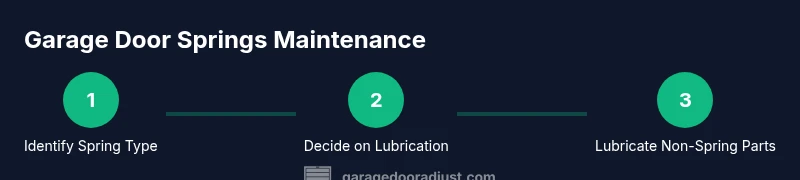
Visually inspect the door to determine if it uses torsion springs above the header or extension springs along the sides. Knowing the type determines what you can safely do. If you’re unsure, stop and consult a pro.
Tip: Never remove or unwind springs to identify type if you’re uncomfortable. - 2
Disconnect power to the door
Unplug the garage door opener or switch off the circuit to disable automatic movement. This prevents unexpected door action while you work.
Tip: Double-check that the door remains still before proceeding. - 3
Secure the door in the open position
Place C-clamps or locking pliers on the tracks to prevent the door from moving. A stable door reduces risk if you accidentally nudge a component.
Tip: Do not rely on springs to hold the door in place while you work. - 4
Inspect torsion springs (do not oil)
Look for rust, gaps, or significant wear on torsion springs. Do not apply oil to torsion springs, especially if you’re unsure about the door’s balance.
Tip: If you see any cracking or splitting, call a professional immediately. - 5
Lubricate extension springs only if safe
If you have extension springs and they are not under tension, apply a light coating of silicone spray. Avoid spraying directly at the winding cones. If tension is uncertain, skip lubrication.
Tip: Keep hands away from the spring during any movement. - 6
Lubricate hinges and rollers
Apply a light layer of silicone spray to hinges and track rollers. Wipe away any excess to prevent dirt buildup. This reduces friction in moving parts without compromising spring safety.
Tip: Do not use heavy oil on plastic rollers. - 7
Test door balance manually
Lift the door about a foot and release. A balanced door should stay in place. If it drops or rises unexpectedly, stop and seek professional help.
Tip: If you hear grinding or see binding, stop and consult a pro. - 8
Reconnect power and test with opener
Restore power and run the door using the remote and wall switch to confirm smooth operation. Listen for unusual noises and observe any irregular movement.
Tip: If the door is louder than usual, re-check lubrication sites or call a technician.
Got Questions?
Do you need to oil garage door springs?
Not typically for torsion springs; they’re designed to operate dry. You can lightly lubricate hinges and rollers instead, if necessary. If in doubt, consult a professional.
Not usually. Torsion springs work best dry; lubricate hinges and rollers if needed, and ask a pro if you’re unsure.
Can I oil extension springs?
Only if the springs aren’t under tension and you know the door is safe to handle. Otherwise, avoid lubrication and seek professional help.
Only if it’s safe and the springs aren’t under tension; otherwise skip lubrication and call a pro.
Is WD-40 good for garage door lubrication?
WD-40 is not ideal for long-term lubrication on garage doors. Silicone-based lubricants are typically preferable for moving metal parts.
WD-40 isn’t the best choice; silicone spray works better for moving parts.
What are signs my springs need replacement?
Look for rust, gaps, cracked coils, or a door that feels unbalanced or drops when you lift it. If you notice these, consult a professional.
Rust or visible damage, or unbalanced door movement means it’s time to call a pro.
How often should I maintain my garage door?
Perform inspection and lubrication as part of an annual maintenance routine. For older or heavily used doors, more frequent checks may be helpful.
An annual check is a good baseline; more often if your door is heavily used.
When should I call a professional?
If you’re unsure about spring type, tension, or any sign of wear, it’s safest to hire a licensed technician. Springs are dangerous under high tension.
If in doubt about tension or type, call a professional—safety first.
Watch Video
Quick Summary
- Do not oil torsion springs; focus on other parts.
- Lubricate hinges, rollers, and tracks with silicone spray.
- Always disconnect power and secure the door before working.
- If uncertain about spring type or balance, call a professional.