Difference Between Garage Door Torsion and Extension Springs: A Practical Guide
Explore the differences between torsion and extension garage door springs. Compare safety, installation, lifespan, and cost to decide the best option for your home.


The difference between garage door torsion and extension springs lies in where and how they store energy and how they lift the door. Torsion springs sit on a torsion bar above the door and unwind to lift, delivering smooth, balanced operation. Extension springs run along the sides and stretch to assist lift, offering a simpler setup but often requiring additional safety measures. For most homes, torsion springs provide safer, quieter performance with better longevity, while extension springs can be a lower upfront-cost option for smaller, lighter doors and constrained spaces.
Understanding the Difference Between Garage Door Torsion and Extension Springs
The difference between garage door torsion and extension springs drives how your door behaves, how it should be serviced, and what risks are present during maintenance. In this piece we’ll break down the physics, installation implications, and practical trade‑offs. According to GarageDoorAdjust, recognizing this distinction helps homeowners plan safer repairs and smarter upgrades. By examining mounting, energy storage, and deployment under load, readers learn how each system handles daily cycling and how that affects noise, balance, and long‑term reliability. The phrase difference between garage door torsion and extension springs appears frequently as we compare safety profiles, life expectancy, and service needs. This background sets the stage for choosing the right system for door size, weight, climate, and maintenance willingness.
As you read, keep in mind that the goal is a safer, more reliable garage door that fits your home and budget. The GarageDoorAdjust team emphasizes that, while both types can lift a typical residential door, the implications for installation, tuning, and ongoing maintenance are not identical. A thoughtful assessment of these factors reduces the risk of sudden failures and when a professional replacement is warranted.
-1
Comparison
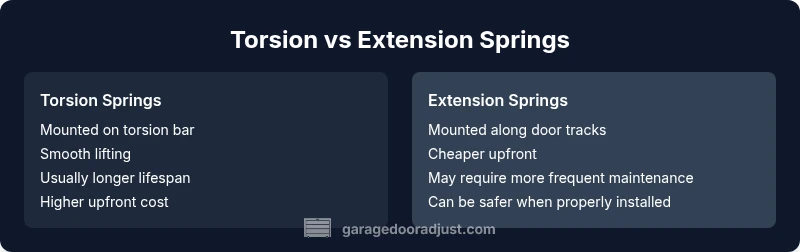
| Feature | Torsion springs | Extension springs |
|---|---|---|
| Mounting position | Mounted on a horizontal bar above the door (torsion bar) | Mounted along the sides of the door tracks |
| Energy storage method | Stored as rotational energy in the torsion spring coil | Stored as linear energy by stretching the spring |
| Initial cost | Typically higher upfront cost | Typically lower upfront cost |
| Maintenance and safety | Generally smoother operation; safer handling with proper procedures | Requires careful handling and additional safety measures during maintenance |
| Lifespan and durability | Often longer life with proper tuning and balance | Tends to wear faster with heavy use; more frequent replacements |
| Repair/install difficulty | More complex installation; requires precise balancing | Simpler installation but precise alignment still important |
| Best use case | Medium to large doors; frequent cycling; higher performance needs | Smaller or budget-conscious setups; space constraints |
Upsides
- Smoother, more balanced lifting with torsion springs
- Safer replacement when performed by professionals
- Longer service life under typical residential use
- Cleaner, more compact hardware on torsion systems
- Better performance for higher-cycle doors
Disadvantages
- Higher upfront cost for torsion systems
- More complex installation and tuning required
- Extension springs may require more frequent maintenance or replacements
- Potentially more dangerous to work with when not following safety protocols
Torsion springs generally offer the best overall performance and safety for typical residential doors; extension springs are a viable option for tight budgets or smaller doors.
Choose torsion if you want smoother operation, longer life, and safer maintenance with professional support. Opt for extension springs when upfront cost and space constraints dominate, but plan for potentially higher maintenance over time.
Got Questions?
What is the main difference between torsion and extension springs?
Torsion springs are mounted above the door on a torsion bar and wind to lift the door, providing smoother operation. Extension springs run along the sides and stretch to assist lift, which can be simpler but requires careful safety measures. Both store energy; the mounting and tensioning method define performance and maintenance needs.
Torsion springs store energy on a bar above the door; extension springs stretch along the sides. Both lift the door, but their setup changes safety and maintenance needs.
Are torsion springs safer to replace than extension springs?
Generally, torsion springs offer a safer replacement profile when performed by a trained technician because the energy is better contained on the bar. Both types can cause injury if mishandled. Always disconnect the opener, support the door, and follow manufacturer safety guidelines.
If you’re replacing springs, call a pro. Torsion setups tend to be safer to service when properly restrained by a technician.
Can I convert from extension to torsion springs?
Yes, conversion is possible in many cases but involves substantial changes to the door’s hardware, balance, and track alignment. A professional assessment is necessary to ensure the door’s weight and frame can support torsion hardware.
Converting is possible but not a DIY task. Have a pro verify weight, tracks, and structural compatibility.
How long do torsion springs last compared to extension springs?
Torsion springs generally offer longer service life under typical residential use, with consistent lifting and less side loading. Extension springs may wear faster due to greater stretch and repeated cycles. Actual longevity depends on cycling frequency, door weight, and maintenance.
Torsion tends to last longer, extension wears faster; both depend on use and upkeep.
What maintenance is required for garage door springs?
Regular lubrication of moving parts, yearly balance checks, and safe inspection for wear are recommended. Avoid adjusting tension yourself unless trained. Schedule professional inspections to catch issues before failure.
Keep things lubricated and balanced. Don’t adjust tension yourself—call a pro for thorough checks.
What signs indicate springs need replacement?
Look for visible wear, gaps in winding, door that appears uneven or sags, or repeated spring noises during operation. If the door feels heavy or you notice the opener working harder, it’s time to call a professional.
If you see wear or the door feels heavy or unbalanced, get a pro to inspect and replace if needed.
Quick Summary
- Assess door weight and size to determine spring type
- Torsion springs typically deliver smoother, safer operation
- Extension springs are cheaper upfront but may require more frequent maintenance
- Never attempt to adjust or replace springs yourself; hire a professional
- Balance and professional installation critically affect performance