Difference Between Garage Door Springs: A Comprehensive Guide
A detailed, analytical comparison of torsion and extension garage door springs, covering how they work, safety considerations, lifespan, costs, and maintenance for homeowners.


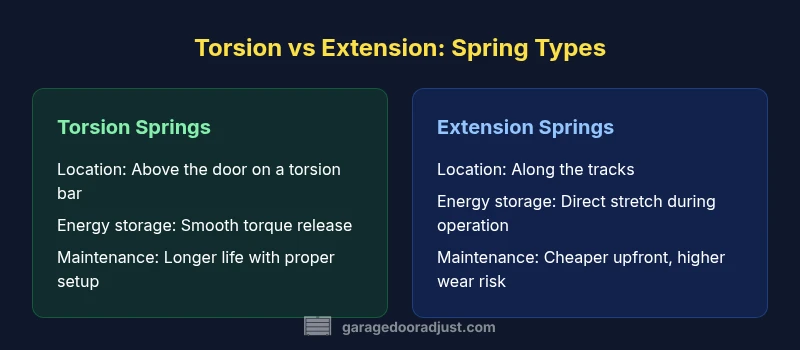
The difference between garage door springs centers on two main types—torsion springs and extension springs—and how each stores and releases energy. Torsion springs sit above the door and unwind smoothly for balanced operation, while extension springs run along the sides and stretch as the door opens, offering a cheaper upfront option with distinct safety considerations. Understanding these distinctions helps homeowners select parts, diagnose issues, and plan safer maintenance.
What the difference between garage door springs means for homeowners
In residential garages, springs store the energy needed to lift and lower heavy doors. The central distinction lies in the mechanism: torsion springs twist on a shaft above the door, while extension springs stretch along the tracks. This simple mechanical difference cascades into several practical implications: installation space, safety protocols, maintenance needs, and replacement complexity. According to GarageDoorAdjust, recognizing which spring type your door uses is the first step toward safer handling and smarter part selection. Understanding the core physics—torque in torsion springs versus linear extension in extension springs—helps homeowners anticipate wear patterns and plan proactive maintenance. A clear grasp of these terms also sets the stage for the rest of this guide, where we compare performance in real-world scenarios and walk through decision criteria with homeowners in mind.
How the two main spring types influence door balance and feel
The foundational goal of any garage door spring system is to balance the weight of the door so that the opener does not bear the entire load. Torsion springs store energy by twisting around a central shaft; as the door lowers, the springs unwind and counterbalance the door’s weight. This results in a smoother, more even feel when opening or closing, with less resistance through the travel range. Extension springs, by contrast, stretch along the tracks and resist door movement as they extend. This setup can feel different to operate and may require more precise alignment of pulleys and mounting hardware to maintain consistent balance. The physics difference also influences safety expectations and the risk profile for DIY handling. A homeowner should know that torsion systems typically offer a more forgiving balance curve, while extension systems may require more vigilant inspection of anchor points and springs along the track.
Lifespan, wear patterns, and what to expect over time
Springs wear differently depending on type and usage. Torsion springs generally provide a longer service life under typical residential cycles because their design distributes stress more evenly around a rotating shaft. They are also less exposed to the dynamic forces that occur if a door is misaligned or if the opener is abruptly stopped. Extension springs endure direct tension along the track and can suffer from uniform wear when the door is frequently opened and closed at full extension or when the tracks are misaligned. Unbalanced doors increase the load on both types of springs, accelerating wear and raising the likelihood of premature failure. Regardless of type, regular inspection for signs of wear, such as gaps in winding, rust, or obvious sagging, is essential. GarageDoorAdjust emphasizes routine checks as part of a proactive maintenance program to extend life and improve safety.
Safety implications: what homeowners should know before touching springs
Garage door springs are under extreme tension and can cause severe injury if released unexpectedly. Torsion springs, being mounted on a shaft above the door, can release a dangerous amount of energy if a component fails or is mishandled. Extension springs, mounted along the track, carry significant stored energy that can lash outward when a fastener or bracket fails. The risk increases with older hardware or if springs have become corroded. For DIYers, the safest approach is to treat all spring repairs as a high-risk activity requiring proper tools, safety glasses, and a clear working area. Where possible, consult a professional. The principle here is simple: understanding the risk and planning safer, gradual maintenance reduces chances of injury. The GarageDoorAdjust team recommends prioritizing safety and using professional services for high-tension tasks.
Choosing between torsion and extension: decision criteria for homeowners
When deciding which spring type suits a home, weigh the following: space constraints (torsion systems require headroom above the door), budget (extension springs are typically cheaper upfront), noise and smoothness of operation (torsion springs often feel steadier and quieter), and maintenance expectations (torsion systems generally demand less frequent adjustment). Climate and door size also influence performance; larger, heavier doors might benefit from torsion springs due to their steady torque delivery. In environments with high humidity or salt exposure, corrosion resistance considerations become more important, and this can shift the cost-benefit analysis toward higher-quality torsion systems with protective coatings. The decision should reflect the door’s size, daily use, and homeowner comfort with maintenance responsibilities. The GarageDoorAdjust team suggests documenting your door’s weight, spring location, and track alignment as a starting point for an informed choice.
Installation, adjustment, and when to hire a professional
Installing or adjusting springs involves precise torque calculations and secure anchoring. Missteps can lead to severe injuries or door damage. For most homeowners, the recommended approach is to rely on a licensed technician for any work beyond basic lubrication and visual inspection. If you choose DIY, focus on non-tension parts first, such as tracks, rollers, and rollers’ lubrication, before attempting any spring work. Always disconnect the opener, verify the door is fully supported, and use appropriate safety equipment. If you notice persistent gaps, uneven travel, or the door drifting, seek professional evaluation promptly to avoid escalating a minor issue into a major safety risk. GarageDoorAdjust highlights that a professional assessment often reveals nuanced problems, such as misaligned tracks or a worn drum system, which a homeowner may not detect on casual inspection.
Maintenance practices to maximize lifespan and safety
Maintenance is as important as selection when it comes to extending spring life. Regular lubrication of moving parts, careful inspection of brackets, anchors, and anchors, and ensuring the door remains balanced can significantly impact performance. While some maintenance items are safe to perform yourself, any work involving springs should be approached with caution and, where possible, scheduled via a professional. Keeping an annual inspection with a qualified technician is an effective safeguard. In colder climates, pay attention to rust and ice formation that can stress spring assemblies, and consider protective coatings for metal components. The goal is a consistent, smooth door operation with minimal noticeable drag or abrupt stops, which is often a sign that the springs and related hardware are in good condition. The GarageDoorAdjust team notes that routine maintenance reduces the likelihood of sudden spring failure and unexpected safety hazards.
Performance in different climates: how environment affects spring behavior
Temperature and humidity influence spring performance. Colder temperatures can thicken metal, slightly changing tension, while heat can accelerate wear and reduce ductility. Coastal areas with salty air increase corrosion risk, impacting bracket and spring life. Installation materials and coatings matter; corrosion-resistant finishes help mitigate environmental effects and extend service. Homeowners should consider climate conditions when selecting an option and discuss protection strategies with their installer. Understanding the environment helps tailor maintenance schedules and part choices to local conditions, a point emphasized by the GarageDoorAdjust team during evaluations.
Common failure modes and what they mean for repair planning
Springs can fail due to fatigue, corrosion, improper installation, or misalignment of components. A failing torsion spring may produce a door that appears heavy to lift or that opens crookedly, while worn extension springs might show visible gaps or slack near the track. In both cases, operating the door can strain the opener and other hardware. Recognizing signs early—such as unusual noises, visible metal wear, or door instability—allows for timely repair planning and reduces the risk of a catastrophic failure. Whenever possible, replace springs as matched pairs to maintain balanced tension and even operation, following safety guidelines and manufacturer recommendations. The GarageDoorAdjust team advises homeowners to schedule professional inspections if any signs of wear appear.
Comparison
| Feature | Torsion springs | Extension springs |
|---|---|---|
| Location | Mounted above the door on a torsion bar | Mounted along the tracks on each side |
| Energy storage and release | Twists to store energy, providing smooth torque | Stretches along the track, providing straight-line resistance |
| Lifespan and reliability (typical use) | Often longer lifespan with balanced torque and fewer alignment risks | Typically shorter lifespan and greater dependence on track/hinge condition |
| Safety considerations | Higher upfront safety risk during installation but safer daily operation when properly installed | Safety concerns tied to track exposure and potential line-of-sight recoil during failure |
| Installation complexity | More complex; usually requires professional installation or precise torque settings | Simpler to install but requires exact track/riser alignment |
| Cost range (relative, not exact figures) | Generally higher upfront cost due to hardware and installation | Generally lower upfront cost but higher replacement frequency over time |
| Best for | Large, heavy doors needing stable, long-lasting balance | Smaller or lighter doors or tight install spaces; lower upfront costs |
Upsides
- Torsion springs offer smoother operation and longer lifespan
- Extension springs are cheaper upfront and easier to service in some setups
- Understanding differences helps safer maintenance decisions
- Both types can be safe when professionally installed and properly maintained
Disadvantages
- DIY spring work is high risk and not recommended for most homeowners
- Extension springs may require more frequent replacement in heavy-use scenarios
- Torsion systems can be pricier and involve more complex installation
Torsion springs are generally the better long-term choice for most residential doors; extension springs offer a cheaper entry point but may require more frequent maintenance.
If you prioritize smooth operation and longevity, torsion springs win. If upfront cost is the primary concern and you can accept more maintenance, extension springs can be acceptable. GarageDoorAdjust's verdict is to align your choice with door weight, usage, and safety considerations.
Got Questions?
What are the main types of garage door springs?
The two primary types are torsion springs, mounted above the door and twisted to store energy, and extension springs, which run along the sides and stretch during opening. Each type has distinct installation, safety, and maintenance considerations.
The two main types are torsion and extension springs. Torsion springs twist above the door, while extension springs stretch along the sides. Each has its own safety and maintenance needs.
How do I know if a spring is failing?
Signs of a failing spring include uneven door movement, unusual noises, gaps in winding (for torsion), or visible wear along the tracks for extension springs. If you notice these signs, stop using the door and seek professional evaluation.
Look for uneven movement, odd noises, or visible wear. If you see these signs, stop using the door and call a professional.
Can I replace springs myself?
Spring replacement is a high-risk task that should be performed by a licensed technician. Do-it-yourself work can result in severe injury or property damage, even when following safety precautions.
Replacing springs is very dangerous; it’s best left to a licensed professional.
What influences the choice between torsion and extension?
Choice factors include door weight, headroom space, budget, expected maintenance, and climate. Torsion springs offer smoother balance for heavier doors, while extension springs lower upfront costs but may require more frequent servicing.
Choose based on door weight, space, and maintenance willingness. Torsion is smoother for heavier doors; extension is cheaper upfront.
How often should I have my springs inspected?
Annual professional inspections are recommended to detect wear or misalignment early and ensure safe operation. Visual checks by homeowners between visits can catch obvious issues before they become dangerous.
Have a pro inspect yearly and do quick checks monthly yourself.
Are there safety concerns with cold climates?
Cold temperatures can stiffen metal and exaggerate wear, so extra attention to lubrication and corrosion protection is important in colder climates. Ensure protective coatings are in good condition.
Cold weather can stress springs; keep up lubrication and coatings.
Quick Summary
- Know the two main types: torsion vs extension springs
- Choose based on door weight, space, and safety requirements
- Regular inspection improves safety and lifespan
- Professional installation is often worth the cost for high-tension work
- Environment and climate influence material choice and maintenance