Garage Door to House Fire Rated: Step-by-Step Guide for Homeowners
Learn how to verify, upgrade, and maintain a fire-rated garage door to protect your home. This step-by-step guide covers ratings, installation, codes, and maintenance for homeowners.


You're about to learn how to verify or upgrade a garage door to house fire rated standards, including checking ratings, selecting compliant components, and coordinating proper installation. This guide from GarageDoorAdjust translates code basics into practical steps for homeowners. According to GarageDoorAdjust, a correct fire-rated setup can improve safety and reduce risk during a garage-fire event.
What fire-rating means for a garage door
According to GarageDoorAdjust, a fire-rated garage door is designed to slow the spread of fire between your garage and living spaces. A properly rated door is tested to standards and labeled by the manufacturer. For homeowners, it is important to understand that the rating applies to the door itself, the seals, tracks, and jambs, and that the entire assembly must be installed correctly to be effective. In the context of a garage door to house fire rated configuration, the goal is to maintain compartment integrity during an emergency, giving occupants more time to escape and firefighters better access. This section explains the basics and why ratings matter for safety and insurance considerations.
How to verify fire rating on your current door
Start by locating the label on the door or hardware that indicates a rating (for example, a UL or fire-resistance listing). Check the manufacturer's documentation and any certification marks on the track, frame, or seals. If the door is older or lacks labels, consult the installer record or contact the manufacturer. Take photos of labels, measurements, and the surrounding frame for reference. Note that ratings can be lost if the door has been modified or if components like seals were replaced with non-rated parts. This quick audit sets the foundation for deciding whether to retrofit or replace.
Key components of a fire-rated garage-door assembly
A true fire-rated system relies on the door slab, frame, tracks, weather seals, intumescent strips, and hardware functioning together. Seals must be properly installed to limit gaps, while the frame and jambs must accommodate rated components. Ensure any replacements retain the same fire-resistance labeling. Remember: both the door and the surrounding structure contribute to overall performance, so upgrades often involve multiple parts rather than a single component.
Codes, ratings, and choosing the right level of protection
Local codes and national guidance influence which rating you need. While exact numbers vary, the goal is to select a rating appropriate for your climate, garage usage, and living space proximity. NFPA 80 and IBC-related guidance are commonly consulted by professionals to determine compatibility and labeling. Always verify that the entire assembly—door, seals, frame, and hardware—meets the listed rating before final installation.
Retrofit versus replacement: finding the safest path forward
Retrofitting a non-rated door is often not practical or compliant with modern codes. In many cases, upgrading to a rated door system with a compatible frame and hardware is the safer choice. The decision should consider the door’s base construction, existing opener compatibility, and whether the surrounding jambs are rated. Consult a licensed professional to evaluate whether retrofit is feasible or if replacement is the better long-term option.
Choosing a fire-rated door system: materials, seals, and labels
Fire-rated doors come in different materials and constructions, but all must bear a recognized rating from an approved listing. Look for UL or equivalent labeling on the door or documentation, and verify that seals and intumescent materials are rated to the same standard. When selecting a system, consider durability, maintenance needs, and compatibility with your existing garage frame and opener. A well-chosen system reduces risk and simplifies future inspections.
Installation basics and professional involvement
Installing a fire-rated door is not a casual DIY task. Proper alignment, sealing, and labeling are critical to performance. Always work with a licensed installer who can certify the rating, adjust tracks and hardware, and ensure the opener remains safe and compliant. Documentation from the installer and the manufacturer should be kept for future reference and code inspections.
Maintenance, testing, and documentation
Regular inspection of seals, tracks, and labeling helps preserve fire-rating performance. Schedule periodic checks for gaps along the sill, door alignment, and opener safety features. Maintain a file with rating certificates, installation notes, and service history. This paperwork supports ongoing compliance and provides a clear record for resale or insurance inquiries.
Planning and budgeting for a fire-rated upgrade
Costs depend on door size, rating level, and whether frame and track upgrades are needed. Plan for a phased approach if you’re on a tight budget, prioritizing labeling, sealing, and alignment first. Talk to multiple installers to compare scope and warranties, and ensure they provide proof of rating documentation and a written plan.
Tools & Materials
- Fire-rated door assembly (sectional or one-piece)(Ensure the door carries a recognized fire-rating label and matches your opening size.)
- UL or NFPA-rated intumescent seals(Palpable heat-activated seals should align with the door's rating.)
- Weatherstripping compatible with fire-rated doors(Check for continuity around sides and bottom.)
- Heat-resistant silicone sealant(Used to seal joints without compromising rating.)
- Screwdriver set (Phillips and flathead)(For securing hardware without damaging rated components.)
- Cordless drill with appropriate bits(Used for mounting tracks and frame components.)
- Measuring tape and level(Precise alignment preserves performance.)
- Safety gear (gloves, safety glasses)(Protect hands and eyes during installation.)
- Power off tools and battery tester(Prevent accidental activation during work.)
- Certification labels and installation manual(Keep documentation for code inspections.)
Steps
Estimated time: 2-4 hours
- 1
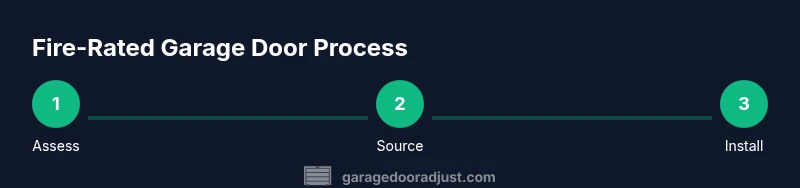
Assess current rating status
Start by inspecting the existing door, frame, and track for any fire-rating labels or documentation. Photograph labels, dimensions, and the surrounding structure. Assess if current components meet the target rating or if a full system upgrade is needed.
Tip: Document every label and measurement to support a proper upgrade plan. - 2
Source rated components
Select a fire-rated door system and compatible frame, seals, and hardware. Confirm that all components carry the same recognized rating and that they fit your opening dimensions. Obtain manufacturer documentation before purchase.
Tip: Ask the supplier for a complete rating certificate and installation guide. - 3
Prepare the workspace and safety setup
Power down the garage opener and unplug if necessary. Clear the area of obstacles and lay out tools in a dry, well-lit space. Inspect the floor for trip hazards and ensure ventilation.
Tip: Never work under a live door spring system; discharge or secure springs under supervision. - 4
Remove non-rated components
Remove any non-rated seals or hardware that could compromise the new system. Keep the old hardware if it’s labeled and compatible with the new setup, but replace anything that isn’t rated to match the new assembly.
Tip: Dispose of non-rated parts properly to avoid accidental reuse. - 5
Install the fire-rated door and frame
Mount the new frame and door per the manufacturer’s instructions. Align tracks, ensure square corners, and check gaps around the door. Install intumescent seals and ensure they contact the frame uniformly.
Tip: Check for smooth operation before mounting the opener or adding components that might shift alignment. - 6
Reconnect/adjust the opener and safety features
Reattach the garage door opener, sensors, and reversing mechanism. Test that the door stops and reverses when blocked. Confirm periodic maintenance requirements are documented.
Tip: If the system balks, revert to the professional installer’s recommended settings. - 7
Functional test and seal integrity
Perform a full door cycle: open, close, and re-check seal contact at all edges. Inspect for any light gaps at the threshold and sides. Ensure all edges are seated correctly without binding.
Tip: Run a passive seal check after each adjustment. - 8
Labeling and documentation
Affix the rating label on the installed door and keep the installation manual handy. Store certificates and inspection records for future reference or insurance needs.
Tip: Create a digital copy of all certificates and store it in a safe cloud location. - 9
Schedule professional inspection
Arrange a follow-up inspection with a licensed installer or code official to verify compliance and safety. Maintain a maintenance schedule to preserve rating integrity.
Tip: Set reminders for periodic checks and re-inspections to stay compliant.
Got Questions?
What does fire-rated mean for a garage door?
A fire-rated garage door is designed to resist fire spread for a defined period, protecting the separation between the garage and living spaces. The rating applies to the door, seals, and hardware when installed as an integrated system. Always verify that the entire assembly carries a recognized listing.
A fire-rated door resists fire for a set period and should be installed as a complete rated system. Make sure all parts carry the same listing.
Can a non-rated door be upgraded to fire-rated?
Upgrading a non-rated door can be possible in some cases, but it often requires full system replacement to ensure the rating is valid. Retrofit options may not achieve the same performance as a purpose-built fire-rated door. Consult a licensed professional for an accurate assessment.
Sometimes you can upgrade, but often you’ll need a full new rated door and frame. Talk to a pro to be sure.
Which codes govern residential fire-rated garage doors?
Residential codes related to fire-rated doors typically reference standards and guidance from authorities having jurisdiction, such as local building codes and national benchmarks. Common references include recognized door-rating listings and safety standards used by installers. Always check with your local code official for specifics.
Local codes decide what ratings you need; check with the inspector before buying.
Is retrofitting a door risky?
Retrofitting can compromise the rating if non-rated parts are mixed or if the assembly isn’t retested. It’s safer to replace with a complete rated door and proper frame rather than attempting partial upgrades.
Retrofitting often isn’t reliable; replacement with a rated system is usually safer.
Should I hire a professional to install a fire-rated door?
Yes. A professional guarantees correct installation, labeling, and testing required for code compliance. They can provide certification and ensure the system works with existing openers.
Hiring a pro ensures it’s done right and compliant.
What maintenance is required for fire-rated doors?
Regular inspection of seals, alignment, and hardware is essential. Keep documentation up to date and schedule periodic inspections to maintain the integrity of the fire-rating over time.
Keep a maintenance schedule and save all inspection records.
Watch Video
Quick Summary
- Verify labeling and rating before work.
- Upgrade with a complete fire-rated system for best safety.
- Follow local codes and document everything.
- Work with licensed professionals for installation.
- Maintain records for future inspections and resale.