Fire Door Garage: A Homeowner's Step-by-Step Guide
Learn how to select, install, and maintain a fire door between your garage and living spaces. This guide covers codes, proper hardware, and step-by-step installation to keep your home safer.


By the end of this guide you will be able to select a compliant fire door garage setup, verify the frame and clearance, install a proper door closer, seal gaps, and perform routine inspections to maintain code compliance and safety between the garage and living areas.
Why a fire door garage matters
A fire door between the garage and living areas is a critical safety feature that helps slow the spread of fire and smoke, buying precious time for occupants to evacuate. For homeowners, this is not just about energy savings or aesthetics—it’s about life safety and protection of assets. According to GarageDoorAdjust, choosing a properly rated door and maintaining it through regular inspections significantly reduces risk in typical residential fire scenarios. A well-installed fire door garage setup should feature a code-compliant frame, a closable mechanism, and sealing to minimize air leakage. The goal is a reliable barrier that performs consistently under stress, while still allowing convenient use for everyday entry and exit. In this section, you’ll learn how to approach the project with a safety-first mindset and practical expectations, so you can plan the work without surprises.
Codes and standards you should know
Fire door requirements between a garage and living space are driven by local and national codes, which typically reference standards for fire resistance, hardware, and maintainability. The National Fire Protection Association (NFPA) standards and the International Code Council (ICC) guidelines are commonly consulted in many jurisdictions. While specifics vary, common themes include the door’s fire-rating, the integrity of the frame, the automatic closing device, and proper sealing to prevent smoke infiltration. Always verify what your city or county requires before purchasing a door. This ensures your installation will pass inspections and provide the intended protection for your family. GarageDoorAdjust emphasizes sticking to code-compliant assemblies and professional installation when needed.
How to choose a fire door garage: ratings, materials, and compatibility
Not all doors labeled as fire doors meet the same criteria. When selecting a fire door garage solution, look for a labeled fire door with a frame designed for the intended wall type. Material options range from solid wood to metal and composite constructions, each with pros and cons for durability, weight, and finish. Pay attention to door and frame compatibility with your existing opening, hinge strength, and whether you need a heavy-duty door closer. Also consider how the door will seal against the floor and sides—intumescent seals and proper weatherstripping are essential for maintaining the barrier’s effectiveness. Keep in mind that higher durability often means more weight and more robust hardware.
Pre-installation assessment and measurements
A precise assessment of the opening is essential before purchasing parts. Measure width, height, and rough opening tolerance, as well as wall structure (studs, drywall, or masonry). Check for clearance at the hinge side, latch side, and bottom of the door to avoid binding after installation. If you’re replacing an existing door, inventory the hardware and plan to reuse compatible hinges and closers if possible. Clear the area of dust and debris, and decide whether you’ll need to relocate any utilities, trim, or baseboards. Document all measurements with photos for reference during ordering and installation.
Installation overview: frame, hinge, and closer considerations
Installing a fire-rated door requires a solid, square frame and correctly aligned hinges. Start by securing the frame plumb and level in the rough opening, using shims as needed to maintain straight walls. Attach the hinges to both the door and frame, ensuring even gaps around the edges. Install a compliant door closer and verify its closing force is appropriate for the door’s weight. If your product includes a fire-rated threshold or seal kit, install those components per manufacturer instructions. Finally, verify that all hardware is tight and that the door latches fully without sticking. This stage sets the foundation for reliable performance under fire exposure conditions.
Sealing, weatherstripping, and insulation
Sealing is critical to maintain the door’s fire-resistance performance. Apply intumescent seals at the door edges and around gaps between the door and frame. Install weatherstripping to minimize air leakage while ensuring smooth operation. Seal the bottom gap to prevent smoke and hot gases from bypassing the barrier. Use fire-rated caulk for any penetrations where the frame meets the wall and around electrical conduits if present. Proper sealing also reduces drafts, helps with temperature control, and extends the life of the door hardware. A well-sealed installation reduces maintenance needs and enhances safety.
Testing the door operation and self-closing function
After assembly, perform a comprehensive test: open and close the door, verify the latch engages fully, and confirm the door closes automatically without manual assistance. Test the self-closing mechanism from multiple angles and speeds to ensure reliable operation. Check for binding, rubbing, or sticking at any point along the swing. If issues arise, recheck hinge alignment and frame plumb, and adjust as needed. Document the test results for your records and for any future inspections.
Maintenance and periodic inspections
Regular maintenance is essential to keep your fire door garage functioning correctly. Schedule quarterly inspections to check hinges, closer operation, seals, and frame integrity. Look for signs of wear like warped panels, cracked seals, loose screws, or rust on metal components. Clean the door surfaces and ensure the closer oils remain at the recommended levels. Replace damaged seals promptly and verify the door continues to meet code requirements through periodic evaluations. Keeping a maintenance log helps you stay organized and prepared for code rechecks.
Common mistakes and quick fixes
Common mistakes include using a non-fire-rated door, wrong frame size, improper hinge installation, and inadequate sealing. If the door binds or fails to close fully, check frame squareness and hinge alignment before making further adjustments. For persistent issues, consult the manufacturer’s guidelines and consider professional servicing. Proactive maintenance reduces the likelihood of emergency failures and supports long-term performance.
Next steps and professional help
If you’re unsure about any step or local code requirements, consult a licensed professional. A certified installer can confirm fire-rating compliance, frame integrity, and hardware suitability. Schedule an inspection after installation to ensure everything meets current standards and local amendments. Regular reviews by a professional can provide peace of mind and protect your home and family.
Tools & Materials
- Fire-rated door (garage-to-living-space rated)(UL-listed rating appropriate for the location)
- Fire-rated door frame and jamb kit(Designed for the wall type and opening size)
- Intumescent seals and smoke seals(Seal all four sides and bottom per manufacturer)
- Door closer rated for fire doors(Ensure adjustable closing force (EC or higher))
- Concealed or surface-mounted hinges(Weight rating should match the door; use corrosion-resistant hardware)
- Screws, shims, and fasteners(Length and type suited to frame and wall material)
- Fire-rated caulk and sealant(For penetrations and gaps in the frame-wall interface)
- Caulking gun, utility knife(For clean sealant application)
- Measuring tape, square, level(Critical for square and plumb alignment)
- Drill/driver with bits and screwdriver set(Philips and flat-head bits as needed)
- Safety gear: goggles, gloves(Protect eyes and hands during heavy work)
- Stud finder and pencil(Helpful for locating framing members)
- Vacuum or brush for cleanup(Keep workspace clear during and after installation)
Steps
Estimated time: 2-6 hours
- 1
Assess opening for fire-door readiness
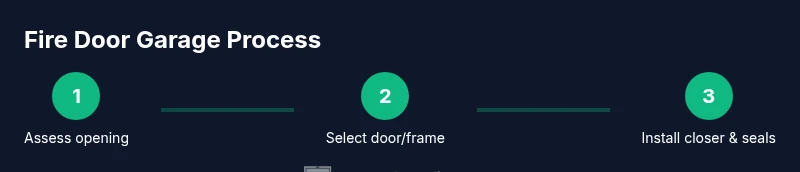
Inspect the current opening to confirm it can accommodate a fire-rated assembly. Check wall structure, rough opening dimensions, and clearance around hinges and latch. Document irregularities that may affect installation.
Tip: Take multiple measurements and photos to compare with the door and frame specs. - 2
Select the correct fire-rated door and frame
Choose a door and frame that match your opening and meet local fire code. Verify compatibility with hinges and closer and ensure the assembly is explicitly rated for garage-to-living-space separation.
Tip: Prefer a complete kit with frame and hardware for reliable fit. - 3
Prepare the opening: remove old hardware
Remove existing door, hardware, and trim as needed. Clean the opening and remove any debris that could interfere with frame seating. Check for any warped framing and address before proceeding.
Tip: Keep fasteners organized by size and location. - 4
Install the fire-rated frame and plumb it
Fit the frame into the rough opening and secure with appropriate shims. Use a level to ensure plumb and square, adjusting as needed. Secure the frame to studs or masonry per the wall type.
Tip: Check both hinge side and latch side alignment before tightening final screws. - 5
Hang the door and align hinges
Attach hinges to the frame and door, ensuring even gaps around edges. Tighten screws securely but avoid overtightening to prevent warping. Open and close to verify smooth operation.
Tip: If the door binds, recheck frame plumb and hinge position. - 6
Install door closer and test force settings
Mount the door closer according to the manufacturer instructions. Set the closing force so the door fully latches without slamming or sticking. Test from multiple angles to ensure reliable self-closing behavior.
Tip: Keep spare closer settings accessible for adjustments. - 7
Seal edges and bottom gap with fire-rated materials
Apply intumescent and smoke seals around the door edges and at the bottom. Seal any penetrations around the threshold and wall with fire-rated caulk. Ensure the floor clearance remains consistent with the manufacturer’s specs.
Tip: Use a backer rod where required to create a clean sealant joint. - 8
Perform functional test and finalize adjustments
Open, close, latch, and confirm automatic closing works as intended. Re-check for binding and adjust hinges or frame as needed. Document test results for compliance records.
Tip: Record the final clearance and latch alignment for future reference. - 9
Schedule code check and maintenance plan
Arrange a code compliance check with local authorities or a licensed professional. Create a maintenance schedule to inspect seals, hinges, and the closer every 3-6 months.
Tip: Maintain a maintenance log to track all service visits.
Got Questions?
Do I need a fire-rated door between the garage and living space?
In many jurisdictions, a fire-rated door between the garage and living areas is required or strongly recommended for safety. Check your local code and consult a professional to confirm the specific rating and installation requirements for your home.
Many homes require a fire-rated door between the garage and living spaces for safety. Check your local codes or talk to a pro to confirm the right rating.
Can I install a fire door garage myself?
Basic installation can be done by a skilled DIYer, but fire-rated assemblies must meet precise standards. If you’re unsure about framing, sealing, or closer installation, hire a licensed professional to ensure code compliance and safety.
It's possible to DIY if you have framing and hardware experience, but for code-compliant fire doors, consider a licensed installer.
What components are essential for a fire door installation?
Key components include a fire-rated door, compatible frame, automatic door closer, intumescent seals, weatherstripping, proper hinges, and fire-rated caulk for penetrations. All components must meet local code requirements.
A fire-rated door, frame, closer, seals, and proper caulk are essential for a compliant installation.
How often should a fire door be inspected?
Inspect the door and hardware at least twice a year. Look for loose screws, worn seals, misalignment, or signs of delamination, and address issues promptly to maintain fire resistance.
Inspect twice a year and fix any loose parts or worn seals right away.
What documents should I keep after installation?
Keep installation receipts, door and frame labels, proof of fire-rating, and inspection notes. These documents help with future maintenance and potential code rechecks.
Store installation papers and inspection notes for future reference.
Watch Video
Quick Summary
- Choose a rated fire door and frame compliant with local codes.
- Ensure precise measurements, square frame, and proper closer function.
- Seal all gaps with fire-rated materials to preserve integrity.
- Test operation and maintain a documented maintenance schedule.