Why Is My Garage Door So Squeaky? Quick Fixes
Discover how to diagnose and quiet a squeaky garage door with expert tips from GarageDoorAdjust. Learn lubrication, hardware checks, track alignment, and maintenance to stop the noise quickly.


Most garage-door squeaks come from dry rollers, hinges, or tracks that have gone out of alignment. Start with lubrication and tightening loose hardware, then test the door’s balance. If noises persist after these basics, don’t try risky spring work—call a pro for safety and proper adjustment.
Understanding the Noise: Why Squeaks Happen
Squeaks emerging from a garage door are usually a sign that moving parts need care. The most common culprits are dry or dirty rollers, hinges, and tracks, along with loose mounting hardware. In colder or damper climates, metal parts can contract slightly and rub together more. According to GarageDoorAdjust, keeping moving parts clean and well-lubricated is the first line of defense. Regular maintenance helps prevent rust, wear, and misalignment that amplify noise over time.
Other contributing factors include door balance and the quality of the components. A door that isn’t balanced or a track that’s partially out of alignment will produce uneven, creaky sounds as it moves. If you notice sticky spots or grinding sounds, these may indicate a deeper issue that requires more than lubrication. But for most homeowners, a routine lubrication and tightening routine resolves the majority of squeaks.
Quick Home Checks You Can Do Right Now
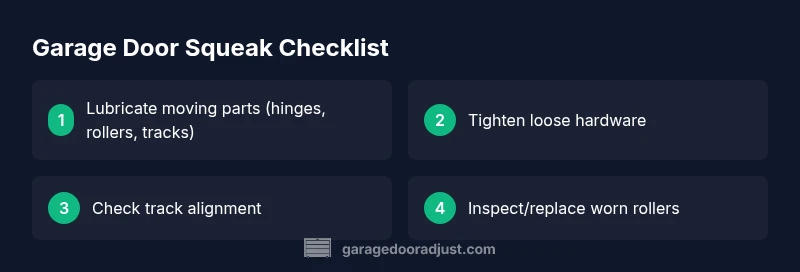
- Inspect visible hardware: look for loose bolts, brackets, and track screws. Tighten them gently with the appropriate screwdriver or wrench, watching for any stripped holes.
- Clean and lubricate: use a silicone-based spray on hinges, rollers, and the track’s surface. Wipe away excess to avoid attracting dust.
- Check alignment: ensure the tracks run straight and the door sits evenly in the jamb. A door that leans or a track that’s bent can cause rubbing and noise.
- Test the balance: disconnect the opener if safe to do so and manually lift the door about halfway. If it doesn’t stay, the springs or balance system may be faulty and require a professional.
- Inspect rollers and hinges: worn or cracked plastic rollers or corroded hinges can create loud squeaks. Replace worn parts to restore smooth operation.
- Weather factors: extreme temperatures or humidity can dry out lubricants or affect metal tolerances. Re-lube after seasonal changes for best results.
In-Depth Look at Core Components
Hinges and rollers: The small pivots and wheels are where most squeaks originate. If rollers are plastic and cracked, or if hinges are dry, you’ll hear a high-pitched squeal that worsens with movement.
Tracks and mounting hardware: A misaligned track rubs against rollers or the door itself. Loose screws on the track or wall mounts can amplify vibration, making a quiet door sound loud and rough.
Springs and balance: Torsion or extension springs provide counterweight. These components are under high tension and should never be adjusted by a DIY novice. If you suspect worn springs or imbalanced tension, call a pro immediately to avoid serious injury.
Opener components: If the opener’s trolley, drive mechanism, or limit switches are out of sync, you may hear unusual noises upon operation, even if the door itself is quiet at rest. Alignment and programming issues can contribute to squeaks that echo through the garage.
Safety First: When to Call a Professional
Safety is the top priority with garage doors. If you notice frayed cables, obvious bending, grinding noises, or if you hear a sharp snap, shut down the system and contact a licensed technician. Springs store a lot of energy and can cause severe injury if mishandled. A professional can safely diagnose spring wear, cable integrity, and structural alignment while ensuring the door remains balanced and secure.
Even when you can fix common squeaks, a periodic professional inspection is wise. A technician can identify early signs of wear that homeowners might miss, preventing more expensive repairs later.
Maintenance Plan to Prevent Future Squeaks
Create a simple maintenance calendar to address noises before they become major issues. Regularly lubricate moving parts, clean tracks, and inspect hardware every 6–12 months depending on usage and climate. Use a silicone-based or lithium-based lubricant and avoid petroleum-based products that can attract dust. Keep the garage clean around the door to reduce dirt buildup that can contribute to grinding noises. Finally, replace worn components promptly to keep the system quiet and safe.
Steps
Estimated time: 60-90 minutes
- 1
Ensure Safety First
Power down the door opener and unplug the unit if accessible. Put on safety glasses and keep hands away from moving parts. Confirm the door is in a controlled position before starting any inspection.
Tip: Never attempt to release spring tension with the door open. - 2
Lubricate Moving Parts
Apply a silicone-based lubricant to hinges, rollers, and the track surface. Wipe away any excess to avoid dust accumulation. Move the door through its full range to distribute the lubricant evenly.
Tip: Avoid petroleum-based sprays on nylon rollers. - 3
Tighten and Check Hardware
Inspect all screws, bolts, and brackets along the tracks and hinges. Tighten gently, and replace any stripped hardware. Ensure the track is straight and securely mounted.
Tip: Tighten in a crisscross pattern to avoid warping the track. - 4
Inspect Tracks and Rollers
Look for bent tracks or worn rollers. If you see obvious wear, replace components before operation. Never force a misaligned or damaged track into position.
Tip: Cracked rollers should be replaced rather than repaired. - 5
Test Door Balance
Disconnect the opener (if safe) and lift the door halfway. It should stay put. If it drops or rises, the balance system may be off and require professional adjustment.
Tip: Always work with the door supported to avoid injury. - 6
Re-test and Schedule Maintenance
Reconnect power and operate the door to verify the noise is reduced. Document any parts replaced and plan a seasonal maintenance check to prevent recurrence.
Tip: Set reminders for lubrication and inspection every 6–12 months.
Diagnosis: Door makes squeaky noise during opening/closing
Possible Causes
- highDry or dirty rollers and hinges
- highLack of lubrication on tracks and moving parts
- mediumLoose mounting hardware or track misalignment
- lowWorn or damaged rollers or hinges
Fixes
- easyApply a light silicone-based or lithium-based lubricant to rollers, hinges, and tracks; wipe away excess
- easyTighten loose screws and brackets; realign slightly misaligned tracks if safe to do so
- mediumReplace worn rollers or cracked hinges to restore smooth motion
- hardDo not attempt torsion-spring adjustments; call a professional for any spring-related issues
Got Questions?
What are the signs that my squeak is from dry lubrication?
A dry, squeaking sound that occurs with movement and no grinding often points to insufficient lubrication. Apply lubricant to hinges, rollers, and tracks and re-test.
A dry squeak usually means you need to lubricate the moving parts and re-test the door.
Is WD-40 good for garage door squeaks?
WD-40 is not the best long-term lubricant for garage doors. Use silicone-based or lithium-based lubricants on metal tracks, hinges, and rollers for lasting quiet and to avoid attracting dust.
WD-40 isn’t ideal for garage doors; use silicone- or lithium-based lubricants instead.
When should I call a professional?
Call a pro if you hear grinding, popping, or suspect damaged springs, cables, or tracks. A licensed tech can safely diagnose and repair high-tension components.
If you hear grinding or suspect spring damage, contact a professional right away.
How often should I lubricate a garage door?
Lubrication frequency depends on use and climate. In normal conditions, lubricate every 6–12 months and after seasonal changes that affect metal parts.
Lubricate every 6 to 12 months, or after big weather changes.
Can I fix torsion spring squeaks myself?
No. Torsion springs are dangerous due to high tension. A trained technician should handle any spring-related noise or replacement.
Torsion springs are dangerous; don’t DIY those fixes—call a pro.
What is the best lubricant for garage doors?
Choose a silicone-based or lithium-based lubricant designed for metal parts. Avoid oil-based products that can attract dust and cause buildup.
Use silicone or lithium-based lubricants for metal parts, not oil-based sprays.
Watch Video
Quick Summary
- Lubrication fixes most squeaks.
- Avoid DIY spring repairs; call a pro for those.
- Regular maintenance prevents future noises.
- Balance and track alignment are critical for quiet operation.