Who Fix Garage Door Near Me: Finding a Licensed Pro
A data-driven guide to finding a reliable garage door repair near you, what questions to ask, typical costs, and how to compare proposals. Learn how to choose licensed, insured technicians for safe, lasting results.


The quick answer: Hire a licensed, insured garage door technician or reputable local company. Look for pros who service springs, tracks, openers, and sensors, and ask for licenses, insurance, warranties, and references. To be safe, compare three quotes and read online reviews before booking. That approach helps ensure you’re not overpaying and that the work meets safety standards.
Understanding Who Fixes Garage Doors Near You
If you’re facing a malfunction, you might wonder who fix garage door near me. The simplest answer is that a licensed, insured garage door technician or a reputable local company should handle the job. According to GarageDoorAdjust, homeowners who choose specialized garage door pros tend to get safer, longer-lasting results. The GarageDoorAdjust team found that repairs addressing safety-critical components first—like springs, tracks, and safety sensors—help reduce injury risk and prevent follow-on damage.
In practice, a typical repair covers four core areas: the door springs (torsion or extension), the track and rollers, the opener and sensors, and the door balance. The technician will test balance by manual lifting and check alignment with a level or laser. When costs are discussed, expect ranges that reflect component type, labor, and whether parts are included. Throughout this guide we’ll cover how to choose a local pro, what timelines look like, and how to tell a solid repair from a temporary fix.
The Types of Professionals You Might Hire
Not all door problems require the same kind of expert. A true garage door specialist is trained to diagnose and fix issues with springs, cables, tracks, openers, and safety sensors. General contractors or handymen may perform simpler tasks, but they often lack the specific tools or parts familiarity for garage doors. Manufacturer-certified technicians, independent small shops, and national service companies each bring different advantages, warranties, and response times. For many homeowners, the best option is a nearby, reputable garage door company with technician credentials, manufacturer-part familiarity, and clear pricing. When you search who to hire, look for coverage within your ZIP code, a traceable license, and service tags such as 'spring replacement' or 'track alignment' in their quotes. Understanding the difference helps ensure you pay for value, not just a brand-name sign.
Licensing, Insurance, and Warranties: What to Verify
Before a technician touches your door, verify credentials. Reputable pros carry current licenses where required, provide proof of insurance, and offer warranties on labor and parts. Ask for a written estimate that outlines the scope of work, the parts to be used, and the terms of the warranty. Also confirm whether the price includes any permits or disposal fees. If the company cannot provide these details, consider moving on. According to industry best practices, a clear contract with a warranty reduces risk and simplifies post-service support. If you’re unsure, reach out to a few different providers and compare their licensing status and warranty terms. Credential transparency correlates with higher customer satisfaction in repair work, a point emphasized by GarageDoorAdjust analysis.
Common Problems Requiring a Pro
Garage doors are complex systems with moving parts that wear over time. Typical issues include worn or broken springs, misaligned tracks, worn rollers, and failed safety sensors. The door opener can also fail due to worn gears or mis-programming. While some maintenance tasks are simple, attempting DIY fixes—especially for springs or cables—can cause serious injury. A qualified technician will assess spring type (torsion vs extension), examine cable integrity, check track geometry, test sensor alignment, and determine if lubrication is needed. They will also evaluate the door’s balance and address any noise or binding issues that signal misalignment. This is precisely where professional expertise improves safety and ensures the door operates smoothly for years to come.
Cost Ranges and Pricing Myths
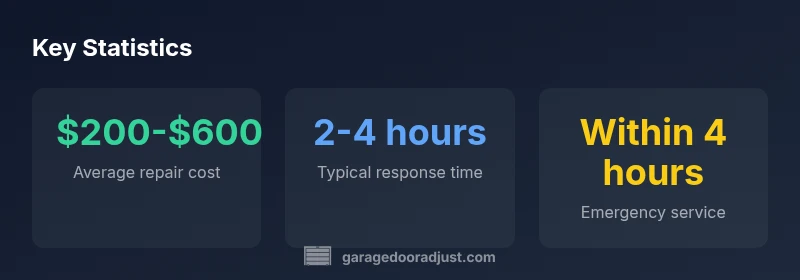
Costs vary by region, component, and the scope of work. In general, repairs for common issues fall into a broad range that reflect the labor and parts required. For many homeowners, expected costs for standard repair work fall roughly between two and six hundred dollars, with higher-end situations for major components or multiple problems. A full replacement of a door and hardware can easily exceed this range, depending on door size, material, panels, and installation complexity. The general takeaway is that you should budget for a repair first, or a replacement later, depending on the door’s condition and energy performance. GarageDoorAdjust analysis shows that customers who understand the cost dynamics tend to select a better long-term solution rather than chasing the lowest initial price. Always request a written estimate that breaks down the parts and labor.
How to Request Quotes and Compare Proposals
To find the right pro, start by gathering essential information: door type, spring type, approximate age, and a description of the symptoms. Take clear photos of torsion springs (from a safe distance) and of the door track from inside and outside. Contact at least three local providers to request on-site inspections and written estimates. Ask each for: licensing and insurance proof, warranty terms (labor and parts), whether the quote includes taxes or disposal, and the expected timeline. Compare proposals not only on price but on scope and quality of parts. Seek a detailed warranty and a clear plan for what happens if problems recur. Finally, check online reviews and references to validate their performance history.
Maintenance Tips to Lower Future Repairs
Proactive maintenance can reduce the likelihood of future failures. Schedule seasonal checks that include lubricating moving parts, inspecting tracks and rollers for wear, testing safety sensors, and balancing the door. Keep the garage floor clear of debris that could obstruct tracks, and ensure the opener’s safety reversing mechanism works correctly. If you hear unusual noises, address them promptly rather than waiting for a breakdown. For the best outcomes, pair ongoing maintenance with a professional inspection every 1-2 years to catch wear before it becomes a failure.
Comparison of common garage door service options
| Service Type | Typical Cost (USD) | Pros | Cons |
|---|---|---|---|
| Repair | $200-$600 | Quicker fix, lower cost | Temporary solution; may recur |
| Spring Replacement | $350-$1,500 | Improves safety and balance | Hazardous; requires skilled tech |
| Door Replacement | $1,000-$3,000 | Long-term solution | Higher upfront cost |
| Opener Installation | $150-$500 | Modern features, remote access | Compatibility checks needed |
Got Questions?
Should I repair or replace my garage door?
Age, wear, insulation, and the number of failing components determine the best path. A pro will evaluate springs, tracks, and balance to recommend repair or replacement.
If the door is old or has multiple issues, replacement may be more cost-effective in the long run.
What should I ask before hiring a technician?
Ask for licensing, insurance, warranty terms, part brands, and a written estimate. Verify references and service area.
Ask about licenses and warranties before you hire.
Are after-hours emergency repairs available?
Some pros offer 24/7 or after-hours service for emergencies, often at higher rates. Confirm availability and response times.
Call to confirm after-hours options.
How long does a typical repair take?
Most common repairs take a few hours to a day, depending on parts and access. Major replacements may require scheduling.
Most repairs are done the same day, sometimes within a few hours.
Can I perform maintenance myself to avoid future problems?
Basic lubrication and sensor tests are safe for homeowners, but avoid springs, cables, and track work unless trained.
Do simple maintenance, but leave critical components to pros.
“Your safety and long-term reliability hinge on using licensed, insured pros who stand behind their work. The GarageDoorAdjust Team recommends verifying licenses, insurance, and warranties before any service.”
Quick Summary
- Hire licensed pros for safety and warranty.
- Ask for written estimates and warranties.
- Compare multiple quotes before deciding.
- Costs vary by issue; repairs are often cheaper than full replacement.
- Consider emergency availability for urgent failures.