SecurLift Garage Door Troubleshooting: A Step-by-Step Guide
A comprehensive, homeowner-focused guide to diagnosing, repairing, and maintaining a SecurLift garage door in 2026. Learn safe practices, essential tools, and a clear step-by-step workflow to keep your door reliable.


This guide helps homeowners safely diagnose and repair a securalift garage door, identify common faults, and complete a proven fix workflow. You’ll learn essential safety steps, the right tools to gather, and when to call a pro. The process emphasizes safety-first actions and clear decision points to prevent injury or further damage.
Why SecurLift Garage Door Reliability Matters
A reliable securalift garage door keeps your home secure, reduces energy waste, and minimizes daily friction. When a door behaves unpredictably—stopping mid-raise, reversing suddenly, or making grinding noises—it's both annoying and potentially dangerous. According to GarageDoorAdjust, routine maintenance and timely troubleshooting dramatically reduce unexpected failures by addressing wear, lubrication gaps, and alignment issues before they escalate. Homeowners who implement a simple, repeatable inspection cycle report fewer emergency fixes and smoother operation over the door’s lifetime. In 2026, the GarageDoorAdjust team emphasizes proactive checks as a core habit for any homeowner who relies on a securalift system, because small tweaks today prevent larger costs tomorrow. In short, investing time now keeps your door secure, quiet, and dependable.
How SecurLift Works: Key Components
A securalift garage door system typically combines a sectional overhead door, tracks, rollers, torsion springs, a balance mechanism, and an opener with safety sensors. The balance system holds the door’s weight so one person can open or close it with minimal effort. Torsion springs provide the main counterbalance, while cables and pulleys help distribute load along the tracks. The tracks guide the door, and rollers ensure smooth motion. The opener supplies power and remote access, usually with an auto-reverse safety feature. Safety sensors near the floor detect obstructions, preventing closure. Understanding these parts helps you diagnose faults without guessing which component is failing. A clearly understood system also helps you communicate more effectively with technicians when a repair surpasses your skill level.
Common Warning Signs You Shouldn’t Ignore
Listen for unusual sounds like grinding, squeaking, or banging, which can indicate worn rollers, damaged tracks, or misaligned components. Notice if the door sags, binds, or stops before reaching full height, or if it reverses unexpectedly when closing. Dimming lights in the garage during operation can hint at a motor draw issue, while lingering motor heat suggests motor or drive issues. Visual clues—rust on springs, frayed cables, or cracked rubber weather seals—also signal impending failure. Addressing these signs early reduces the risk of sudden door failure, which can cause property damage or personal injury. The GarageDoorAdjust approach recommends documenting symptoms with photos and notes to help you decide between do-it-yourself fixes and professional service.
Quick Safety Practices Before You Begin
Before any inspection or repair, cut power to the door and secure the area to prevent unexpected movement. Use a sturdy ladder and wear safety glasses and gloves to protect against sharp edges or springs. Keep children and pets away from the workspace and never place hands near moving parts. If you feel unsure at any point, pause and reassess—some tasks involve high-tension components that require specialized training. A clear, well-lit workspace reduces mistakes and keeps everyone safer during the troubleshooting process.
Step-by-Step Troubleshooting Overview
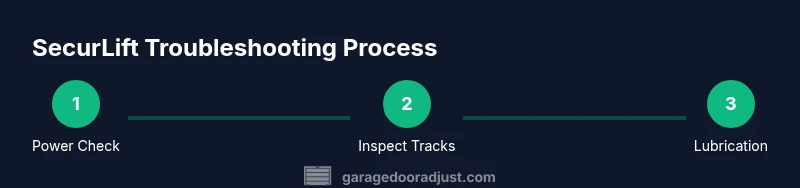
This section provides a high-level roadmap for diagnosing securalift issues. It’s designed to help you decide which steps you can perform safely and which tasks require a pro. The steps cover power verification, track and hinge inspection, door balance testing, safety sensor checks, lubrication, and opener testing. Each step is paired with a concrete action and a safety note to prevent accidents. If at any point you encounter a stubborn problem or suspect high-tension components, escalate to a professional to avoid injury or further damage.
Maintenance Routine to Extend SecurLift Life
Consistency is the best defense against garage door problems. Establish a monthly quick-check routine that includes visual inspection of tracks, rollers, weather seals, and mounting brackets; lubrication of moving parts; and testing of the reversing safety feature. Clean tracks to remove dust and debris, then wipe guides and hinges with a light lubricant. Replace weather stripping as needed to maintain insulation and reduce drag. A proactive approach reduces friction, preserves balance, and extends the life of springs and hardware. The GarageDoorAdjust team notes that small, regular maintenance can delay expensive replacements and keep your system functioning smoothly.
When to Replace vs Repair: Decision Guide
Not every issue is worth repairing, especially with older securalift systems. If springs show visible wear, cables are frayed, tracks are bent, or the opener struggles to move the door under normal conditions, replacement is likely more cost-effective than repeated repairs. Weight, corrosion, and door age are strong indicators for considering a replacement. In contrast, minor misalignments, worn bearings, or weather-stripping failures are often addressable with straightforward DIY fixes and routine maintenance. A qualified technician can provide an objective assessment and a transparent breakdown of costs.
Troubleshooting Acoustic Noises: Quieting a SecurLift
Loud noises typically point to dry rollers, lack of lubrication, or misaligned tracks. Start by cleaning and lubricating rollers and hinges with a light garage-door lubricant. Inspect track alignment and tighten mounting hardware to reduce rattling. Worn rollers or damaged springs produce persistent noise and require professional attention. In many cases, replacing worn rollers or realigning tracks eliminates most common noises. Quiet operation improves safety by making it easier to notice new noises that may indicate a new fault.
What to Expect in a Pro Visit: Questions to Ask
If a professional visit is needed, expect a full inspection of springs, cables, tracks, rollers, and the opener. Ask for a written assessment detailing required parts, labor, and timelines. Request a safety-focused plan, including anticipated life of components and preventive maintenance recommendations. A good technician will explain options and provide a clear cost estimate before any work begins. Bringing photos of symptoms and a history of issues helps the technician diagnose faster and more accurately.
Common DIY Pitfalls and How to Avoid Them
Avoid attempting risky tasks like adjusting torsion springs, which can cause severe injury or death. Do not bypass safety devices or use makeshift tools on high-tension parts. Rushing fixes often leads to misalignment or additional damage. Follow a structured plan, use the right tools, and respect manufacturer safety warnings. If a procedure feels risky or requires specialized equipment, pause and call a pro.
Tools & Materials
- Sturdy ladder (extension or step, rated for load)(Select a ladder tall enough to reach the door with a stable stance)
- Safety glasses(Protect eyes from flying debris and dust)
- Work gloves(Grip and hand protection during manual tasks)
- Adjustable wrench set(For mounting bolts and track hardware)
- Phillips and flathead screwdrivers(Common fasteners on brackets and components)
- Socket set and/or ratchet(Tighten/loosen bolts and nuts)
- Torque wrench (optional but helpful)(Precise torque on critical fasteners)
- Lubricant (light garage-door lubricant)(Apply to hinges, rollers, and tracks)
- Rag or shop towels(Clean parts before lubrication)
- Voltage tester / non-contact voltage detector(Ensure power is off when working near the opener)
- Camera or notebook(Document symptoms for reference)
- Replacement weather stripping and parts (as needed)(Keep spares on hand for maintenance)
Steps
Estimated time: 45-60 minutes
- 1
Disconnect power and secure the area
Turn off the garage door opener from the wall switch and unplug the unit if accessible. Use the ladder to reach the opener safely, then confirm there is no residual voltage near the control board. This prevents accidental movement while you inspect components.
Tip: Always verify power is off with a non-contact tester before touching any electrical parts. - 2
Test door balance by manual operation
With the door closed, disconnect the opener from the door (if possible) and manually lift the door halfway. If it stays put, the balance is likely correct; if it rises or falls, the springs or balance mechanism may need adjustment by a professional. Note the effort required and any sticking points.
Tip: If the door is heavy or sticks, do not force it; note for the pro and avoid quick jerks. - 3
Inspect tracks, hinges, and rollers
Look for bends, gaps, or debris in the tracks. Check that rollers spin freely and hinges aren’t corroded. Tighten loose mounting screws and clean the track with a damp cloth before re-lubricating. Misalignment or obstruction is a common cause of binding and noise.
Tip: Run a rubber mallet gently along the track to dislodge stubborn debris without bending the track. - 4
Check safety sensors and opener response
Ensure the safety eyes align and clean the lenses to remove dust. Reconnect power and test the opener by closing from a safe distance with an object placed on the floor to trigger the sensor. If the door does not reverse, the sensor alignment may be off or the control board may need calibration.
Tip: Use a flashlight to inspect sensor housings for moisture or misalignment during checks. - 5
Lubricate moving parts
Apply a light garage-door lubricant to hinges, rollers (if ball-bearing), and track joints. Avoid over-lubrication, which can attract dust. Wipe excess with a clean cloth. Lubrication reduces friction and noise, improving smoother operation.
Tip: Lubricate only after cleaning surfaces to ensure the lubricant reaches interface points. - 6
Reconnect and test the opener
Re-engage the opener to the door and perform several cycles: open fully, close fully, and back off the limit a bit if the door stops short. Observe movement and listen for changes in tone or resistance. If any abnormal behavior persists, schedule a professional inspection.
Tip: Document any remaining issues with timing or resistance to share with a technician.
Got Questions?
What is a securalift garage door, and how does it differ from standard doors?
A securalift garage door is a sectional overhead door with a specific balance and safety system designed for reliable operation. It uses torsion springs, tracks, and an electric opener to assist lifting and lowering. While many doors share basic components, securalift models may have a unique balance setup and sensor configuration, so always consult the manual for model-specific guidance.
SecurLift is a balanced overhead door with an electric opener and safety sensors. Check your manual for model-specific balance and sensor details.
Is it safe to troubleshoot a securalift door myself?
Some routine maintenance like cleaning tracks and lubricating hinges can be done safely. However, tasks involving torsion springs or high-tension components should be performed only by a licensed technician due to serious injury risk.
DIY can be safe for basic maintenance, but avoid adjusting springs—leave that to a pro.
What basic maintenance can I perform without professional help?
You can clean tracks, lubricate moving joints, test safety sensors, and verify that the door glides smoothly on tracks. Keep hardware tight and replace weather stripping if worn. Document any persistent issues for when you contact a professional.
Clean and lubricate tracks, test sensors, and document issues for your next service visit.
How do I know when to replace the door or the opener?
If multiple major components show wear (springs, tracks, cables, or the opener itself) and repairs exceed a practical cost, replacement may be more cost-effective. Consider age, frequency of past repairs, and safety concerns in your decision.
If many parts are worn or the opener struggles despite service, replacement may be best.
What questions should I ask a pro during a visit?
Ask for a written assessment, parts list, and a clear cost estimate. Request explanations of safety implications, and ask about preventive maintenance plans and expected component lifespans.
Ask for a written plan, costs, and preventive maintenance recommendations.
Can weather changes affect securalift performance?
Yes. Temperature and humidity can affect lubrication points and weather seals, influencing noise and resistance. Regular checks help catch weather-related issues early.
Weather can impact lubrication and seals—keep an eye on seasonal changes.
Watch Video
Quick Summary
- Identify primary faults with securalift using a structured checklist
- Prioritize safety and documentation before repairs
- Differentiate between DIY tasks and issues needing a pro
- Maintain regular lubrication and track cleanliness for longevity
- Ask clear questions and request an inspection if in doubt