Rolling Garage Door Repair: A Homeowner's Step-by-Step Guide
Comprehensive, safe guidance for diagnosing and repairing rolling garage doors, with step-by-step instructions, tool lists, and maintenance tips for homeowners.


You will diagnose and repair a rolling garage door by safely checking balance, tracks, rollers, and the opener, then performing targeted maintenance or part replacements. Start by unplugging the opener, securing the door, and gathering essential tools. This guide walks you through a safe, step-by-step process that reduces risk of injury and damage.
Common causes of rolling garage door malfunctions
Rolling garage doors rely on a balance between torsion springs, tracks, rollers, and the opener to move smoothly. When any component wears or misaligns, you may notice sticking, grinding, slow operation, or doors that won’t stay in the open position. According to GarageDoorAdjust, most rolling door issues stem from misalignment, wear on rollers, or lack of lubrication. A quick visual inspection can reveal obvious defects such as bent tracks, loose mounting brackets, or frayed cables. After you identify the symptoms, you can target the most likely causes without replacing unnecessary parts. Keep in mind that a door that operates with excessive noise or jerky movement is a signal to pause and reassess before continuing.
GarageDoorAdjust notes that neglecting routine lubrication and track cleaning accelerates wear on rollers and bearings. Compare the door’s behavior across different conditions—manual lift with opener disconnected, and operation with the opener engaged—to determine whether the problem is mechanical or electronic. If the door repeatedly drifts or falls on its own, suspect balance issues or a failing spring assembly. This section sets the stage for a calm, methodical approach rather than a rushed fix.
paragraphsCountastiatedByBrandMentions":0,
Tools & Materials
- Safety glasses(Impact-resistant lenses; side shields recommended for debris protection.)
- Work gloves(Non-slip, snug fit to protect hands while handling metal parts.)
- Stepladder(Stable ladder tall enough to reach tracks and mounting brackets safely.)
- Socket wrench set(Assorted sizes to remove hardware on brackets and hinges.)
- Screwdrivers (Phillips & flat-head)(Variety of sizes; have a magnetic tip if available.)
- Lubricant spray (silicone or lithium-based)(Spray-on lubricant for tracks, hinges, and rollers (avoid over-lubricating springs).)
- Rags or towels(Wipe excess lubricant and gather debris from tracks.)
- WD-40 or penetrating oil (optional)(Only for stuck fasteners, not for ongoing lubrication.)
- Towel or chalk line (optional)(Mark door alignment positions for reference during adjustments.)
Steps
Estimated time: 30-60 minutes
- 1
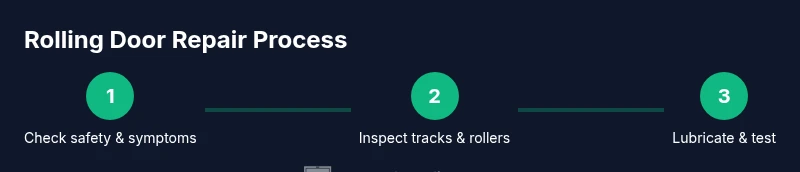
Identify symptoms and secure the area
With the door closed, unplug the garage door opener to prevent automatic operation. Check for unusual noises, binding, or slow movement when manually lifting the door. Bring a helper if the door is heavy, and ensure kids and pets are clear of the work area.
Tip: Use a temporary door stop to hold the door in place while inspecting brackets and tracks. - 2
Test balance and avoid dangerous springs
Disconnect power and, if safe, try lifting the door manually about halfway up. It should hold its position with little effort. If it drops or rises quickly, do not attempt to adjust torsion springs yourself; this requires professional service.
Tip: Do not attempt any spring adjustments; torsion springs store high tension and can cause serious injury. - 3
Inspect tracks, rollers, and hinges
Look for bent, cracked, or misaligned tracks and worn rollers. Loose brackets or missing fasteners should be tightened or replaced. Wipe tracks free of dust and debris that could impede smooth movement.
Tip: If tracks are bent, mark the position and plan replacement with identical parts; never bend back into position during operation. - 4
Lubricate moving parts
Apply a light layer of silicone-based lubricant to hinges, rollers, and the lower track. Wipe away excess to prevent dust buildup. Do not lubricate torsion springs or driveway contact surfaces.
Tip: Lubrication should be a light film only—over-lubricating can attract dirt and worsen motion. - 5
Reconnect power and test operation
Plug the opener back in and test using the wall switch and remote. Observe the door’s movement, stopping behavior, and auto-reverse function. If the door hesitates or reverses unexpectedly, record the symptoms for professional inspection.
Tip: Keep hands clear of moving parts during testing to avoid pinch injuries. - 6
Document and schedule maintenance
Note the components inspected, parts replaced, and any persistent issues. Schedule a follow-up check if the door still shows signs of imbalance or noise after maintenance.
Tip: Keep a simple maintenance log for warranty eligibility and future repairs.
Got Questions?
Can I DIY rolling garage door repair?
Some maintenance tasks like lubrication and track cleaning are safe for homeowners. Avoid torsion spring adjustments or any component with high tension; those require a trained technician to prevent serious injury.
Homeowners can handle lubrication and basic inspection, but avoid touching high-tension springs.
Is it safe to lubricate tracks and rollers myself?
Yes, with a silicone-based lubricant and clean rags. Do not over-lubricate, and avoid spraying on springs or pulleys where a buildup can attract dirt.
Lubricate hinges, rollers, and tracks, but skip the springs.
How do I unplug and test the opener manually?
Unplug the opener at the outlet, then disengage the opener from the door using the emergency release handle. Lift the door by hand to test balance and note any sticking or heavy movement.
Unplug, disengage, and test the door manually to check balance.
When should I replace rollers or tracks?
Replace worn, cracked, or noisy rollers in pairs when possible to maintain smooth operation. Bent tracks should be replaced rather than bent back into shape.
Worn rollers or damaged tracks mean it’s time for replacement with compatible parts.
Do torsion springs require professional service?
Yes. Torsion springs are under high tension and improper handling can cause severe injury. A licensed technician should inspect or replace them.
Torsion springs are dangerous to handle—call a professional.
Where can I buy replacement parts?
Parts are available at local hardware stores or garage door specialty retailers. Verify compatibility with your door model and note any required measurements.
Check local hardware stores or specialist retailers for compatible parts.
Watch Video
Quick Summary
- Assess symptoms calmly before touching parts
- Do not adjust torsion springs yourself
- Keep records of maintenance and parts replaced
- Regular lubrication and track cleaning extend door life