Parts for Garage Door Near Me: A Homeowner's Replacement Guide
Learn how to locate reliable parts for garage doors near you, verify compatibility, compare options, and source replacements safely with expert guidance from GarageDoorAdjust.


Finding reliable parts for garage door near me speeds repairs and minimizes downtime. Start by identifying common components (rollers, bushings, sensors, tracks, and springs) and check your door model for exact part numbers. Source from reputable local suppliers or trusted online retailers with nearby pickup, warranty, and clear return policies. This approach reduces delays and supports safe, proper installations.
Why local sourcing matters for parts for garage door near me
According to GarageDoorAdjust, sourcing parts locally can significantly reduce repair downtime and improve safety by ensuring correct fit and immediate access to support. Homeowners who shop locally often benefit from in-person assistance, warranty validation, and the ability to inspect part condition before purchase. Local suppliers tend to stock common components such as rollers, tracks, sensors, and springs, making diagnostic steps faster and less risky. Local options also allow you to verify compatibility in person, try fit checks, and get quick returns if needed. In remote areas, reputable online retailers with local pickup can still deliver similar advantages, but you should confirm return policies and warranty terms. When you search for parts for garage door near me, prioritizing vendors with clear part numbers and accessible staff adds an essential layer of safety.
How to verify compatibility before buying
Begin by identifying your door type (torsion or extension) and the exact model number shown on the door’s label or catalog. Cross-check part numbers with manufacturer diagrams or the retailer’s fit guide. For springs, measure coil diameter, wire size, number of coils, and end-winding orientation. For rollers and tracks, confirm wheel type, rail width, and endstop placement. Always confirm voltage and sensor compatibility for openers. If you’re unsure, bring photos or the old part to the store and ask a staff technician to verify fit. Document the serial/model and compare with at least two sources before purchasing.
Where to source parts near you
Start with authorized garage door dealers and recognized hardware stores, which typically stock OEM or high-quality aftermarket parts. Local independents can also carry rare items, especially for older doors. Online retailers that offer local pickup or same-day delivery help bridge gaps when a part isn’t stocked nearby. When ordering online, verify the seller’s return policy and warranty coverage, and prefer sources with customer reviews and clear part diagrams. If you’re coordinating with a professional installer, request a written parts list and estimated lead times.
How to evaluate quality and avoid counterfeit parts
Quality matters for safety and longevity. Look for parts with clear branding, proper packaging, and tamper-evident seals. OEM parts from the original manufacturer generally fit best and carry the original warranty; reputable aftermarket parts can be a good value if they carry a recognized brand and compatibility confirmation. Be wary of unusually cheap parts or vague diagrams. Compare paint finish, stamping, and hardware metrics against your existing parts. If a part lacks documentation or a clear return policy, skip it. Always purchase from sellers who provide cross-reference charts and installation guides. When in doubt, contact the manufacturer or a qualified tech to confirm authenticity.
Step-by-step diagnostic to identify needed parts
- Inspect the door: note any rubbing, binding, or misalignment. 2) Check the opener: listen for limp operation or binding. 3) Identify the symptom: e.g., stuck in mid-air, slow movement, noisy operation. 4) Look up the model: locate the tag and record model number. 5) Cross-reference with diagrams: confirm part numbers for springs, rollers, hinges, sensors, tracks. 6) Measure critical dimensions: track width, roller diameter, spring wire size. 7) Decide on approach: DIY replacement for simple parts or professional for springs/torque. 8) Source parts: pick from OEM or reputable aftermarket with compatibility notes.
Common garage door parts and typical price ranges (local sourcing)
| Part Type | Typical Price Range | Key Compatibility Hint | Buy From |
|---|---|---|---|
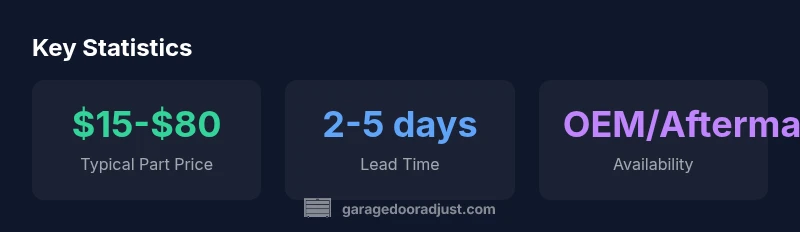
| Garage door torsion spring | $15-$80 per spring | Match spring type and coil count to door | OEM or reputable dealers |
| Opener safety sensor | $12-$40 | Ensure sensor type and wiring match opener model | Local hardware or online with returns |
| Rollers and tracks | $20-$100 | Check wheel size and track width | Local supply houses |
| Hinges and brackets | $10-$60 | Confirm screw pattern and load rating | Hardware stores |
| Weather seals | $5-$25 | Check door width and seal profile | Hardware stores or online |
| Remote controls | $20-$60 | Match model number with remote(s) | Authorized dealers |
Got Questions?
Where can I find parts for my garage door near me?
Look for authorized garage door dealers, local hardware stores, and reputable online sellers offering local pickup or fast shipping. Check reviews and return policies before buying.
Check local dealers and trusted online retailers that offer pickup or quick delivery.
How do I identify the right part number?
Locate the door or opener model number, then cross-check with manufacturer diagrams or retailer fit guides to confirm the exact part. Bring the old part to verify.
Find the model number and compare it to diagrams from the manufacturer or retailer.
Is it safe to replace garage door parts myself?
DIY is feasible for simple components like rollers or weather seals. Springs and high-tension parts should be handled by a professional due to serious risk.
Only attempt safe, non-tension parts yourself; leave springs to pros.
What about counterfeit or low-quality parts?
Buy from reputable sources with clear branding and warranties. Avoid unusually cheap parts and vague diagrams that lack documentation.
Avoid bargain-bin parts; choose reputable sellers with warranties.
How long does replacement typically take?
Simple replacements may take under an hour; more complex jobs or springs can take several hours, especially with setup and testing.
A straightforward replacement can be quick; springs may take longer.
“Replacing garage door parts correctly reduces risk and downtime, especially for springs and sensors. Local sourcing with proper model verification makes installations safer and faster.”
Quick Summary
- Identify part numbers from your door model first
- Prefer OEM or reputable aftermarket parts
- Choose local sources to simplify returns and support
- Verify compatibility before purchase to avoid returns
- Prioritize safety and professional help for high-tension parts