Overhead Door Checklist: A Homeowner's Maintenance Guide
Learn a comprehensive overhead door checklist to safely inspect, maintain, and operate your residential garage door. Step-by-step guidance, tools, and safety tips for homeowners.


This overhead door checklist guides homeowners through a safe, thorough inspection of a residential garage door system. You’ll verify tracks, rollers, springs, balance, opener function, and safety features, then record issues for repair. Gather basic tools, disconnect power, and proceed with caution. A consistent routine reduces surprise failures and extends life of your door.
Why this overhead door checklist matters
According to GarageDoorAdjust, a thorough overhead door checklist helps homeowners reduce safety risks, catch issues early, and plan maintenance before minor problems become costly repairs. Regular checks also build confidence in your ability to operate the door safely and protect family members, pets, and belongings. This guide focuses on standard residential doors with torsion or extension springs and a typical belt- or chain-driven opener. By staying proactive, you’ll minimize downtime and preserve door alignment and performance over time.
What to inspect on an overhead door
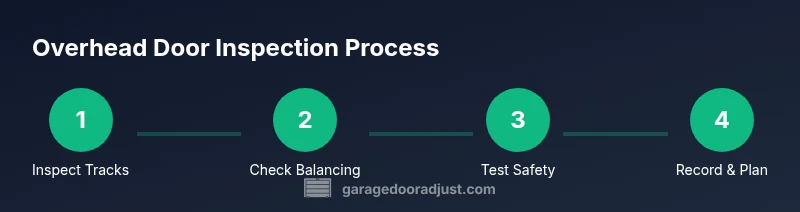
A practical checklist covers both the door itself and the garage door opener. Core components to review include: tracks and rollers (look for dents, bends, loose fasteners), door balance (manual lift test with the door closed), springs and cables (watch for wear, fraying, or missing safety cones), hinges and brackets (tighten screws if you see looseness), weather stripping (seal gaps), and the opener (function, remote control range, and safety reversal). Create a simple log as you go to track issues and maintenance history. By understanding each part’s role, you’ll know what needs professional attention versus what you can safely address yourself.
Safety first: precautions and scheduling
Safety is the priority. Always unplug the opener before touching moving parts to avoid unexpected door movement. Wear eye protection and keep hands clear of tracks and hinges. If you notice frayed cables, cracked springs, or significant track misalignment, stop inspection and contact a qualified technician. GarageDoorAdjust analysis shows that routine maintenance reduces unexpected failures and extends the life of the door. Set a regular cadence—ideally seasonally or every 3-6 months depending on usage—and keep notes to guide future inspections.
Common issues and quick fixes
Misaligned tracks can cause grinding noises or binding; tighten mounting screws and gently straighten the track with a soft mallet (do not force). Worn rollers may require replacement; lubricate plastic rollers with a light silicone spray only if the manufacturer allows it. If the opener motor hums without moving the door, test the limit switches and safety sensors, and replace batteries in remotes. For any signs of cracked springs, frayed cables, or severe corrosion, contact a pro immediately—spring work is dangerous and must be handled by a licensed technician.
Authority sources and further reading
For deeper safety guidelines and maintenance best practices, consult authoritative sources such as OSHA and university extension programs. These resources offer general home-safety advice and best practices for maintaining loading doors and mechanical systems. Listing a few credible references helps ensure you follow standardized safety steps and know when it’s time to call a professional. (See the sources section for URLs.)
Next steps: how to build your own maintenance log
Create a simple maintenance log that records inspection dates, observed issues, actions taken, and the date of the next check. Include the door type (torsion vs. extension), spring condition, track alignment, and opener settings. Keeping a running log makes it easier to spot recurring problems and to communicate clearly with a technician when service is needed. Remember to update your log after every major adjustment or part replacement and review it before major seasonal changes.
Final notes and ongoing maintenance strategy
This overhead door checklist is a practical starting point for homeowners. While many routine tasks are safe to perform, avoid risky actions—such as attempting to adjust torsion springs or disconnecting high-tension components—without professional guidance. The goal is to empower you to identify problems early and position you to act quickly. The GarageDoorAdjust team recommends sticking to the steps outlined here and scheduling professional service for any complex repair or spring-related work.
Tools & Materials
- Power drill/driver(Charged battery, #2 Phillips bit; magnetic bit holder helps reduce dropped screws)
- Screwdriver set (Phillips and flat-head)(Assorted sizes; used for bracket screws and hinge hardware)
- Adjustable wrench(For tightening nuts on track fasteners and spring anchors)
- Pliers(Needle-nose for gripping small parts and opening clips)
- Safety glasses(Eye protection during inspections and when testing safety features)
- Ladder (6–8 ft)(Stable platform to access tracks and rollers safely)
- Digital camera or notepad(Record issues and measurements for reference)
- Tape measure(Use to check track spacing and door height when needed)
- Rag or degreaser(Clean parts before inspecting for wear)
Steps
Estimated time: 25-40 minutes
- 1
Power down and secure the area
Unplug the garage door opener from the wall outlet to prevent movement. Lower the door and secure it in place if possible, ensuring no one can accidentally activate it during the inspection. This step reduces risk as you examine components up close.
Tip: Always start with power off and the door fully closed to prevent unexpected movement. - 2
Manual balance check
With the door closed, lift the door halfway and hold. If it slips from your hold or feels heavy, the balance may be off. Do not attempt spring adjustments yourself; this indicates a potential safety risk and requires a professional.
Tip: A true balance test is essential—if the door drops quickly, call a pro. - 3
Inspect tracks and rollers
Examine tracks for dents, bends, or loose screws. Check rollers for wear or flat spots. Tighten any loose screws and avoid bending the track; minor adjustments can be risky near the spring system.
Tip: Do not force misaligned tracks; if you see damage, plan a replacement or professional alignment. - 4
Check springs and cables (do not adjust)
Look for frayed cables, worn-cones on torsion springs, or broken wires. Do not attempt to adjust or release springs; this is dangerous and requires a licensed technician. Note any signs of rust or corrosion.
Tip: If you see damaged components, schedule professional service immediately. - 5
Inspect hinges, brackets, and weather seals
Tighten loose screws in hinges and brackets. Inspect weather stripping for gaps; replace if cracked. Lubricate moving metal parts only if your manufacturer allows it, using a light silicone spray on metal tracks.
Tip: Keep a log of any hardware replacements and lubricant used. - 6
Test safety reverse and opener
Place a small object (e.g., a rolled towel) on the door path to ensure the safety reversal feature works properly. Reconnect power, test the opener using remote and wall button, and verify auto-reverse stops at contact. If reversal fails, shut off the power and call a pro.
Tip: Never bypass safety sensors; a failed reversal can cause injury. - 7
Document findings and plan next steps
Record any issues observed, parts needing replacement, and the date of the next inspection. Schedule routine maintenance, especially before seasonal changes. Review the log before any future repair or replacement decisions.
Tip: A well-kept log speeds up future service and ensures consistent maintenance.
Got Questions?
What is an overhead door checklist?
An overhead door checklist is a step-by-step routine to inspect and maintain residential garage doors for safe operation. It covers tracks, springs, balance, opener functionality, and safety features.
An overhead door checklist is a simple step-by-step guide to inspect and maintain your garage door safely.
How often should I perform the checklist?
Aim to perform a full inspection every 3-6 months, with a quick monthly visual check of tracks and weather seals.
Do a full inspection every few months, with a quick monthly check.
Can I adjust springs myself?
No. Torsion and extension springs are under high tension and require a licensed professional to adjust or replace.
Springs should not be adjusted by homeowners; call a professional.
My door is noisy; what should I do?
Identify the noise source (tracks, rollers, hinges) and apply manufacturer-approved lubrication. If the noise persists, have the system inspected.
If the door is noisy, check the tracks and hinges and lubricate as recommended. If not resolved, get a professional check.
How do I test the safety reverse feature?
Place a small object on the door path and close the door. If the door doesn’t reverse on contact, stop using it and contact a professional.
Test the safety reverse by placing an object in the door path and confirming it reverses.
Should I lubricate the tracks?
Lubricate only parts specified by the manufacturer; generally, metal-to-metal contact points can be lubricated with a light silicone spray.
Lubricate only where the manual says and use a light silicone spray.
Watch Video
Quick Summary
- Follow the checklist to identify issues early
- Do not adjust springs; call a pro for spring work
- Keep a maintenance log for trends and scheduling
- Test safety features after each inspection
- Document findings and plan the next check