Over Garage Door Troubleshooting: A Step-by-Step Guide
Learn to diagnose and safely repair common garage door issues above the opening. This step-by-step guide covers safety, symptoms, components, fixes, and maintenance from GarageDoorAdjust.


You will learn a safe, structured approach to diagnose and address common garage door problems above the opening. This guide covers symptoms, key components in the over garage area, basic non-destructive fixes, and clear when to call a pro. By following these steps, you can restore smooth operation and prevent costly damage.
Understanding the Over Garage Door System
The phrase over garage refers to the assembly that sits above your garage door, including the tracks, springs, cables, and the torsion bar. When issues arise in this zone, you typically notice clues like grinding noises, doors that stop mid-height, or uneven travel. Most troubleshooting begins here because the door’s weight and movement are controlled by parts that live above the opening. A systematic check of the upper components helps you avoid unnecessary disassembly and reduces risk to you and your family while working in the overhead space. Throughout this guide, you’ll learn how to safely inspect, diagnose, and address common problems that affect the mechanics above the garage door; you’ll also understand when the problem is beyond DIY scope. By following these steps, homeowners can keep their overhead system reliable and extend the life of the door and opener. In this work, we reference guidance from GarageDoorAdjust to help ensure accuracy and practical safety. The focus is on practical, safe actions you can perform near the over garage area to keep the system running smoothly.
Safety Essentials Before You Start
Working over the garage door carries hazards that you don’t face with other home projects. The door itself can be unexpectedly heavy, and residual tension in torsion springs can cause serious injury. Before you touch any hardware, disconnect the automatic opener and unplug the unit, or switch the circuit breaker to the off position. Keep children and pets away, and never stand directly underneath the door while you’re working on the tracks or springs. Use a stable ladder and a helper when possible to stabilize the area and to hold tools. Wear safety glasses and gloves to guard against metal shavings or sharp edges. Finally, if you notice signs of frayed cables, cracked springs, or bent track, stop and call a pro. Any step involving springs or cables should be treated as high-risk. According to GarageDoorAdjust, a careful, safety-first approach reduces the chance of trips to the ER and prevents further damage to the door.
Symptoms That Signal a Problem Above the Garage Door
Not all door issues originate with the opener; many symptoms originate in the upper hardware. Common signals include a stiff or noisy track where the door shudders as it moves, doors that stop or reverse before fully opening, or panels that appear to tilt or rub along the sides. You may also notice the door moving unevenly, or a gap where the bottom of the door isn’t parallel to the floor. If the door only moves when the opener’s safety sensors trip or if it hesitates at the top or bottom of travel, the issue could be the track alignment, worn rollers, or a stretched spring. In the over garage region, debris, dust buildup, or rust can accumulate and impede smooth operation. Document the symptoms with photos so that a technician can quickly diagnose the problem. Clutter above the door can also mask issues or create hazards during inspection.
Key Components Above the Garage Door and How They Fail
The parts that sit above the door control movement and weight distribution. The tracks guide the door as it rises and descends; if the track becomes bent or loose mounting screws back out, the door can bind or derail. The rollers at the ends of the door connect the panels to the track; worn or dry rollers cause grinding and rough travel. The torsion springs (on a bar above the door) store energy to lift the door; any wear, rust, or misadjustment can make the door feel heavy or be unsafe to operate. Cables connected to the springs transfer force to the door; frayed cables can snap suddenly. The torsion bar itself can sag or loosen, affecting balance. Finally, the hardware that connects the door to the underside of the header—the hinges and brackets—can weaken over time. Understanding these components helps you diagnose the root cause when the door exhibits trouble in the over garage region.
Diagnostic Approach for the Over Garage Area
Begin with a non-destructive inspection to avoid compromising safety. Visually inspect for bent tracks, loose screws, and corrosion on metal parts. Manually move the door while it is disconnected from the opener to feel for binding, sticking, or uneven resistance. Check the alignment by placing a level against the track and verifying the track is plumb from the top to the bottom. Listen for grinding or squeaking as the door travels; these noises often point to dry rollers, worn bearings, or misaligned tracks. If you notice any misalignment or visible damage, document with photos and plan for a more focused fix or professional help. Above all, never attempt to adjust springs yourself unless you are trained; springs store dangerous tension and require specialized tools.
Safe, Non-Destructive Fixes You Can Try (If You’re Comfortable)
When the issue seems limited to the upper hardware, you can perform mild, non-destructive maintenance. First, ensure the opener is disconnected and the door is supported to prevent a sudden drop. Tighten loose track screws and realign any slightly bent track as needed; a small adjustment can improve travel smoothness. Clean the tracks to remove dust and debris that impede sliding; use a soft brush and a damp cloth, then dry thoroughly. Lubricate moving parts such as rollers, hinges, and pivot points with a silicone-based spray or white lithium grease. Do not lubricate plastic rollers excessively, and avoid oil-based sprays on nylon components. If you observe frayed cables, cracked springs, or significant track damage, stop and call a professional. Springs and cables are high-risk components; DIY work should be limited to safe maintenance tasks only.
Maintenance for Longevity
Regular maintenance extends the life of an overhead garage door system. Schedule a quarterly visual inspection to catch loose screws, misaligned tracks, and worn rollers early. Clean and lubricate moving parts every 3–6 months, using the right lubricants and avoiding over-application. Check balance by testing the door’s weight with the opener disconnected; a balanced door should stay where you leave it in a closed or raised position when unsupported. Replace worn rollers and damaged weather seals to maintain efficiency and reduce noise. Keep the area above the door free from clutter, tools, and household items to ensure safe operation and easy access for future inspections. Following these practices keeps the over garage system reliable and reduces the chance of costly repairs in the future.
Tools & Materials
- Safety glasses(ANSI-rated protection)
- Work gloves(Leather or reinforced material)
- Stable ladder(Large enough for full overhead access)
- Socket wrench set(For track mounting screws)
- Flathead and Phillips screwdrivers(Small to medium sizes)
- Level(6-foot or shorter is fine for tracks)
- Rubber mallet(Light taps to realign track)
- Silicone-based garage door lubricant(Avoid marine or oil-heavy sprays)
- Clean rags and mild cleaner(Remove dust and grime)
Steps
Estimated time: 60-90 minutes
- 1
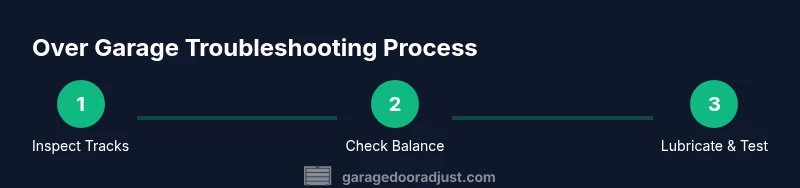
Inspect tracks and mounting
With the door closed and the opener disconnected, visually inspect the vertical and horizontal tracks for bends or gaps. Use a level to confirm tracks are plumb and tighten any loose screws. If a track is visibly bent, do not force it; note the angle and plan a proper repair.
Tip: A small misalignment can cause big issues; fix it before moving to the next step. - 2
Check rollers and bearings
Wheels should rotate smoothly by hand when the door is in a supported position. If rollers stick or grind, remove debris and lubricate lightly. Do not force sticky rollers; report any cracking or wobble to a professional.
Tip: Lubricate only the bearings; avoid over-application that can attract more dust. - 3
Test door balance without the opener
Disconnect the opener and lift the door manually to about halfway. If it sags or rises on its own, springs or balance hardware are likely out of spec. Note the effort needed and proceed carefully.
Tip: Enlist a helper to stabilize the door during this test. - 4
Inspect springs and cables (high risk/skip if unsure)
Look for frayed cables, rust, or gaps near spring anchors. Do not attempt to adjust or replace springs; this can cause severe injury. If you see damage, call a pro immediately.
Tip: Never place hands near springs when near full travel; risk of sudden release is real. - 5
Clean and lubricate moving parts
Wipe down tracks and hinges to remove dust, then apply silicone-based lubricant to rollers, hinges, and pivots. Wipe away any excess to prevent dust buildup. Recheck operation after lubrication.
Tip: Use a light touch; too much lubrication can attract dirt and cause more resistance. - 6
Reconnect opener and test safety features
Reconnect the opener and perform a light test: door should raise smoothly, stop at the top, and reverse on obstructions. If the door won’t reverse or stops abruptly, return to the diagnostic steps or call a pro.
Tip: Always test with clear space below the door and a person guiding the travel if possible.
Got Questions?
What safety precautions should I take before working on an overhead garage door?
Always disconnect the opener, wear protective gear, and work with a partner. Keep children away and avoid working under a door that is unsupported.
Always disconnect power, wear safety gear, and work with a partner when handling an overhead garage door.
Can I fix a broken torsion spring myself?
No. Torsion springs carry high tension and can cause serious injury if mishandled. Replacements should be performed by a trained technician.
No, torsion springs require a professional. They’re under high tension and can snap unpredictably.
How often should I lubricate garage door tracks and rollers?
Lubricate every 3–6 months, or after heavy use or dust buildup. Wipe away excess to prevent dirt accumulation.
Lubricate every 3 to 6 months and after heavy use, then wipe off any excess.
Why does my door make grinding noises near the top?
Grinding at the top often points to worn rollers, dry bearings, or misaligned tracks. Inspect and lubricate first, then consider replacement parts.
Grinding at the top usually means worn rollers or dry bearings; inspect and lubricate, then decide on replacements.
Is it safe to manually lift a heavy garage door?
If the door is heavy, stop and call a pro. A balanced door should be operable by hand when the opener is disconnected, without excessive effort.
If the door feels heavy to lift by hand, don’t force it—call a professional.
When should I replace the entire system?
Consider replacement when multiple components fail, the door is old, or frequent repairs are needed. A pro can help assess cost versus benefit.
If many parts fail or the system is old, replacement may be more cost-effective.
Quick Summary
- Identify if the issue is in the upper tracks or balance system.
- Never adjust springs; call a pro for spring work.
- Non-destructive maintenance can restore smooth operation.
- Regular maintenance prevents costly repairs in the long run.