Nylon Garage Door Rollers: A Homeowner's Guide to Quiet, Durable Doors
Discover how nylon garage door rollers reduce noise and wear. This step-by-step guide helps homeowners inspect, select, install, and maintain nylon rollers for smoother operation.


According to GarageDoorAdjust, nylon garage door rollers reduce friction, noise, and wear in most residential setups. They offer smoother operation and longer life compared with conventional metal rollers. This quick definition helps homeowners understand what nylon rollers are, why they matter, and what to expect after installation. If you are upgrading, this guide shows how to choose the right style and install safely.
Why nylon garage door rollers matter
Nylon garage door rollers play a critical role in the overall performance of a sectional door. They ride inside aluminum tracks and bear the weight and movement of the door, absorbing wear and reducing friction. Switching to nylon rollers from older metal or embedded plastic can noticeably quiet operation and extend the life of both the rollers and the track hardware. According to GarageDoorAdjust, nylon rollers typically provide smoother cycling and better resistance to wear points that degrade door balance over time. When you consider replacement, you are trading louder operation and more maintenance for a longer-term, hands-off solution. In many homes, nylon rollers also contribute to gentler starts and stops, reducing stress on springs and cables. This makes them a popular upgrade for aging doors or doors that operate with a loud or jerky motion.
Benefits of nylon rollers over steel rollers
Nylon rollers offer several advantages for residential doors. They are lighter, which reduces the load on the balance system and can lessen spring wear. Nylon wheels tend to spin more quietly and smoothly, minimizing track noise during operation. They also handle dirt and debris differently than steel, which can result in longer intervals between tune-ups. Another key benefit is resistance to corrosion and moisture, which helps maintain consistent performance in humid or wet garages. For homeowners seeking a low-maintenance upgrade, nylon rollers can translate to fewer service calls and less frequent lubrication needs, especially when paired with a silicone-based lubricant.
Compatibility and selection considerations
Not all nylon rollers are created equal. To choose the right pair, measure the axle diameter and wheel width, and confirm the track type (standard vs. low-profile). Check the door weight class and the hinge spacing, as some nylon rollers are designed for lighter doors while others tolerate heavier ones. If your door uses snap-in end caps, ensure the replacement kit includes compatible end caps or covers. Look for rollers with sealed bearings designed for residential use, which reduces dirt ingress and improves longevity. If you’re unsure, consult your door’s manufacturer guidance or bring a sample to a local hardware store.
Inspection and maintenance basics
Before replacing any rollers, inspect the entire track and hinge system for wear. Look for flat spots, cracks in the wheel, worn axles, or bent brackets. Clean the tracks with a soft brush to remove dust and debris, then wipe them dry. Lubricate the bearings and rails with a silicone-based lubricant; avoid petroleum-based products on nylon. Regularly check all screws and bolts for tightness and replace any damaged fasteners. This preventive check helps prevent premature wear and ensures the new nylon rollers perform correctly from the first use.
Safety and common installation mistakes
Safety first: always disconnect power to the opener and secure the door in the down position before working on rollers. Avoid forcing components or prying wheels off tracks; improper removal can bend tracks and compromise alignment. Do not overtighten axle bolts, which can pinch the roller and cause premature failure. A common mistake is mixing nylon wheels with incompatible brackets or tracks. Always verify compatibility and follow the installation steps in the manufacturer’s guide or a trusted how-to resource.
Cost considerations and timing
Upgrading to nylon garage door rollers can be a cost-effective improvement, especially when weighed against frequent repairs and the noise reduction benefits. Expect costs to reflect roller quality, axle size, and whether you replace additional components like end caps or brackets. Installation time varies with door size and your level of experience, but a typical home upgrade falls within a few hours. Plan for a dedicated work session and a spotter for safety.
Authoritative sources
- OSHA: Safety guidelines for garage work and machinery safety (https://www.osha.gov)
- University extension resources on garage maintenance and door systems (https://extension.illinois.edu)
- NIST guidance on mechanical components and wear considerations (https://www.nist.gov)
Tools & Materials
- Nylon rollers(Match axle size and wheel diameter to your door model; check for sealed bearings.)
- Silicone-based lubricant(Use on bearings and rails; avoid oil-based lubricants on nylon wheels.)
- Phillips screwdriver(For end caps and brackets.)
- Flathead screwdriver(Helpful for prying loose components without damage.)
- Adjustable wrench(Removes axle fasteners; ensure not to overtighten when reinstalling.)
- Socket or nut driver(Torque to manufacturer specs; keep fasteners organized.)
- Ladder(Stable platform; have a helper if door is heavy.)
- Safety gear (gloves, eye protection)(Protect hands from sharp edges and eyes from debris.)
- Replacement brackets or end caps(Only if your old components show wear or damage.)
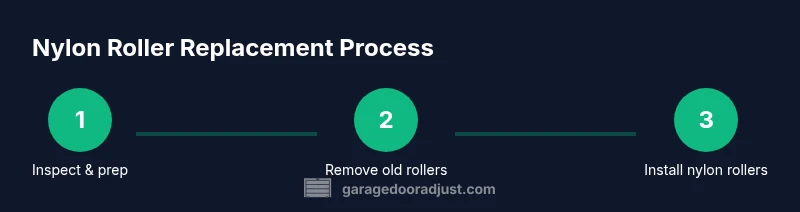
Steps
Estimated time: 45-60 minutes
- 1
Secure door and power down
Close the door fully and clamp it or have a helper hold it to prevent movement. Disconnect the garage door opener from power or switch off the circuit to ensure no accidental operation during work. Confirm there is no gap between sections and that the track is stable before proceeding.
Tip: Always have a spotter; keep hands clear of moving parts. - 2
Release roller from track
Open the track side where the roller sits and remove end caps if present. Detach the roller from the hinge bracket using the appropriate screwdriver or wrench. Place the removed components in a labeled container to avoid misplacement.
Tip: Take a quick photo of the setup before removal to guide reassembly. - 3
Remove old rollers
Loosen and remove axle bolts or pins that secure the roller to the hinge. Slide the roller away from the bracket with care. If a roller is stubborn, use a non-marking tool to avoid damaging the track or bracket.
Tip: Keep fasteners in a labeled bag for each door section. - 4
Compare dimensions and select nylon rollers
Measure the old roller's wheel diameter and axle length, then pick nylon rollers that match these dimensions and your track type. Ensure the replacement rollers are designed for residential garage doors and compatible with your hinges.
Tip: If in doubt, bring a sample to a hardware store for exact fit guidance. - 5
Install nylon rollers
Insert the new nylon rollers into the hinge, align with the track, and secure with axle bolts or pins. Ensure the wheels spin freely without rubbing against the track bracket. Reinstall end caps if removed earlier.
Tip: Lubricate bearings lightly during installation; avoid over-lubricating to prevent dirt accumulation. - 6
Test door operation
Reconnect power to the opener and test the door through several cycles. Listen for smooth, quiet movement and watch for any misalignment or binding. If the door binds, reseat rollers or adjust track alignment and re-test.
Tip: Run at multiple heights (halfway and fully open) to confirm consistent performance.
Got Questions?
What are nylon garage door rollers and why replace metal ones?
Nylon rollers are plastic wheels that ride along the door track. They reduce noise and friction, which lowers wear on the track and hinges. Replacing metal rollers with nylon can improve smoothness and longevity of the door system.
Nylon rollers are plastic wheels that ride the door track, reducing noise and wear. They can improve smoothness and longevity when replacing older metal rollers.
Can I replace rollers myself, or should I hire a pro?
If you have basic hand tools and follow safety steps, you can replace rollers yourself. For heavier doors or uncertain compatibility, hire a professional to ensure proper alignment and track integrity.
You can replace rollers yourself if you’re comfortable with basic tools and safety steps; otherwise, hire a pro for alignment and track integrity.
How do I know if nylon rollers are worn?
Look for visible cracks, flat spots, uneven wheel rotation, or unusual rubbing sounds in the tracks. If the door jerks or drags during movement, replacement is likely needed.
Check for cracks, flat spots, or jerky movement. If the door drags, it’s time to replace the rollers.
Are nylon rollers compatible with all garage doors?
Most residential doors can use nylon rollers, but you should verify axle size and track type. If in doubt, consult the door manufacturer or a professional.
Most homes can use nylon rollers, but check axle size and track type or ask a professional.
What maintenance do nylon rollers require?
Lubricate the bearings and rails with silicone-based lubricant. Avoid petroleum-based oils on nylon, and perform periodic inspections for wear.
Lubricate bearings with silicone lubricant and inspect for wear regularly.
Is it safe to run the door during replacement?
No. Always disconnect power to the opener and secure the door before starting work to prevent accidental movement.
Do not run the door while replacing rollers; disconnect power and secure the door.
What if the track is damaged during replacement?
If you notice bent brackets or damaged tracks, stop and consult a professional. Do not continue with a compromised track.
If the track is damaged, stop work and get professional help.
Watch Video
Quick Summary
- Inspect rollers for wear and replace if cracked or seized.
- Choose nylon rollers sized to your axle and track.
- Follow the step-by-step guide and test operation before use.
- Maintain rollers with silicone lubrication.
- The GarageDoorAdjust team recommends nylon rollers for quieter operation.