Naperville Garage Door Repair: A Step-by-Step Guide for Homeowners
Diagnose, repair, and install Naperville garage doors with clear, safe steps. A homeowner-friendly guide from GarageDoorAdjust, covering common noises, balance checks, opener troubleshooting, and lubrication.


By following this guide, you’ll diagnose and perform safe Naperville garage door repair tasks, including balance checks, lubrication, track alignment, and basic opener troubleshooting. You’ll learn how to identify wear, apply maintenance, and decide when to call a pro. This step-by-step approach helps homeowners restore function, reduce noise, and extend door life while staying within safety guidelines.
Why Naperville residents care about proper garage door repair
According to GarageDoorAdjust, Naperville homeowners face unique weather and road conditions that stress garage doors over time. Heavy snows in winter, freeze-thaw cycles in spring, and slushy streets can cause tracks to misalign and hardware to wear faster than in milder climates. A well-maintained door improves home safety, energy efficiency, and curb appeal. When a garage door in Naperville operates smoothly, you also reduce the risk of interrupted routines and potential property damage. Regular preventive care is a smart habit for any homeowner, and it pays off in fewer emergency calls to a technician. This guide is designed for residents who want practical, do-it-yourself steps backed by solid safety practices.
Safety first: hazards and precautions
Garage doors are heavy and operate with high-torque hardware. Before you touch anything, unplug the opener and disconnect power to the garage to prevent unexpected movement. Wear safety glasses and gloves, keep children away, and work on a dry surface to avoid slipping. If you notice frayed cables, bent tracks, or a door that suddenly hangs or slams, stop and call a professional. Never attempt to adjust torsion springs or cables with the door closed or under tension. Staying mindful of pinch points and the door’s weight helps prevent injuries and property damage.
Common symptoms and root causes
Typical warning signs include a door that won’t move, makes grinding noises, or stops halfway and sags. Root causes often involve worn rollers or hinges, misaligned tracks, loose mounting screws, or weather-sealed issues in Naperville’s climate. A door that rattles when the opener starts or reverses unexpectedly may indicate an alignment problem or worn components. Understanding symptom-to-cause relationships helps homeowners decide which tasks are safe to tackle and which require a pro. This section helps you map symptoms to likely fixes without jumping to conclusions.
Tools and prep
Before you begin, assemble essential tools and safety gear. A sturdy ladder, screwdriver set, socket wrenches, pliers, a chalk line, and a small flashlight are basics. Lubricants formulated for garage doors—silicone spray for tracks and white lithium grease for hinges and rollers—keep parts moving smoothly. Have protective eyewear and gloves on hand, and keep a clean workspace with a backup power source for the opener. Proper prep reduces time spent searching for tools mid-task and lowers the risk of mistakes.
Step-by-step diagnosis workflow
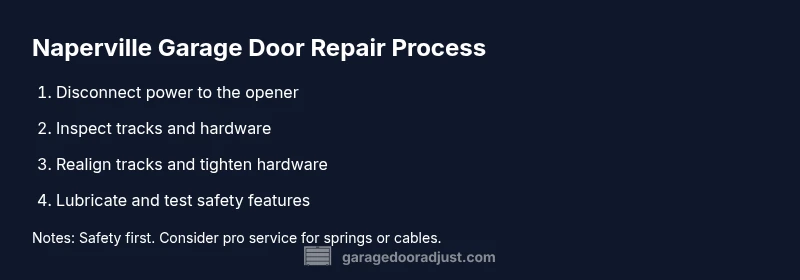
A clear diagnostic workflow helps you identify root causes efficiently. Start by disconnecting power to the opener, then visually inspect the door and hardware for damage or looseness. Check tracks for dents and obstructions, and verify that tracks are parallel and square. Use a chalk line to mark misaligned sections and then adjust brackets gently. Tighten every loose mounting screw on hinges and brackets, and apply lubrication to moving parts. Finally, test balance manually and verify the opener’s safety reverser and limits. A methodical sequence minimizes guesswork and increases safety.
Maintenance tips: lubrication and balance
Lubrication is a cornerstone of quiet operation and equipment longevity. Use silicone spray on tracks and rollers; apply white lithium grease to hinges and bearings. Wipe away excess to avoid attracting grit. Regularly check door balance by lifting it halfway; it should stay in place or return slowly toward the ground. If it falls or rises abruptly, balance adjustments may be required or a professional service may be needed. Consistent maintenance reduces noise and wear over time.
Track alignment and roller care
Track alignment is crucial for smooth operation. If you notice gaps between rollers and track or hear scraping when the door moves, realign the tracks by loosening brackets slightly, repositioning, and re-tightening. Use a level to ensure tracks run straight from the opener to the door. Clean dirt and debris from tracks and rollers, and inspect roller wheels for wear. Replacing worn rollers improves safety and reduces binding, while keeping the door on its rails reduces strain on gears and springs.
When to call a pro: springs, cables, and safety concerns
Springs and cables carry extreme tension. If you see frayed cables, a gap in torsion springs, or the door binding near the top, stop immediately and call a professional. Attempting to adjust springs without proper tools can cause severe injury. Naperville’s climate can accelerate spring wear, so schedule periodic professional inspections, especially after severe cold snaps or heavy snowfall. Professionals can safely replace springs, cables, and emergency release mechanisms with the right equipment.
Opener troubleshooting and programming basics
If the opener seems to struggle with limits or sensor alignment, verify the opener’s power source and check the safety sensors. Reprogram the remote or keypad according to the manufacturer’s instructions and test the door’s auto-reverse feature. If codes fail to program or the remote stops working, confirm transmitter compatibility and consider updating to a newer unit with the right safety features. Routine checks reduce frustration and improve reliability.
Replacement vs repair decision and budgeting in Naperville
Not every malfunction warrants a full door replacement. A simple repair—hinge tightening, track cleaning, or roller replacement—can extend life at a fraction of the cost of a new door. For older doors with multiple failing components, replacement may be more cost-effective in the long run. Consider neighborhood climate, energy efficiency, and security when deciding, and compare quotes from local pros. This guide helps you make a well-informed choice without surprises.
Local considerations and professional support: what to expect from a Naperville pro
Naperville homeowners often seek local expertise for complex repairs, insurance, and warranty considerations. A qualified pro will assess the door’s balance, track alignment, spring condition, and opener compatibility, then provide a written estimate and safety-first plan. With seasonal weather changes in mind, professionals may suggest maintenance schedules and upgrading to quiet, energy-efficient openers. A trusted local partner, like GarageDoorAdjust, can streamline parts replacement, safety checks, and preventive maintenance for long-term reliability.
Tools & Materials
- Flat-head and Phillips screwdrivers(Assorted sizes for hinges and brackets)
- Socket set and wrenches(Various sizes for mounting hardware)
- Lubricants(Silicone spray for tracks; white lithium grease for hinges/rollers)
- Safety gear(Safety glasses and work gloves)
- Step ladder(Stable, rated to support your weight)
- Tape measure(Check track spacing and clearances)
- C-clamps or locking pliers(Temporary holds during adjustments)
- Cordless drill and bits(Optional for mounting hole adjustments)
- Chalk line or marker(Mark track/hinge positions)
- Rags or paper towels(Clean up excess lubricant)
Steps
Estimated time: 60-90 minutes
- 1
Disconnect power to the opener
Unplug the garage door opener (and remove the battery if it’s a backup). This prevents the door from moving while you work, protecting you from sudden movements.
Tip: Always confirm power is off by trying to move the door manually after disconnecting. - 2
Visually inspect door sections and hardware
Look for bent panels, cracks, loose screws, and worn rollers or hinges. Note any rust or corrosion that could affect movement.
Tip: Document damaged parts with photos before removing or replacing anything. - 3
Check tracks for damage and obstructions
Inspect both tracks for dents, warping, or debris. Clear obstructions and ensure tracks are parallel and clean.
Tip: Avoid hitting tracks with force; use a plastic mallet if gentle nudging is needed. - 4
Realign misaligned tracks
Loosen the mounting brackets, reposition the track, and re-tighten brackets so the track runs straight from the opener to the door.
Tip: Use a level to verify straightness for best results. - 5
Tighten loose screws and brackets
Go around all hinges, roller brackets, and mounting screws, tightening them to manufacturer torque specs if known.
Tip: Don’t overtighten and strip threads; snug is enough. - 6
Lubricate moving parts
Apply silicone spray to tracks and rollers, and white lithium grease to hinges and bearings. Wipe off any excess.
Tip: Lubricate every 6–12 months as part of routine maintenance. - 7
Perform manual balance test
With power off, lift the door to about halfway and release. It should stay in place or descend slowly; if it rises or falls quickly, balance adjustments may be required.
Tip: If unsure, pause and proceed to professional help. - 8
Test opener safety features
Reconnect power and run the door; verify auto-reverse and manual stop functions engage correctly.
Tip: Keep hands clear of the door and sensors during testing. - 9
Assess springs and cables
Look for frayed cables or visible wear on springs. Do not attempt to adjust or replace springs yourself due to high risk.
Tip: Plan a pro replacement if wear is evident. - 10
Document results and plan next steps
Record what you found and whether you can safely complete repairs. Schedule professional service if complex or unsafe components are involved.
Tip: Set a maintenance reminder for a future check.
Got Questions?
How long does Naperville garage door repair typically take?
Most basic tasks take 1-2 hours, but more complex issues like spring or track replacement may require a pro and a longer timeline. Schedule a buffer in case parts are ordered or a technician needs to adjust garage geometry.
Most basic repairs take 1-2 hours; complex issues may need a professional and more time.
Can I safely replace torsion springs myself?
Torsion springs are under high tension and dangerous to handle without proper training and equipment. It is strongly advised to hire a licensed technician for spring replacement.
No, torsion springs are dangerous to replace yourself—hire a pro.
How often should I lubricate tracks and rollers?
Lubrication is recommended every 6-12 months, more often in dusty or high-use environments. Use silicone-based spray on metal tracks and a grease for moving hinge parts.
Lubricate every 6 to 12 months, or more often if dusty.
What are signs I need a new opener?
If the opener struggles to reverse, has faulty sensors, or can’t reach full travel after adjustments, a newer opener with safety features may be a better choice. A professional can help decide based on wear and compatibility.
If the opener has trouble reversing or sensors fail, consider a new unit with safety features.
Is it safe to adjust tracks myself?
Minor track adjustments are possible, but misalignment can indicate structural issues. If you’re not confident, stop and contact a pro to avoid damaging the door or harming yourself.
Small track tweaks are possible, but don’t push your luck—call a pro if unsure.
What should I budget for Naperville repairs?
Budgeting depends on the task complexity, parts needed, and whether you hire a pro. Compare quotes from local pros and consider seasonal demand in Naperville; avoid delaying urgent safety repairs.
Costs vary; compare quotes and don’t delay safety repairs.
Watch Video
Quick Summary
- Inspect hardware regularly to prevent failures
- Always prioritize safety when testing door movement
- Use proper lubrication to reduce wear and noise
- Know when to call a pro for springs or cables
- Plan maintenance around Naperville seasonal weather