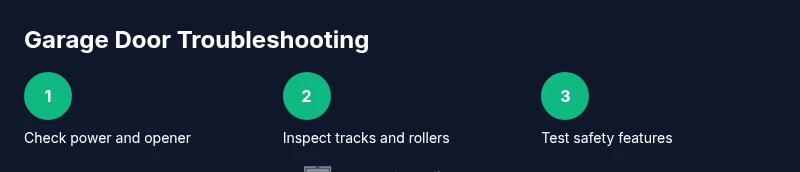
My Q Garage: Step-by-Step Guide to Garage Door Troubleshooting
Learn how to diagnose, repair, and safely install a garage door with the My Q Garage guide. Step-by-step instructions, tools, safety tips, and trusted sources for homeowners from GarageDoorAdjust.


This guide helps you diagnose and safely repair common garage door problems in your home. You’ll unplug the opener, inspect springs, cables, tracks, and sensors, test door balance, and follow safety precautions. With basic tools and methodical steps, you can reduce downtime and keep your door operating smoothly. Use the guide to decide when to DIY and when to call a pro.
Getting started with my q garage
If your garage door isn’t behaving, you’re not alone. The term my q garage represents a homeowner-focused approach to diagnosing, repairing, and maintaining an overhead door and opener. This guide from the GarageDoorAdjust Team walks you through a practical, safety-conscious workflow so you can identify root causes, apply fixes, and prevent future problems. Start with a calm workspace, gather the required tools, and set aside a dedicated block of time. The goal is to restore reliable operation while minimizing risk to you and your family. Throughout, you’ll see how a systematic checklist can save you time and money, especially when you’re dealing with common wear and age-related issues.
Safety and risk awareness
Garage doors are heavy, under tension, and supported by springs and cables under significant load. A small mistake can cause injury or property damage. Always unplug the opener before beginning any inspection, keep hands clear of moving parts, and wear eye protection. If a component shows significant wear or if a spring shows signs of separation, stop and call a professional. The GarageDoorAdjust team emphasizes safety first: never attempt to adjust torsion springs or cables while the door is loaded. A conservative approach reduces risk and increases the odds of a successful DIY repair.
Diagnosing common garage door problems
Garage doors can fail for many reasons, from motor burnout to misaligned tracks. Common symptoms include doors that won’t open or close, reversing unexpectedly, or making grinding or screeching noises. In my q garage scenarios, the root cause is often a misadjusted limit switch, worn rollers, dirty tracks, or insufficient lubrication. Start with a visual inspection: look for gaps in track alignment, bent rollers, frayed cables, or loose mounting brackets. Then perform a simple functional test: manually lift the door ~6 inches and release to check balance. If it falls or rises unevenly, you likely have a balance or track problem. This block builds the diagnostic mindset you'll apply in the step-by-step section.
Tools and materials you need
Before you touch a door, assemble a basic toolkit and a few consumables. A well-stocked home toolkit reduces trips to the hardware store and speeds up repairs. You’ll need items like a Phillips and flat-head screwdriver, adjustable wrench, needle-nose pliers, a level, a small pry bar, and a sturdy ladder. Lubricants (prefer silicone-based) and a clean rag are essential for maintenance. A power outlet or a garage circuit tester helps you verify the opener’s power state. Keep replacement parts on hand only if you’re confident in the part’s fit and installation requirements; when in doubt, consult a pro or the manufacturer’s guidelines.
Step-by-step diagnosis: power and opener testing
- Disconnect power to the opener by unplugging it at the outlet or flipping the circuit breaker. This prevents accidental operation. 2) Manually operate the door to gauge ease of movement and balance. If the door is heavy or sticks, focus on springs, tracks, and hinges. 3) Reconnect power briefly and test the opener’s safety reverse mechanism at a low opening height. If the door does not reverse on contact, adjust or replace safety sensors as needed. 4) Inspect the wall switch and remote controls for interference, battery health, and correct programming. These checks isolate whether the issue lies with power, the opener, or the door itself.
Inspecting springs and cables (with caution)
Springs and cables bear the majority of the door’s load. Inspect for visible wear, gaps, rust, or fraying. Do not attempt to adjust or replace springs yourself unless you are trained; this is a high-risk step. If you notice any deformity, unusual noises during movement, or signs of wear, consult a professional technician. In my q garage cases, spring-related issues are frequent culprits behind doors that won’t stay balanced or that suddenly sag when raised.
Checking tracks, rollers, and alignment
Tracks should be straight, free of dents, and securely fastened. Rollers must turn smoothly without grinding. Misaligned tracks often cause binding and door speed issues. Use a level to verify horizontal alignment, and tighten mounting brackets if misalignment is detected. Clean the tracks of dirt and debris with a rag, then lubricate rollers and hinges with a silicone-based lubricant. If you see significant track damage, do not attempt to bend it back into place; replacement is safer and more reliable.
Door balance and manual operation testing
A well-balanced door requires minimal effort to lift by hand. With the door fully closed, disconnect the opener and slowly raise the door to halfway. If it holds position, the balance is good. If the door falls or rises, the springs or balance system require attention. This test is simple, but it exposes fundamental issues that, if unaddressed, will propagate problems when you re-engage the opener.
Lubrication and routine maintenance
Apply silicone-based lubricant to torsion springs, hinges, rollers, track joints, and pulley mechanisms. Wipe away excess lubricant to prevent dirt buildup. Establish a maintenance cadence—every 6 to 12 months for standard doors—and adjust based on garage usage and climate. Regular lubrication reduces wear, preserves performance, and suppresses noise. In my q garage fixtures, a minimal maintenance routine is often the difference between smooth operation and frequent disruptions.
Sensor alignment and safety features
Modern garage doors rely on safety sensors to prevent injury. If the door won’t fully close or reverses unexpectedly, sensor misalignment or obstruction is a common cause. Align the photoelectric sensors so their faces are parallel and clean the sensor lenses. Test the auto-reverse feature after realignment to ensure safe operation. If misalignment recurs after reassembly, seek professional assistance to verify wiring integrity and sensor calibration.
Maintenance routine to prevent future failures
Create a simple calendar reminder for seasonal checks. Clean tracks quarterly, lubricate moving parts semi-annually, and test force limits after any repair or weather event. Document any replacements and part numbers for future maintenance. A proactive approach reduces emergency calls and extends door life. Remember: consistent care today minimizes downtime tomorrow, especially in environments with temperature swings or high humidity.
When to call a pro vs DIY: decision framework
If you identify damaged springs, frayed cables, complex track damage, or a door that won’t stay balanced after basic checks, it’s time to call a professional. DIY is appropriate for lubrication, sensor cleaning, track alignment, and simple part replacements with clear instructions. The GarageDoorAdjust Team emphasizes that safety comes first; when in doubt, consult a licensed technician to avoid injury or property damage.
Installing a new garage door or opener: basic considerations
Installing a new door or opener is a larger project with significant structural implications. If you’re replacing the door, ensure proper sizing, insulation, and hardware compatibility with existing tracks and framing. For openers, verify power supply, mounting, and safety features such as auto-reverse. If you’re unsure about wind load ratings, sectional track compatibility, or torque requirements, hire a pro. This step aligns with best practices for long-term reliability and safety.
Tools & Materials
- Voltage tester or circuit tester(Verify power is off before touching opener components)
- Screwdriver set (Phillips & flat-head)(Include small precision bits for quick access screws)
- Adjustable wrench(Use metric and SAE sizes as needed)
- Needle-nose pliers(For cable and spring-related tasks)
- Level and tape measure(Check track alignment accurately)
- Ladder or step stool(Stable, adult-height reach)
- Silicone-based lubricant(Avoid oil-based lubricants on plastic parts)
- Rag or shop towel(Clean tracks and lenses before lubrication)
- Safety goggles(Eye protection during testing and disassembly)
- Replacement rollers (if needed)(Only if wear is evident)
- Replacement parts for common wear(Like brackets or weather seals; confirm fit)
- Owner’s manual or manufacturer guidelines(For model-specific torque and safety specs)
Steps
Estimated time: 60-90 minutes
- 1
Disconnect power to opener
Unplug the opener from its outlet or switch off the circuit breaker. This ensures no accidental operation while you inspect. Confirm the door remains stationary once the power is removed.
Tip: Always double-check the power source is off before touching any moving parts. - 2
Test door balance manually
With the door closed, detach the emergency release cord and manually lift the door halfway. It should stay put. If it drops or rises, the balance system needs attention.
Tip: If the door is heavy, do not force it; note the resistance and proceed cautiously. - 3
Inspect tracks and alignment
Look for dents or bends in the tracks. Use a level to check that tracks run plumb and are securely fastened. Tighten brackets and remove debris from the track.
Tip: Keep screws snug but avoid overtightening that could warp metal. - 4
Check rollers and hinges
Ensure rollers rotate freely and hinges are intact without cracks. Lubricate pivot points as needed. Replace worn rollers if rotation feels gritty or rough.
Tip: Work from the bottom up to avoid stepping on loose components. - 5
Inspect springs and cables
Look for fraying, gaps, or obvious wear in springs and cables. Do not try to adjust or replace springs yourself unless trained; this is high-risk work.
Tip: If you see any sign of wear, call a pro immediately. - 6
Test safety reversal and sensors
With power reconnected, test the auto-reverse feature by lightly obstructing the door's path. Ensure sensors are aligned, clean, and facing each other.
Tip: Always test safety features after any repair or realignment. - 7
Lubricate moving parts
Apply silicone-based lubricant to springs, hinges, rollers, and track joints. Wipe excess away to prevent dirt buildup. Re-test door movement for smoothness.
Tip: Avoid spraying lubricant directly on exposed belts or exposed electronics.
Got Questions?
Can I fix a broken garage door spring myself?
Springs are under high tension and can cause severe injuries. Do not attempt replacement unless you’re trained. Hire a professional for spring work and focus DIY on lubrication, sensor cleaning, and track alignment.
Springs are under high tension, so avoid DIY spring work unless you’re trained. For safety, hire a professional for spring replacements and use DIY for simpler tasks like lubrication and alignment.
How long does a typical garage door repair take?
Most common repairs can be completed in a few hours, depending on parts availability and the exact issue. If the problem involves springs or structural components, it may take longer or require a pro.
Most repairs take a few hours depending on the issue and parts. For springs or structural work, a pro is often best.
Should I replace the opener or the door?
Consider door age, noise, insulation, and reliability. If the door is old or damaged beyond repair, replacement may be more economical in the long run. An underperforming opener might be fixed or replaced separately.
If the door is aging or damaged, replacement might be wiser. If the opener is unreliable, you may only need replacement there.
Is it safe to use my remote during maintenance?
No. Keep the opener powered down during maintenance to avoid accidental door movement and potential injury.
No—keep the opener off during maintenance to prevent accidents.
What maintenance should I perform monthly?
Inspect tracks and hardware, lubricate moving parts with silicone lubricant, test safety features, and clean sensor lenses. Document wear and recheck after weather changes.
Regularly inspect, lubricate, test safety features, and clean sensors for reliable operation.
When should I call a pro?
Call a professional for broken springs, frayed cables, bent tracks, or if you’re unsure about part compatibility. A pro can assess structural issues and ensure safety.
Call a professional for springs, cables, track damage, or if you’re unsure about repairs.
Quick Summary
- Identify root causes before replacing parts or components.
- Prioritize safety; never work on loaded springs or cables without professional help.
- Regular maintenance reduces downtime and extends door life.
- Sensor alignment and safety features are critical for safe operation.
- Know when to call a pro and when DIY is appropriate.